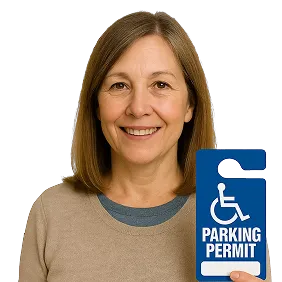

Handicap placard for Diabetes
 by Nida Hammad
Last updated:


Getting a handicap placard for diabetes isn’t about the diagnosis itself. It’s about proving how diabetic complications limit your ability to walk safely. Most states don’t grant placards for diabetes alone. They look at specific complications like peripheral neuropathy, vision loss from retinopathy, or lower limb amputation. You’ll learn which diabetic complications qualify in most states, what medical documentation your doctor needs to provide, and how to strengthen your application to avoid denial. This guide covers everything from understanding neuropathy as a qualifying mechanism to working through state-specific eligibility criteria and the DMV approval process. By the end, you’ll know precisely how to prove your handicap placard for diabetes eligibility and what steps to take next.
Does Diabetes Automatically Qualify You for a Handicap Placard?

A diabetes diagnosis alone doesn’t qualify you for a handicap placard for diabetes in any state. What matters is how the condition affects your ability to walk. States don’t evaluate the diagnosis itself. They look at the functional limitations caused by diabetic complications.
Why Diagnosis Alone Isn’t Enough
Having diabetes on your medical chart isn’t the same as meeting state eligibility standards. Millions of Americans manage diabetes without significant mobility impairment. The condition exists on a spectrum. Some people control it with medication and lifestyle changes. Others develop severe complications that limit daily movement.
State agencies need proof that your walking ability is compromised. This means documented evidence of how far you can walk, whether you need assistive devices, and if walking puts you at risk. A physician must certify these limitations before you can receive a placard.
What States Actually Evaluate
States assess specific functional impairments, not medical labels. They measure walking distance before you need to rest. They check your balance and fall risk. They evaluate vision problems that make navigation unsafe. They review cardiovascular capacity during physical activity.
Your physician documents these limitations during evaluation. The certification must show how complications restrict your mobility. For example, peripheral neuropathy might cause numbness and pain that make walking 200 feet impossible. Diabetic retinopathy could impair vision enough to create safety concerns in parking lots.
Understanding diabetes and parking eligibility requirements helps you know what documentation your state needs. Each state sets its own thresholds, but all focus on functional capacity rather than diagnosis.
The Functional Limitation Standard
The standard centers on how complications affect daily life. Peripheral neuropathy serves as the qualifying mechanism, not diabetes itself. This nerve damage causes numbness, burning pain, and poor balance. It makes each step uncertain and potentially dangerous.
Other complications that may qualify include severe vision loss from diabetic retinopathy, cardiovascular problems that cause breathlessness after minimal exertion, and amputation that requires prosthetics or mobility aids. The severity determines eligibility, not how long you’ve had diabetes.
Your physician evaluates whether these complications meet your state’s criteria. Similar to how obesity-related mobility limitations are assessed, the focus stays on measurable walking impairment. If you can walk typical parking lot distances without significant difficulty, you likely won’t qualify yet. If complications make that distance painful, unsafe, or impossible, you may meet the standard.
Understanding Peripheral Neuropathy as the Qualifying Mechanism
Peripheral neuropathy is the most common diabetic complication that leads to a handicap placard for diabetes. It’s not the diabetes diagnosis itself that qualifies you. It’s how nerve damage affects your ability to walk safely.
Neuropathy causes numbness, burning pain, and loss of protective sensation in your feet. When you can’t feel where your feet are, balance becomes unstable. This increases fall risk and makes walking across a parking lot genuinely dangerous.
How Neuropathy Affects Walking Ability
Nerve damage in your feet changes the way you walk. You lose the ability to sense ground texture, temperature, or pressure. This makes it hard to adjust your gait on uneven surfaces.
Balance problems develop because your brain relies on foot sensation to maintain stability. Without that feedback, you’re more likely to stumble or fall. Many people with advanced neuropathy describe feeling like they’re walking on cotton or thick socks.
According to research on diabetic peripheral neuropathy, nerve damage directly impairs walking speed, stride length, and postural control. These changes aren’t just uncomfortable. They make walking short distances exhausting and unsafe.
At Parking MD, we work with patients who’ve developed neuropathy-related walking limitations. Many describe needing to stop and rest after just 100 feet. Others rely on a cane or walker to avoid falls.
Medical Documentation Requirements
Your physician needs to document how neuropathy affects your mobility. This goes beyond confirming a diagnosis. It requires showing functional impairment.
Medical tests that strengthen your application include:
-
Nerve conduction studies showing reduced signal transmission
-
Monofilament testing documenting loss of protective sensation
-
Gait assessment showing balance problems or altered walking patterns
-
Pain scales indicating chronic discomfort that limits walking distance
-
Records of assistive device use like canes, walkers, or braces
Your doctor should also note how far you can walk before needing to rest. If you can’t walk 200 feet without stopping, that’s a strong indicator. Fall history matters too. If you’ve fallen or nearly fallen due to neuropathy, include that in your documentation.
When Neuropathy Meets State Thresholds
Not all neuropathy qualifies for a diabetes handicap parking permit. Mild neuropathy without functional impairment usually doesn’t meet state criteria. You need documented walking limitations that affect daily activities.
Advanced neuropathy with balance problems, fall risk, or severe pain typically qualifies. According to Web MD’s guide on medical conditions qualifying for permits, states look for conditions that substantially limit walking ability or create safety risks.
The mechanism is what matters. It’s not enough to have diabetes or even a neuropathy diagnosis. Your physician must show that nerve damage has reduced your walking distance, balance, or safety to a degree that meets your state’s functional standard.
Some states require you to walk less than 200 feet without stopping. Others focus on whether you need an assistive device or face a high fall risk. Your physician evaluation should address these specific criteria based on where you live.
Diabetic Complications That May Qualify for a Handicap Placard

Diabetes affects more than blood sugar. Over time, it can damage nerves, blood vessels, and organs. These complications can make walking painful, unsafe, or nearly impossible. Not every person with diabetes qualifies for a handicap placard for diabetes. What matters is how much the condition limits your ability to walk or stand.
States evaluate functional mobility, not just a diagnosis. If you can walk 200 feet without stopping, you may not meet the threshold. If you need a walker, experience severe pain, or risk falling with each step, you might. Understanding which complications qualify helps you know whether an evaluation makes sense.
Peripheral Neuropathy and Nerve Damage
Peripheral neuropathy is one of the most common diabetic complications. High blood sugar damages nerves in the legs and feet. This causes numbness, tingling, burning pain, or loss of sensation. Many people describe it as walking on pins and needles.
When neuropathy becomes severe, it affects balance and coordination. You may not feel where your feet are. This makes walking on uneven surfaces dangerous. Some people develop foot drop, where the foot drags or slaps the ground with each step.
Pain can also be disabling. Sharp, shooting pain or constant burning can make every step unbearable. If you need to stop frequently, rely on a cane or walker, or avoid walking because of pain, you may meet the criteria for a diabetic neuropathy handicap placard.
At Parking MD, we work with patients who have documented neuropathy through nerve conduction studies or clinical exams. These tests help physicians confirm the severity and functional impact of nerve damage.
Diabetic Retinopathy and Vision Loss
Diabetic retinopathy damages the blood vessels in the retina. In advanced stages, it causes severe vision loss or blindness. Most states consider vision impairment a qualifying medical condition for disability parking when it meets specific thresholds.
Vision worse than 20/200 in the better eye, even with correction, typically qualifies. So does a visual field narrowed to 20 degrees or less. These limitations make it hard to see curbs, obstacles, or oncoming traffic. Walking through a parking lot becomes a safety risk.
Some people with diabetic retinopathy also experience fluctuating vision or blind spots. This makes navigation unpredictable. If your vision loss meets your state’s threshold, you may qualify for a diabetic retinopathy parking permit.
Lower Limb Amputation
Diabetes is the leading cause of non-traumatic lower limb amputations in the United States. Poor circulation and nerve damage can lead to infections, ulcers, and tissue death. When these cannot be treated, amputation becomes necessary.
Amputation at or above the ankle almost always qualifies for a handicap placard. Walking with a prosthetic limb requires significant energy and balance. Many people also use a wheelchair or walker for longer distances.
Even partial foot amputations can limit mobility. Loss of toes or part of the forefoot changes your gait and balance. If this makes walking 200 feet difficult or unsafe, you may meet the criteria for diabetes amputation handicap placard eligibility.
Cardiovascular and Circulatory Complications
Diabetes increases the risk of heart disease and peripheral arterial disease (PAD). PAD narrows the arteries in the legs, reducing blood flow. This causes pain, cramping, or heaviness in the legs when walking. The pain usually stops when you rest.
This is called claudication. In severe cases, people can only walk a few steps before needing to stop. According to Washington State disability parking eligibility guidelines, conditions that limit walking distance to 200 feet or less may qualify for a permit.
Diabetic foot ulcers and Charcot foot also fall under circulatory complications. Foot ulcers are open sores that heal slowly or not at all. Charcot foot is a condition where bones in the foot weaken and fracture. Both require strict mobility restrictions to prevent further damage.
Autonomic neuropathy can also affect circulation and blood pressure. It causes orthostatic hypotension, where blood pressure drops when you stand. This leads to dizziness, lightheadedness, or fainting. If this increases your fall risk, it may support a placard application.
These complications often overlap. A person with diabetes may have neuropathy, PAD, and a history of foot ulcers. Together, these conditions create a clear picture of limited mobility. If your complications make walking short distances difficult or dangerous, a physician evaluation can help determine whether you meet your state’s criteria for disability parking for diabetes complications.
Diabetic Retinopathy and Vision-Based Eligibility
Diabetic retinopathy damages the blood vessels in the retina. Over time, this damage can lead to vision loss. For people with diabetes, this eye disease is one of the most common reasons to apply for a diabetic retinopathy parking permit. But not every case qualifies. What matters is how much your vision has actually declined.
Most states base eligibility on measurable vision loss. They don’t approve placards based on a diagnosis alone. Your eye doctor must document specific test results that show your vision meets state thresholds. This section explains what those standards are, how doctors evaluate diabetic eye disease, and what paperwork you need to submit.
Vision Standards for Handicap Placards
States use two main tests to decide if vision loss qualifies you for accessible parking. The first is visual acuity, which measures how clearly you see. The second is visual field, which measures your peripheral vision. Both tests must be done with your best corrective lenses on.
According to Ohio vision standards for placards, most states require visual acuity worse than 20/200 in your better eye with correction. This means you can’t see at 20 feet what someone with normal vision sees at 200 feet. That level of vision loss is considered legally blind.
Visual field loss also qualifies in many states. If your field of vision is 20 degrees or less in your better eye, you may meet the threshold. This is sometimes called tunnel vision. It makes walking through parking lots unsafe because you can’t see obstacles or moving cars in your peripheral view.
Some states accept either visual acuity loss or visual field loss. Others require one or the other. Check your state’s DMV rules before you apply. If you’re not sure whether your vision meets the standard, a licensed physician can review your test results and tell you if you’re likely to qualify.
How Diabetic Eye Disease Is Evaluated
Diabetic retinopathy progresses in stages. Early stages may not cause noticeable vision problems. Advanced stages, especially proliferative diabetic retinopathy, can lead to bleeding, scarring, and permanent vision loss. Only the advanced stages with documented vision impairment typically qualify for a handicap placard for diabetes.
Your eye doctor will perform a dilated eye exam to check for retinal damage. They’ll also run visual acuity and visual field tests. These tests measure how well you see and how much of your visual field remains intact. The results are recorded in your medical chart and used to complete your placard application.
Proliferative retinopathy with vision loss has higher approval rates. This is because the damage is severe and measurable. Early-stage retinopathy without significant vision impairment typically does not qualify. States need proof that your vision loss affects your ability to walk safely through parking lots.
If you’ve had laser treatment or surgery for diabetic retinopathy, your doctor will document how those procedures affected your vision. Even after treatment, some people still have permanent vision loss that meets state standards. Others recover enough vision that they no longer qualify.
Required Ophthalmology Documentation
Your application must include recent test results from a licensed ophthalmologist or optometrist. Most states won’t accept test results older than six months. The documentation must show your current visual acuity and visual field measurements, not just a diagnosis of diabetic retinopathy.
According to New Jersey vision qualification standards, your eye doctor must certify that your vision meets the state’s legal threshold. This certification is what the DMV relies on to approve or deny your application. Without it, your application will be rejected.
Here’s what your ophthalmology documentation should include:
-
Visual acuity test results for both eyes with best correction
-
Visual field test results showing degree of peripheral vision loss
-
Diagnosis of diabetic retinopathy with stage classification
-
Date of most recent dilated eye exam
-
Physician signature and license number
Some states also ask for a description of how your vision loss affects your daily activities. Your doctor may need to explain that you can’t see curbs, steps, or moving vehicles in parking lots. This functional description helps the DMV understand why you need closer parking.
If you’re applying through Parking MD, our licensed physicians can review your existing ophthalmology records and complete your state’s certification form. This saves you a trip to the DMV and speeds up the approval process. You’ll need to upload your recent visual acuity and visual field test results during your online evaluation.
Lower Limb Amputation and Mobility Limitations
Diabetes can lead to severe complications that affect the lower limbs. One of the most serious is amputation. When blood sugar remains high over time, it damages nerves and blood vessels. This reduces circulation and sensation in the feet and legs. Poor circulation slows healing, and nerve damage means injuries often go unnoticed until they become infected.
For people with diabetes who have undergone amputation, a handicap placard for diabetes becomes more than a convenience. It’s a tool that supports safer mobility and independence.
Which Amputation Levels Qualify
Not all amputations automatically qualify for a disability parking permit. States typically evaluate the level of amputation and its impact on walking ability. Amputation at or above the ankle usually meets eligibility criteria. This includes below-knee and above-knee amputations. These procedures remove enough of the limb that walking becomes difficult or impossible without assistive devices.
Toe amputations alone usually don’t qualify. However, if multiple toes are removed and mobility is severely affected, you may still be eligible. Bilateral amputations strengthen applications. Losing part of both legs creates greater walking limitations than a single amputation. Complications that affect prosthetic use also matter. If you can’t wear a prosthetic due to pain, poor fit, or skin breakdown, your walking ability is more limited.
According to the Social Security Administration’s diabetes evaluation guidelines, amputation of one or both lower extremities at or above the tarsal region is considered a severe impairment. This federal standard helps guide state-level decisions about disability parking eligibility.
Prosthetic Use and Eligibility
Using a prosthetic doesn’t disqualify you from getting a placard. What matters is how well the prosthetic restores your walking ability. Some people adapt well to prosthetics and walk with minimal difficulty. Others face ongoing challenges. Pain, balance problems, and limited endurance are common. If you can’t walk 200 feet without stopping, you may qualify.
Prosthetic complications also play a role. Skin irritation, pressure sores, and poor socket fit can make wearing a prosthetic painful or unsafe. If these issues prevent you from using your prosthetic consistently, your physician should document this. Recovery after amputation is another factor. The healing process takes time. During this period, you may qualify for a temporary placard. Once you’ve adapted to a prosthetic, your physician will reassess whether a permanent placard is appropriate.
Documentation From Surgical Records
Strong documentation is needed for approval. Your physician must certify that your amputation limits your walking ability. Surgical records provide proof of the amputation level and date. These records show exactly what was removed and when. Prosthetist documentation adds detail. If you work with a prosthetist, their notes can describe fit issues, complications, or limitations with your device.
The Colorado Division of Motor Vehicles requires detailed medical documentation for disability parking permits, including surgical records and physician certification of mobility limitations. Most states follow similar procedures. Your physician should include specific details about your walking distance, use of assistive devices, and any complications. This helps state agencies understand the full scope of your mobility limitation. If you’re applying through Parking MD, a licensed physician will review your medical history and complete the certification. This process makes sure your application meets your state’s requirements before submission.
Cardiovascular Complications From Diabetes
Diabetes damages blood vessels throughout the body. Over time, this damage can make walking painful or dangerous. Heart disease and poor circulation in the legs are two of the most common cardiovascular complications that may qualify someone for a handicap placard for diabetes.
Peripheral Arterial Disease and Claudication
Peripheral arterial disease (PAD) narrows the arteries in your legs. This reduces blood flow to your muscles. When you walk, your leg muscles need more oxygen than they can get.
The result is a cramping pain called claudication. It typically starts in your calves after walking a short distance. The pain forces you to stop and rest until blood flow catches up.
According to the Massachusetts disability placard eligibility criteria, claudication that limits walking to less than 200 feet may qualify for accessible parking. Your doctor can measure the severity using an ankle-brachial index test. This compares blood pressure in your ankle to blood pressure in your arm.
PAD often gets worse over time. Early symptoms include leg pain with activity that goes away with rest. Advanced cases can cause pain even at rest or lead to non-healing wounds on the feet.
Heart Disease and Exertional Limitations
Diabetes increases your risk of heart failure and cardiomyopathy. These conditions weaken the heart’s ability to pump blood. Even short walks can leave you breathless or exhausted.
Doctors classify heart failure using the New York Heart Association (NYHA) system. Class III means you feel comfortable at rest but get symptoms with minimal activity. Class IV means symptoms occur even at rest.
NYHA Class III or IV heart failure typically meets eligibility standards for a diabetes handicap parking permit. Your physician must document how far you can walk before symptoms start. They also note whether walking puts strain on your heart or causes dangerous symptoms like chest pain or severe shortness of breath.
Required Cardiac Testing and Documentation
State agencies need objective proof of your cardiovascular limitations. Your doctor may order several tests to document the severity of your condition:
-
Ankle-brachial index (ABI) testing measures blood flow in your legs and detects PAD
-
Stress tests show how your heart responds to physical activity
-
Echocardiograms measure your heart’s pumping strength and detect structural problems
-
Walking distance assessments document how far you can walk before symptoms start
Your physician must certify your functional cardiac class on the placard application. They also describe your walking limitations in specific terms. Vague statements like “has heart disease” won’t support approval. The documentation must show that walking a typical parking lot distance causes symptoms or puts you at risk.
Medical Documentation Required for Diabetes-Related Applications

Getting a handicap placard for diabetes isn’t about the diagnosis itself. It’s about proving how diabetic complications limit your ability to walk safely. Most states won’t approve an application that simply says “has diabetes.” They need specific details about which complication affects your mobility and how severely it impacts your daily function.
Your physician must document the functional limitation, not just the underlying condition. That means showing how far you can walk, whether you need assistive devices, and what specific diabetic complication causes the problem. Generic statements lead to denials. Specific measurements and objective findings improve approval rates.
What Physicians Must Certify
Your doctor must identify the specific diabetic complication that limits your walking ability. According to the Illinois disability parking program FAQ, physicians must certify the exact medical condition that restricts mobility, not just the presence of diabetes. Common qualifying complications include peripheral neuropathy, diabetic retinopathy, or vascular disease with amputation.
The certification must include your functional walking distance. Can you walk 200 feet without stopping? Do you need a cane, walker, or wheelchair? These details matter more than your A1C levels or medication list. Your physician should also note whether walking causes pain, numbness, balance problems, or breathlessness that makes it unsafe to cross a parking lot.
Some states ask physicians to specify whether the limitation is temporary or permanent. A recent amputation might qualify for a temporary placard during recovery. Advanced peripheral neuropathy with documented nerve damage typically qualifies as permanent. Your doctor determines which category fits your situation based on expected recovery or progression.
Supporting Test Results and Records
Objective test results strengthen your application significantly. Nerve conduction studies showing severe peripheral neuropathy provide measurable proof of nerve damage. Visual field tests documenting diabetic retinopathy with vision loss below state thresholds add concrete evidence. Vascular studies showing poor circulation or prior amputation records create a clear medical picture.
Recent documentation carries more weight than older records. Most states prefer test results from within the past 6-12 months. A nerve conduction study from three years ago won’t hold the same value as one from six months ago, especially if your condition has progressed. Updated records show your current functional status, not what it was years earlier.
Your medical records should show a pattern of treatment and monitoring. Regular podiatry visits for diabetic foot care, endocrinology notes documenting neuropathy progression, or ophthalmology reports tracking retinopathy all help build your case. These records demonstrate that your complication is ongoing, documented, and actively managed.
Common Documentation Mistakes to Avoid
The most common mistake is submitting an application that only mentions diabetes without specifying the qualifying complication. A form that says “Type 2 diabetes” with no mention of neuropathy, retinopathy, or amputation will likely be denied. The complication is the qualifying mechanism, not the diabetes diagnosis itself.
Another frequent error is vague functional descriptions. Phrases like “difficulty walking” or “limited mobility” don’t provide enough detail. Your physician should document specific measurements: “Can walk 50 feet before needing to rest due to neuropathic pain” or “Requires bilateral ankle-foot orthoses due to foot drop from diabetic neuropathy.” Specific details make the difference between approval and denial.
Some applicants submit outdated medical records or test results from years ago. States want current documentation that reflects your present condition. If your last nerve conduction study was five years old, it won’t accurately represent your current walking ability. Schedule updated testing before applying to strengthen your application with recent, relevant evidence.
Temporary vs. Permanent Placards for Diabetic Complications
Diabetes can cause complications that affect your walking ability. Some get better with treatment. Others get worse over time. The type of placard you get depends on whether your doctor expects your condition to improve.
When Temporary Placards Are Appropriate
Temporary placards work best for short-term mobility problems. These are conditions your doctor expects to heal or improve within a specific timeframe.
-
Recovery from foot surgery or amputation while you learn to use a prosthetic
-
Healing diabetic foot ulcers that limit weight-bearing
-
Severe neuropathy pain during medication adjustment
-
Post-surgical recovery from procedures to restore circulation
Most states issue temporary placards for six months to two years. Your doctor decides the duration based on how long recovery should take. If your condition improves faster than expected, you stop using the placard. If it takes longer, you can apply for renewal with updated medical documentation.
Conditions That Qualify for Permanent Placards
Permanent placards are for complications that won’t improve or will get worse over time. These are progressive or irreversible conditions that affect your ability to walk safely.
According to the Florida permanent disability permit criteria, permanent placards are appropriate when a condition is not expected to improve. This applies to many advanced diabetic complications.
-
Amputation of a foot or leg
-
Advanced peripheral neuropathy with balance problems or numbness
-
Severe diabetic retinopathy causing vision loss
-
Chronic kidney disease requiring dialysis
-
Heart disease from long-term diabetes
Your doctor evaluates whether your complication is stable, progressive, or reversible. That assessment determines which placard type fits your situation.
Renewal Requirements by State
Even permanent placards may need periodic renewal. States want to confirm your condition still meets eligibility standards. Renewal timelines vary widely.
Some states renew permanent placards every four to six years. Others don’t require renewal unless your address changes. Temporary placards always expire on the date your doctor specified.
When renewal time comes, you’ll need updated medical certification. Your doctor must confirm your mobility limitation still exists and meets state criteria. This doesn’t mean your condition changed. It’s a standard verification process to keep the system working properly.
State-Specific Eligibility Criteria for Diabetes Complications
Getting a handicap placard for diabetes isn’t the same everywhere. Each state sets its own rules. Some focus on specific complications like neuropathy or amputation. Others use broader language about mobility impairment. What matters most is how diabetes affects your ability to walk safely.
All states require proof of functional limitation. A diabetes diagnosis alone won’t qualify you. Your doctor must document that complications limit your walking distance or stability. This keeps placards available for people who genuinely need them.
How State Requirements Vary
Walking distance thresholds differ across the country. Some states set the limit at 100 feet without stopping. Others allow up to 200 feet. A few states don’t specify an exact distance. Instead, they ask whether walking causes severe pain or health risk.
Physician licensing requirements also vary. Most states accept certifications from MDs and DOs. Some allow physician assistants or nurse practitioners to sign applications. Others restrict certification to doctors only. Check your state-specific requirements before starting your application.
The complications listed on state forms differ too. California and Texas name specific conditions like peripheral neuropathy and diabetic retinopathy. Florida uses broader terms like “mobility impairment from chronic disease.” Both approaches can cover diabetic complications. The key is how your doctor describes your functional limits.
Common Standards Across Most States
Despite differences, most states share core eligibility standards. You must show that diabetes complications make walking difficult, painful, or unsafe. This includes conditions like:
-
Peripheral neuropathy causing numbness, pain, or balance problems
-
Lower limb amputation affecting gait and stability
-
Diabetic retinopathy with severe vision loss
-
Cardiovascular complications limiting endurance
-
Chronic wounds or ulcers that worsen with walking
Your doctor evaluates whether these complications meet your state’s functional threshold. They consider how far you can walk, whether you need assistive devices, and if walking puts your health at risk. This medical certification is what state DMV offices rely on.
Most states also require that your condition be long-term or permanent. Temporary complications may qualify for a short-term placard. Chronic, progressive complications typically qualify for permanent permits. Your physician determines which category fits your situation.
Where to Find Your State’s Specific Rules
State DMV websites list exact medical criteria and required forms. Look for sections on disability parking or handicap placards. These pages explain walking distance limits, acceptable complications, and who can certify your application.
You can also call your local DMV office. Ask which diabetes complications qualify and what documentation they need. Some states post downloadable application forms online. Others require you to pick up forms in person.
Parking MD’s physician network stays current on state requirements. Our evaluations follow your state’s specific criteria. This helps you know whether your diabetes complications meet the threshold before you apply.
The Application Process for Diabetes-Related Handicap Placards

Getting a handicap placard for diabetes starts with proving your condition affects your walking ability. The process follows a clear path. You need medical certification, state forms, and DMV approval.
Step 1: Physician Evaluation and Certification
Schedule an evaluation with a doctor who knows your diabetic complications. This can be your primary care physician, endocrinologist, or podiatrist. They need to see how diabetes limits your mobility.
Bring recent test results to your appointment. Include A1C levels, nerve conduction studies, and circulation tests. Also bring your medication list and any documentation of mobility problems.
Your doctor completes the medical certification section of your state’s DMV form. They document specific limitations like diabetic neuropathy, retinopathy, or amputation. The form asks how far you can walk without stopping. It also asks if you need assistive devices.
If visiting a doctor’s office is difficult, with help of ParkingMD you can apply online through a telehealth evaluation service that connects you with licensed physicians. This option works well for people with limited mobility.
Step 2: Completing State-Specific Forms
Each state uses its own application form. Most require similar information. You’ll provide your name, address, and driver’s license number.
The medical section needs your physician’s signature and license number. Some states ask for specific diagnostic codes. Others want a description of your functional limitations.
Check your state’s DMV website for the exact form. Download it before your doctor visit. This saves time and makes sure you have the right paperwork.
Step 3: DMV Submission and Processing
Submit your completed application to your state’s DMV office. You can usually do this by mail or in person. Some states now accept online submissions.
Include the required fee with your application. Fees vary by state. They typically range from $0 to $25 for the initial placard.
Processing time depends on your state. Most applications take 2-6 weeks. Some states process faster. Others take longer during busy periods.
Step 4: Receiving and Using Your Placard
Once approved, you’ll get your placard by mail. It comes with instructions for proper display. Hang it from your rearview mirror when parked in accessible spaces.
Remove the placard when driving. This keeps it visible and prevents theft. Store it in your glove box or center console.
Follow your state’s rules for placard use. Most states issue temporary placards for short-term conditions. Permanent placards go to people with lasting mobility problems. Your doctor determines which type fits your situation.
Why Diabetes Applications Get Denied and How to Strengthen Yours
Getting a handicap placard for diabetes isn’t automatic. Many people assume a diagnosis is enough. It isn’t. State agencies evaluate your functional walking ability, not just the condition itself. If your application lacks specific documentation, it will likely get denied.
The most common reason for denial is insufficient proof of walking limitations. Vague statements like “patient has diabetes” don’t meet state standards. Agencies need objective measurements that show how far you can walk, how much pain you experience, and whether walking puts you at risk.
Most Common Reasons for Denial
Understanding why doctors deny placards helps you avoid common mistakes. Here are the top reasons applications get rejected:
-
No documented walking limitation: A diabetes diagnosis without proof of mobility impairment doesn’t qualify. You need evidence of diabetic neuropathy handicap placard eligibility through nerve damage documentation.
-
Vague physician statements: General notes like “difficulty walking” get rejected. Specific measurements matter: walking distance in feet, pain scale ratings, gait speed.
-
Missing test results: Applications without recent nerve conduction studies, foot exams, or cardiovascular assessments appear incomplete.
-
No mention of complications: Diabetes alone doesn’t qualify. You need documented complications like peripheral neuropathy, retinopathy affecting balance, or amputation.
States require proof that your condition creates a functional barrier to walking. Without that proof, your application fails.
How to Document Functional Limitations
Strong applications include objective data. Your physician should document specific measurements that demonstrate real walking limitations. This is what state agencies actually review.
Include these elements in your application:
-
Walking distance: State the maximum distance you can walk without stopping. “Cannot walk more than 150 feet” is specific. “Has trouble walking” is not.
-
Pain scale ratings: Use a 0-10 scale to rate foot pain, leg pain, or joint pain during walking. Document how pain limits distance.
-
Gait assessment: Have your physician note gait abnormalities like limping, shuffling, or unsteady balance caused by nerve damage.
-
Assistive device use: Document if you use a cane, walker, or wheelchair. Note how often and why you need it.
-
Fall history: List any falls or near-falls in the past year. This shows safety risk during walking.
-
Recent test results: Include nerve conduction studies, monofilament tests, or vascular studies that confirm neuropathy or circulation problems.
For diabetes handicap parking permit applications, documentation of peripheral neuropathy disability parking needs is especially important. Nerve damage creates measurable walking limitations that meet state criteria.
The Appeals Process if You’re Denied
A denial isn’t final. Most states let you appeal with stronger medical documentation. Many people succeed on their second attempt after adding missing details.
Here’s how to approach an appeal:
-
Request the denial reason: Contact your state DMV to find out exactly why your application was rejected. This tells you what documentation was missing.
-
Gather additional medical records: Get recent test results, specialist reports, or detailed physician notes that address the denial reason.
-
Schedule a follow-up evaluation: If your initial documentation was vague, ask your physician for a more detailed assessment with specific measurements.
-
Submit new evidence: File your appeal with the additional documentation. Include a cover letter explaining what new information you’re providing.
Reapplication often works better than appeal in some states. If your condition has worsened or you now have better documentation, starting fresh with a complete application may be faster than navigating the appeals process.
Managing Diabetes to Preserve Mobility and Independence
Living with diabetes means taking steps to protect your body from long-term damage. The condition affects blood vessels, nerves, and organs throughout your body. When blood sugar stays high for years, it can lead to serious complications that limit your ability to walk and move safely.
For many people with diabetes, mobility loss happens gradually. You might not notice the changes until walking across a parking lot becomes difficult or painful. A diabetes handicap parking permit can help reduce strain and fall risk. But the real goal is preventing complications before they reach that point.
Blood Sugar Control and Complication Prevention
Tight blood sugar control is your first line of defense. When glucose levels stay within target range, you reduce the risk of nerve damage, vision loss, and blood vessel disease. These complications are what eventually affect your ability to walk and stay independent.
According to the California DMV disability parking requirements, functional limitations from diabetic complications can qualify you for accessible parking. But prevention is always better than accommodation.
Work with your doctor to set realistic A1C targets. Most adults with diabetes aim for an A1C below 7%. Your target may differ based on your age, other health conditions, and how long you’ve had diabetes.
Physical Activity and Mobility Maintenance
Exercise does more than control blood sugar. It strengthens muscles, improves circulation, and helps maintain balance. All of these protect your ability to walk safely as you age with diabetes.
Structured programs work best. Physical therapy can teach you exercises that target leg strength and balance. Even 20-30 minutes of walking most days helps maintain muscle function and reduces diabetic neuropathy handicap placard risk.
If you already have nerve damage in your feet, work with a physical therapist. They can design a safe exercise plan that won’t increase your risk of injury or falls.
Regular Screening for Diabetic Complications
Early detection makes treatment more effective. Many diabetic complications cause no symptoms in their early stages. By the time you notice problems, permanent damage may have already occurred.
Get your feet examined at every doctor visit. Your physician should check for loss of sensation, ulcers, and circulation problems. Catching neuropathy early can prevent wounds that lead to amputation.
Schedule annual dilated eye exams. Diabetic retinopathy often has no warning signs until vision loss begins. Treatment works best when started early, before significant damage occurs.
Ask about nerve conduction studies if you notice numbness, tingling, or burning in your feet. These tests measure how well your nerves transmit signals. Results help your doctor determine if you need treatment changes or disability parking for diabetes complications.
Common Misconceptions About Diabetes and Handicap Placards
Many people with diabetes assume their diagnosis alone qualifies them for a handicap placard for diabetes. It doesn’t. Others believe specific treatment methods or diabetes types determine eligibility. That’s not how it works either. What matters is whether diabetes has caused a complication that limits your ability to walk safely.
These misunderstandings can lead people to apply when they don’t meet the criteria. They can also stop people who do qualify from seeking the help they need. Let’s clear up the most common myths about diabetes and disability parking permits.
Common Misconceptions About Diabetes and Handicap Placards Overview
Misconception: Type 1 versus Type 2 diabetes affects eligibility. Reality: The type of diabetes you have doesn’t matter. What matters is the severity of complications. Someone with Type 2 diabetes and severe peripheral neuropathy may qualify. Someone with Type 1 diabetes and no mobility complications won’t.
Misconception: Long diabetes duration automatically qualifies you. Reality: How long you’ve had diabetes isn’t the deciding factor. A person who’s had diabetes for 20 years without mobility complications won’t qualify. Someone who’s had it for five years with documented walking limitations might.
Misconception: Insulin use means you qualify. Reality: Treatment method doesn’t determine eligibility. Using insulin, pills, or a pump doesn’t prove you have a mobility limitation. States look at how far you can walk and whether it’s safe.
Key Considerations
Misconception: Hypoglycemia episodes qualify you. Reality: Most states need mobility or vision impairment. Low blood sugar episodes alone don’t meet the standard. You need a documented complication that affects walking or balance.
Misconception: You need multiple complications to qualify. Reality: One severe complication may be enough. If diabetic neuropathy handicap placard eligibility is based on documented walking limitation, that single complication can qualify you.
Misconception: Diabetic neuropathy always qualifies. Reality: Neuropathy must cause documented walking limitation. According to New York disability parking laws, functional impairment must be medically certified. Mild neuropathy without mobility impact won’t meet the threshold.
Misconception: Diabetes diagnosis is the qualifying condition. Reality: The complication’s effect on mobility is what qualifies. States don’t approve placards based on a diabetes diagnosis. They approve based on how diabetes complications limit your ability to walk safely.
Conclusion
Getting a handicap placard for diabetes depends on how complications affect your mobility. Your diagnosis alone won’t qualify you. But peripheral neuropathy, vision loss, amputation, or heart problems can. What matters most is proving these conditions make walking difficult or unsafe.
Strong medical documentation makes the difference. Your doctor needs to show objective test results. They must describe specific functional limits. They should explain why walking creates problems for you.
Each state sets its own rules. Some focus on distance limits. Others look at balance or vision. Your application must match what your state requires.
If diabetic neuropathy causes pain when you walk, you might qualify. If retinopathy limits your vision, that could work too. Amputation or heart complications often meet the criteria.
Don’t let weak documentation stop you. Parking MD connects you with doctors who understand disability parking for diabetes complications. They know what your state needs. Start your evaluation today to see if you qualify.
Frequently Asked Questions
Can I get a handicap placard if I only have a diabetes diagnosis?
No. A diabetes diagnosis alone won't qualify you for a placard in any state. States evaluate how diabetic complications affect your walking ability, not the diagnosis itself. You need documented proof that complications like peripheral neuropathy, vision loss, or amputation limit your mobility. Your physician must certify these functional limitations before you can receive a placard. Millions of Americans manage diabetes without mobility impairment, so states require evidence of specific walking restrictions.
What diabetic complications qualify for a handicap placard?
Peripheral neuropathy is the most common qualifying complication. This nerve damage causes numbness, burning pain, and poor balance that make walking unsafe. Other complications include severe vision loss from diabetic retinopathy, cardiovascular problems causing breathlessness after minimal exertion, and lower limb amputation requiring prosthetics or mobility aids. The severity of these complications determines eligibility. Your physician evaluates whether your complications meet your state's walking distance and safety criteria.
How does peripheral neuropathy help me qualify for a placard?
Peripheral neuropathy qualifies you by proving walking is unsafe or painful. This nerve damage causes numbness in your feet, making each step uncertain. It creates burning pain that limits how far you can walk. It impairs balance, which increases fall risk in parking lots. Your doctor documents these symptoms and measures your walking capacity. If neuropathy prevents you from walking typical parking lot distances safely, you meet the functional limitation standard most states require.
What medical documentation does my doctor need to provide?
Your doctor must certify how far you can walk before needing rest. They document whether you need assistive devices like canes or walkers. They describe specific complications affecting your mobility, such as neuropathy severity or vision impairment. They assess your balance and fall risk during physical activity. The certification must show measurable walking restrictions, not just list your diabetes diagnosis. This documentation proves your complications meet state eligibility thresholds for parking access.
Do all states have the same eligibility requirements for diabetes complications?
No. Each state sets its own thresholds for placard eligibility. All states focus on functional capacity rather than diagnosis, but walking distance requirements vary. Some states specify exact distances you must be unable to walk. Others use broader criteria about mobility impairment and safety risks. Your state's DMV or health department defines these standards. Understanding your specific state's criteria helps you prepare proper documentation and avoid application denial.
How do I strengthen my handicap placard application to avoid denial?
Get detailed documentation from your physician about specific walking limitations. Include measurements of how far you can walk before pain or fatigue stops you. Document any assistive devices you use daily. Describe safety concerns like fall risk from neuropathy or vision problems in parking areas. Have your doctor explain how complications restrict your daily movement. Provide evidence of cardiovascular capacity issues during physical activity. Thorough documentation showing measurable impairment reduces denial risk.
Why do states focus on walking ability instead of my diabetes severity?
States grant placards based on parking access needs, not disease severity. Someone with well-controlled diabetes may have no mobility issues. Another person with similar blood sugar levels might have severe neuropathy preventing safe walking. The placard system addresses functional limitations that make standard parking distances difficult or dangerous. Your walking capacity determines whether you need closer parking access. This approach treats mobility impairment fairly regardless of the underlying medical condition causing it.
What happens during the physician evaluation for placard eligibility?
Your physician assesses your walking distance before you need rest. They check your balance and coordination during movement. They evaluate vision problems that affect parking lot navigation. They review cardiovascular response to physical activity. They document pain levels and numbness from neuropathy. They determine whether complications create safety risks during walking. This evaluation produces the certification your state needs. The physician must confirm your limitations meet state standards before signing your application.

Meet the author
Nida Hammad
With over 5 years of experience in accessibility content, I create clear resources on handicap parking permits, state requirements, and applications.
Get an Accessible Parking Permit Evaluation in Minutes.