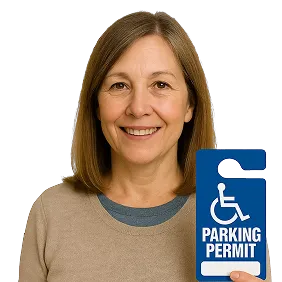

Disability Parking Permit for Sciatica
 by Areeba Imran
Last updated:


Sciatica is nerve pain caused by compression of the sciatic nerve, and severe cases may qualify you for a handicap placard. Sharp, shooting pain radiates from your lower back down through your leg, making everyday activities like walking, standing, and sitting sources of discomfort.
For people with severe sciatic nerve pain, the distance between a parking space and a building entrance creates a real barrier. It can prevent you from working, shopping, or attending medical appointments. Many don’t realize their condition may qualify them for a sciatica handicap placard. But you need to meet specific walking limitations first.
This guide explains how state agencies evaluate sciatica for placard eligibility. You’ll learn what physicians look for during certification. We’ll cover the 200-foot walking test that determines qualification. You’ll also discover how to work through your state’s application process and what documentation you need.
The main focus is understanding how your mobility limitations translate into placard eligibility. Let’s break down precisely what qualifies and how to get approved.
What Is Sciatica and How Does It Affect Mobility?
Sciatica is nerve pain caused by compression or irritation of the sciatic nerve. This nerve runs from your lower back through your hips and down each leg. When it gets pinched or inflamed, the pain can be sharp and debilitating.

The condition affects more than just comfort. It can make walking, standing, and sitting difficult or impossible. For some people, the pain is occasional. For others, it becomes a constant barrier to daily life.
Understanding Sciatic Nerve Pain
The sciatic nerve is the longest nerve in your body. When something presses on it, you feel pain along its path. That pain can shoot down your leg like an electric shock. You might also feel numbness, tingling, or muscle weakness.
According to Cleveland Clinic, symptoms can range from mild discomfort to severe pain that makes it hard to move. The intensity varies from person to person. Some people describe it as a dull ache. Others say it feels like a burning sensation or sharp stabbing pain.
What makes sciatica particularly challenging is how it affects your ability to walk. The pain often worsens with movement. Standing up from a chair can trigger a flare. Walking across a parking lot can become exhausting.
Common Causes of Sciatica
Several conditions can compress or irritate the sciatic nerve:

-
Herniated discs that press on nerve roots
-
Spinal stenosis that narrows the space around the nerve
-
Degenerative disc disease that changes spinal structure
-
Bone spurs that grow into nerve pathways
-
Piriformis syndrome where the muscle irritates the nerve
These conditions don’t always cause sciatica. But when they do, the impact on mobility can be severe. A herniated disc might press directly on the nerve root. Spinal stenosis can create ongoing pressure that worsens over time.
How Sciatica Limits Walking Ability
Sciatica can make every step painful. The pain often shoots down your leg when you put weight on it. This makes walking short distances feel like a major challenge. Some people can’t walk more than 50 feet without stopping.
Muscle weakness adds another layer of difficulty. When the nerve is compressed, it can’t send proper signals to your leg muscles. Your foot might drag or feel heavy. Balance becomes harder to maintain.
Chronic sciatica that lasts more than 12 weeks may meet state eligibility criteria for accessible parking. If you can’t walk 200 feet without severe pain or need to stop and rest, you might qualify. Understanding chronic pain and parking permits can help you determine if your condition meets the requirements.
Does Sciatica Qualify for a Handicap Placard If It Limits Walking 200 Feet?
Sciatica alone doesn’t automatically qualify you for a handicap placard. States evaluate how much your condition limits your walking ability, not just the diagnosis itself. At Parking MD, we help people understand whether their sciatic nerve pain meets state standards for accessible parking.
What matters most is function. Can you walk 200 feet without stopping? Does walking cause severe pain or put you at risk of falling? These questions drive the evaluation process.
State Eligibility Requirements for Sciatica
Most states use a 200-foot walking threshold as their baseline. According to California disability parking eligibility guidelines, you must be unable to walk this distance without stopping to rest. Some states also consider whether walking causes severe pain or poses safety risks.
Your diagnosis matters less than your documented limitations. A physician must certify that sciatica prevents you from walking typical parking lot distances safely. This certification forms the basis of your application.
States also look at whether your condition is temporary or permanent. Acute sciatica episodes may qualify for temporary placards. Chronic cases with nerve damage often meet permanent placard criteria.
Functional Limitations That Matter Most
Physicians assess several factors during your evaluation:

-
Walking distance before you need to stop and rest
-
Pain severity when standing or moving
-
Whether you use a cane, walker, or other assistive device
-
How often symptoms occur and how long they last
-
Impact on daily activities like grocery shopping or errands
Your doctor may also review imaging results. MRI scans showing nerve compression or herniated discs strengthen your case. Documentation of failed conservative treatments, like physical therapy or injections, also helps.
The evaluation focuses on real-world function. Can you safely cross a parking lot? Do you need frequent breaks? These practical questions matter more than test results alone.
When Sciatica Meets the Threshold
Chronic sciatica with documented nerve damage is more likely to qualify. Severe radiculopathy, where nerve compression causes weakness or numbness, often meets state standards. Failed conservative treatment also supports your application.
Post-surgical recovery may qualify for temporary placards. If you’re recovering from a discectomy or spinal fusion, your surgeon can certify short-term walking limitations. These placards typically last three to six months.
Understanding qualifying medical conditions helps you know where sciatica fits. Your physician evaluates whether your specific case meets your state’s functional requirements.
What Physicians Evaluate During Sciatica Placard Certification
Physicians don’t approve placard applications based on a diagnosis alone. They look at how sciatica affects your daily mobility. The evaluation focuses on whether you can walk safely and how far you can go without stopping. At Parking MD, we connect patients with licensed physicians who understand state-specific requirements and can complete this evaluation remotely.
Your doctor will review several factors during the certification process. These include your medical history, physical exam results, and diagnostic imaging. Each piece helps build a complete picture of your walking limitations.
Medical Documentation Requirements
Your physician starts by reviewing your medical history. This includes how long you’ve had sciatica and what treatments you’ve tried. Documentation of failed conservative care is critical. It shows that your condition is severe enough to limit mobility despite treatment.
Most states want to see proof that you’ve tried multiple approaches. This might include:
-
Physical therapy sessions over several weeks or months
-
Prescription pain medications or muscle relaxants
-
Epidural steroid injections or nerve blocks
-
Chiropractic care or other conservative treatments
If these treatments haven’t improved your walking ability, that strengthens your application. Your doctor will also note how long symptoms have lasted. Chronic sciatica that persists for months carries more weight than a recent flare-up.
Physical Examination Findings
The physical exam is where your doctor assesses functional limitations. They’ll watch how you walk and move. They’ll also perform specific tests to measure nerve involvement and pain severity.
The straight leg raise test is a standard part of the clinical diagnosis of sciatica. Your doctor lifts your leg while you lie flat. If this causes sharp pain down your leg, it suggests nerve compression. Other tests check your reflexes, muscle strength, and sensation in your legs and feet.
Your doctor will also observe your gait. Do you limp? Do you need to stop and rest after a short distance? Can you walk 200 feet without significant pain or instability? These observations matter more than the diagnosis itself.
Key physical findings that support placard approval include:
-
Positive straight leg raise test showing nerve irritation
-
Reduced reflexes in the affected leg
-
Muscle weakness that affects walking or standing
-
Abnormal gait or need for an assistive device
-
Pain that worsens with weight-bearing or walking
If you’re wondering whether a physician might decline your request, understanding when a doctor denies a placard can help you prepare for the evaluation.
Diagnostic Tests That Support Your Application
Imaging studies provide objective evidence of nerve compression. An MRI or CT scan can show herniated discs, spinal stenosis, or other structural problems. These images confirm that your pain has a physical cause.

Not every sciatica case needs imaging to qualify. But when available, these tests strengthen your application. They show the severity of nerve compression and help explain why conservative treatments haven’t worked.
Common diagnostic findings that support placard eligibility include:
-
Herniated disc pressing on the sciatic nerve
-
Spinal stenosis narrowing the nerve canal
-
Degenerative disc disease causing nerve irritation
-
Bone spurs or other structural changes
Your physician will combine all this information to certify whether your sciatica meets state criteria. The goal is to confirm that walking is genuinely difficult, painful, or unsafe for you.
Application Process for Sciatica Handicap Placard
Getting a sciatica disability parking permit starts with a medical evaluation. You need a licensed physician to confirm your walking limitations meet your state’s standards. Parking MD connects you with licensed doctors who can complete this evaluation through a secure telehealth visit.

Step-by-Step Application Guide
First, schedule an appointment with your doctor or use Parking MD’s online service. Your physician will assess how far you can walk without stopping. They’ll also check if you use assistive devices like a cane or walker.
Next, your doctor completes the medical certification section of your state’s form. According to the Illinois Secretary of State, this certification must document your specific mobility limitations. The form asks about walking distance, pain levels, and functional restrictions.
Then, submit the certified application to your state DMV. Most states charge between $0 and $25 for processing. Some states accept online submissions, while others need mail or in-person delivery.
Required Documentation and Forms
You’ll need your state’s official handicap placard application form. Your physician must sign the medical certification section. Some states also ask for proof of residency and a valid driver’s license or state ID.
The Mayo Clinic notes that documentation should reflect current treatment status and functional limitations. Bring recent medical records to your evaluation if available.
Processing Times and Renewal Requirements
Processing times vary by state but typically range from 2 to 6 weeks. Temporary placards are issued for conditions expected to improve within 6 months. Permanent placards are given for chronic sciatica that limits long-term mobility.
Most states need periodic renewal for permanent placards. Check your state’s specific renewal timeline to avoid expiration.
Managing Sciatica Beyond Accessible Parking
Sciatica treatment extends far beyond parking access. A disability parking permit helps reduce walking strain. But it works best when paired with medical care that targets the root cause.
Treatment Options That May Improve Mobility
Conservative treatments form the first line of defense. Physical therapy strengthens core muscles and improves flexibility. Anti-inflammatory medications reduce nerve irritation and pain.
Epidural steroid injections deliver targeted relief. They reduce inflammation around compressed nerves. Many patients see improvement within days of treatment.
Lifestyle changes also play a role. Weight loss reduces spinal pressure. Better posture prevents nerve compression during daily activities.
Surgery becomes an option when conservative care fails. Microdiscectomy removes disc material pressing on nerves. Laminectomy creates more space for the spinal cord.
When Sciatica Does Not Qualify
Mild sciatica rarely meets state thresholds. According to the Massachusetts placard eligibility criteria, you must show substantial walking limitations. Occasional pain doesn’t count.
Intermittent symptoms also fall short. If you can walk 200 feet without stopping, most states won’t approve your application. The limitation must be consistent and documented.
Your physician evaluates functional impact. They look at how far you walk before pain forces you to stop. They check whether you need assistive devices for safety.
Combining Medical Treatment with Accessibility Accommodations
A handicap placard addresses one piece of the puzzle. It shortens walking distances to building entrances. But it doesn’t treat the underlying nerve compression.
Regular follow-up visits track your progress. Your doctor adjusts medications as symptoms change. They may recommend additional imaging if pain worsens.
Pain management works alongside parking access. Together, they help you stay active and independent. Both support your mobility while treatment takes effect.
Conclusion
Sciatica can limit your ability to walk, stand, and move through daily life. When sciatic nerve pain restricts your mobility to less than 200 feet, a handicap placard offers practical support. You need medical certification from a licensed physician who evaluates your functional limitations.
This guide covered what sciatica is and how it affects mobility. You learned how states evaluate walking limitations for placard eligibility. We explained what physicians assess during certification. You also discovered the application process and treatment options beyond parking access.
Don’t let chronic sciatica mobility limitations keep you from the places you need to go. A sciatica disability parking permit can reduce walking distance and help you maintain independence. The right support makes daily activities more manageable.
If sciatica limits your ability to walk safely, Parking MD connects you with licensed physicians who evaluate your condition. Start your evaluation today to see if you qualify for a handicap placard and take the first step toward easier access.
Frequently Asked Questions
What is sciatica and what causes the pain?
Sciatica is nerve pain from compression or irritation of the sciatic nerve. This nerve runs from your lower back through your hips and down each leg. When something presses on it, you feel sharp pain along its path. Common causes include herniated discs, spinal stenosis, degenerative disc disease, bone spurs, and piriformis syndrome. The pain can shoot down your leg like an electric shock. You might also feel numbness, tingling, or muscle weakness in the affected leg.
How long does sciatica typically take to go away?
Sciatica typically takes 4 to 8 weeks to progress through the initial healing phases. Complete recovery may take an additional 1 to 4 months depending on activity levels and treatment adherence. Many individuals report feeling better within 1 to 2 weeks or after 2 to 3 visits to a healthcare provider. Those who complete all phases of healing—including pain relief and restoring normal movement—have a minimal chance of recurrence.
Can sciatica qualify you for a handicap placard?
Yes, sciatica may qualify for a disability parking permit if it causes severe leg pain, weakness, sensory loss, or instability that materially limits safe walking. Sciatica alone doesn't automatically qualify you—you must meet specific walking limitations first. Chronic sciatica lasting more than 12 weeks that prevents you from walking 200 feet without severe pain or stopping to rest may meet state eligibility criteria. A licensed physician must certify your functional limitations.
What is the 200-foot walking test for placard eligibility?
The 200-foot walking test measures whether you can walk this distance without stopping or experiencing severe pain. This distance equals about two-thirds of a football field or roughly 60 steps. Many states use this as the common qualifying threshold—if you cannot walk 200 feet without stopping to rest, you may qualify for a handicap placard. Your doctor must document this limitation during your certification exam. The test focuses on your actual walking ability, not diagnosis alone.
How does sciatica affect your ability to walk?
Sciatica makes every step painful because pain shoots down your leg when you put weight on it. Walking short distances becomes a major challenge. Some people can't walk more than 50 feet without stopping. Muscle weakness adds another problem because the compressed nerve can't send proper signals to your leg muscles. Your foot might drag or feel heavy. Balance becomes harder to maintain. These limitations can prevent you from working, shopping, or attending medical appointments.
What documentation do you need for a sciatica placard application?
You need physician certification that documents your walking limitations. Your doctor must confirm you can't walk 200 feet without severe pain or stopping to rest. The certification should include your diagnosis, symptom duration, and specific mobility restrictions. Medical records showing chronic sciatica lasting more than 12 weeks support your application. Your physician needs to complete your state's official certification form. Some states require additional documentation like imaging results or treatment history. The application process varies by state.
Do I need a specific diagnosis to apply for a handicap placard?
A diagnosis alone does not guarantee approval for a handicap placard. The application must explain how sciatica affects your mobility and safety. A licensed clinician must certify that your condition produces qualifying functional limitations. States evaluate how much your condition limits your walking ability, not just the diagnosis itself. The strongest applications explain the functional impact—whether you can safely walk typical parking lot distances and whether walking causes severe pain or puts you at risk of falling.
How do I apply for a handicap parking permit with sciatica?
You typically need to complete an application from your state's DMV, have a healthcare provider certify your mobility limitations, and submit the application either by mail or in person. First, schedule an appointment with your doctor or use an online service. Your physician will assess how far you can walk without stopping and whether you use assistive devices. Your doctor completes the medical certification section of your state's form. Then submit the certified application to your state DMV. Processing times vary by state but typically range from 2 to 6 weeks.

Meet the author
Areeba Imran
I am a healthcare professional and seasoned medical writer with 13+ years of experience across health, wellness, and clinical content. My work focuses on delivering trustworthy, evidence-based information that empowers readers to make informed decisions. With a keen interest in innovation and evolving areas of patient care, I bring a modern perspective to today's healthcare setup.
Get an Accessible Parking Permit Evaluation in Minutes.