
Can You Get a Handicap Placard for Pregnancy?
 by Nida Hammad
Last updated:


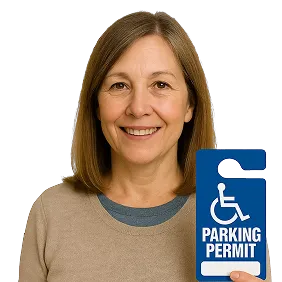
A handicap placard pregnancy permit isn’t easy just because you’re expecting. You need a recorded limit on how you can move caused by pregnancy issues. Conditions like severe pelvic girdle pain can qualify you for a temporary disability parking permit during pregnancy. Preeclampsia can also qualify you for a temporary disability parking permit during pregnancy. These conditions may require bed rest. High-risk pregnancy restrictions can also qualify you for this permit. The standard is clear: you must show functional impairment, not solely pregnancy status.
This guide explains which pregnancy issues qualify for a handicap placard pregnancy permit. Your doctor must document your needs. You’ll fill out the form. You’ll gain parking rights. We cover state rules, costs, and the difference between short-term and long-term placards. This helps you get the access you need during your most challenging months.
The request process takes 2-4 weeks in most states. You can complete it while managing your pregnancy complications. Let’s start with the core question: does your specific condition qualify?
Does Pregnancy Qualify for a Handicap Placard?
Pregnancy alone doesn’t by itself qualify you for a handicap placard pregnancy permit. The key factor is limited ability to move, not pregnancy status itself. You must show you have a lot of trouble walking or moving to meet the rules.
Normal Pregnancy vs. Complicated Pregnancy
Pregnancy alone does not qualify you for a temporary disability parking permit. Most pregnant women maintain full mobility throughout their pregnancy. They can walk, stand, and move without major limitation.
Difficult pregnancy changes the whole situation. When pregnancy causes severe mobility restrictions, you may qualify. The permit depends on your daily physical limits, not just being pregnant.
Pregnancy Complications That Commonly Qualify
Several pregnancy complications meet the qualifying medical conditions for disability parking permits. These issues seriously limit your power to walk or stand safely.

Common qualifying complications include:
-
Pelvic girdle pain (symphysis pubis dysfunction) that deeply limits walking
-
High-risk pregnancy needing doctor-ordered less movement or bed rest
-
Preeclampsia with severe symptoms affecting balance and mobility
-
Placenta previa requiring restricted movement to prevent complications
-
Multiple pregnancy (twins or triplets) with noted severe mobility limitation
-
Pregnancy after joint surgery or bone surgery affecting movement
Pre-existing conditions that qualified you before pregnancy continue to qualify during pregnancy. This includes multiple sclerosis, severe arthritis, or heart disease.
The Functional Mobility Standard
According to the Washington State Department of Licensing, you may be eligible for a handicap placard during pregnancy if your mobility is limited. You must prove you can’t walk 200 feet without stopping to rest. Otherwise, you need mobility devices like a wheelchair or walker.
A pregnant woman who walks often doesn’t qualify. Your healthcare provider must document the specific limitation. Your doctor will explain how your pregnancy complications restrict your movement. They will also explain why you need accessible parking.
Temporary vs. Permanent Placard for Pregnancy
You can get a temporary disability parking permit during pregnancy, not a permanent one. The red placard addresses mobility challenges during pregnancy. It’s not meant for routine pregnancy without complications.
Most states issue temporary permits valid for 3-6 months. The length depends on your own issue and what each state requires. Your doctor decides the first period based on your medical needs.
Red Temporary Placards for Pregnancy Complications
The state designs red placards for short-term limits on moving. Severe preeclampsia, gestational diabetes with neuropathy, or pelvic girdle pain may qualify you for a handicap placard during pregnancy. Your healthcare provider must certify that your condition limits walking ability.
The temporary placard application process needs medical records. Your doctor explains how pregnancy complications affect your mobility. This proof shows your need for easy-to-use parking.
Duration and Renewal During Pregnancy
First permits usually last 3-6 months. You can renew if complications persist beyond this period. Your provider must confirm you still need it for each renewal.
Keep close track of your expiration date. Start renewal 30 days before it expires. This prevents gaps in parking access during your pregnancy.
Post-Delivery Placard Status
Your permit ends after birth unless issues keep going. Most pregnancy-related permits end once you give birth. But, some conditions after birth may lengthen the time it’s valid.
Severe diastasis recti affecting mobility can qualify for renewal. C-section healing with major limits on how you can move may also extend your permit. Issues after surgery needing more time to heal warrant continued access.
Your healthcare provider must confirm any extension after giving birth. They document how your condition still limits walking ability. Without medical proof, your permit becomes useless after the first expiration date.
How to Apply for a Handicap Placard During Pregnancy
Getting a handicap placard pregnancy permit requires a few simple steps. The process takes 2-4 weeks in most states. You can complete it from home using telehealth services.
Step 1: Medical Certification
Schedule an appointment with your OB/GYN or primary care provider. Discuss your mobility limitations during pregnancy. Your doctor decides if you qualify for a temporary disability parking permit during pregnancy.
Parking MD’s online providers can finish the review without an in-person visit. This saves you the trip to a medical office. The process usually takes 24-48 hours for approval through online services.
Step 2: Complete Application
Download the temporary disability parking permit application from your state DMV website. Fill out the personal details sections closely. You’ll need your driver’s license number and contact details.
Knowing the pregnancy parking permit application process helps you skip common errors. Have your healthcare provider fill out and sign the medical confirmation part. This verifies your need for accessible parking.
Step 3: Submit Documentation
Submit your application with medical certification and required fees to the DMV office. Many states now accept online submissions. This gets rid of the need for in-person visits during pregnancy.
Keep copies of all documents for your records. Track your submission to ensure it arrives safely.
Step 4: Receive Your Placard
It usually takes 2-4 weeks after submitting for processing. Some states offer faster processing for urgent medical needs. You’ll receive your red temporary placard by mail.
Display the placard correctly when parking in marked spaces. The permit remains valid until the expiration date printed on it.
What Your Doctor Needs to Document
Your healthcare provider must confirm the limited ability to move caused by your pregnancy issue. Simply noting “pregnant” won’t qualify you for a temporary disability parking permit pregnancy. The paperwork must explain how the condition limits your movement.
According to WebMD, physicians must evaluate and document precise mobility restrictions. Your doctor must say if you can’t walk 200 feet without stopping, need help, or have other limits.

Specific Mobility Limitation Requirements
The obstetric complication causing your limitation must be distinctly stated. For example, severe preeclampsia, gestational diabetes with neuropathy, or pelvic girdle pain. Your provider must explain why this issue greatly limits your walking.
Common qualifying limitations include:
-
Cannot walk 200 feet without rest or assistance
-
Requires wheelchair, walker, or crutches for mobility
-
Has very bad balance problems or risk of falling
-
Suffers from extreme fatigue affecting safe walking
Medical Certification Details
Your doctor must provide their signature, license number, and contact information on the handicap placard application. Incomplete medical sections cause most application delays. Make sure your provider fills out every field fully before you submit.
Expected Duration Documentation
The expected duration typically covers the remainder of your pregnancy through delivery. Your doctor will guess how long you’ll need parking help. Keep copies of all your documents. This helps if questions come up later.
Cost of Handicap Placards for Pregnancy by State
Getting a handicap placard pregnancy permit doesn’t have to strain your budget. Many states offer free or low-cost ways for pregnant women to get the parking they need.
Free Temporary Permit States
Many states provide free temporary disability parking permits for pregnancy. New York, Illinois, and Michigan lead the way with no-cost permits. These states recognize that pregnancy complications shouldn’t come with extra financial burden.
Other states giving free permits include Pennsylvania, Ohio, and Washington. You’ll only pay for the medical certification appointment. The permit itself costs nothing.
Low-Cost State Fees
Some states charge minimal fees for temporary permits. California charges $6 for temporary placards. Louisiana keeps fees lowest at $3.
Texas charges $5 for temporary permits. Florida’s $15 fee is still cheap compared to daily parking at medical places. These low fees cover the work while keeping permits easy to get.
Additional Costs to Consider
Beyond state fees, you’ll face other expenses. Medical certification appointments may have copays from $20-$50 depending on your insurance. Some healthcare providers charge documentation fees for completing disability forms.
Online services like Parking MD offer easy virtual reviews with clear prices. Total costs typically range from $0-$50 including application fees and medical certification. Some states might offer fee waivers for low-income people.
New permits for lost or broken placards usually cost $5-$15. Keep your permit safe to avoid these extra charges.
State-Specific Notes on Pregnancy and Handicap Placards
States with Specific Pregnancy Provisions
A few states have rules recognizing pregnancy issues in their disability parking laws. Minnesota allows pregnant people with medical issues to qualify for short-term handicap permits. This makes the application process clearer for expectant mothers facing mobility challenges.
Most states don’t have pregnancy-specific language in their laws. However, this doesn’t mean pregnant women can’t qualify. They must meet the same mobility rules as other applicants.
General Mobility Limitation Standards
Most states use the general mobility limitation standard without specific pregnancy language. California, Texas, Florida, and New York use standard criteria for temporary disability parking permits for pregnancy complications. Your doctor must say your condition makes it hard to walk 200 feet without a break.
For instance, a woman with bad pregnancy sciatica might qualify if she can’t safely walk to her car. Likewise, someone with high blood pressure from pregnancy needing many doctor visits could meet the rules. The main thing is showing how your issue affects how you move each day.
Where to Find Your State’s Requirements
State DMV websites provide specific application forms and medical certification requirements. Some states require specific forms for temporary vs. permanent permits. How long it takes and how to renew varies a lot by state.
Check your state’s DMV website for exact requirements and fee schedules. Review state-specific requirements for handicap placard applications to understand the required documentation. You can find the qualifying conditions, required physician signatures, and processing timelines for handicap placards on most states’ official websites.
Your Parking Rights and Privileges During Pregnancy
A handicap placard during pregnancy provides parking rights that make daily tasks easier. You can use all handicap spaces with the wheelchair symbol. Most areas give free parking meter use, but check the local rules. More time in timed zones gives you more freedom when you need it.
Where You Can Park with a Pregnancy-Related Placard
Your pregnancy parking permit works in all 50 states, no matter where it was issued. This means you can travel freely without worrying about parking access. The placard transfers between vehicles when you’re present as either driver or passenger.
According to the Missouri Department of Revenue, temporary disability parking placards are for conditions that are expected to last a short time. This includes pregnancy complications. You can park in any space displaying the wheelchair symbol. Time-restricted zones often allow extended stays with your placard. Some places let you park at meters for free. This saves you money when you have many doctor visits.
Proper Placard Display and Usage
Always hang your placard so officers can see the expiration date. Remove it while driving to avoid obstructing your vision. This simple step prevents accidents and keeps you safe on the road.
Only use your placard when you’re present in the vehicle. Never lend it to family or friends when you’re not with them. Tell the DMV and police right away if your placard is lost or stolen. This stops others from misusing it.
Conclusion
Getting a handicap placard pregnancy permit requires documented mobility limitations from pregnancy complications. Pregnancy alone doesn’t qualify you. You need medical certification showing functional impairment that limits walking.
This guide covered which complications qualify for a temporary disability parking permit pregnancy. You learned how to apply through your state’s DMV. We explained what your doctor must document. You now know the costs and state-specific rules.
Start the application process early. Don’t wait until your ability to move becomes greatly limited. Talk to your OB-GYN about your symptoms. Get proper documentation before your condition worsens.
Parking MD can finish your review and medical confirmation within 24-48 hours. You don’t need an in-person visit. Our telehealth service connects you with licensed physicians who understand pregnancy complications. Act now to get safe parking during your hardest months.
Frequently Asked Questions
Can you get a handicap placard while pregnant?
Yes, but only if pregnancy complications cause severe mobility limitations. Normal pregnancy doesn't qualify you for a handicap placard pregnancy permit. You need documented conditions like severe pelvic girdle pain, preeclampsia, or high-risk pregnancy requiring bed rest. Your doctor must certify you can't walk 200 feet without stopping or need mobility devices. The standard focuses on functional impairment, not pregnancy status alone. Most states issue temporary red placards valid for 3-6 months when complications restrict your movement.
What pregnancy complications qualify for a temporary disability parking permit?
Several complications meet the criteria for pregnant handicap parking permits. Pelvic girdle pain that severely limits walking qualifies. High-risk pregnancy requiring doctor-ordered bed rest or reduced activity meets the standard. Preeclampsia with severe symptoms affecting balance and mobility qualifies. Placenta previa requiring restricted movement to prevent complications works. Multiple pregnancy with documented severe mobility limitation can qualify. Pre-existing conditions like arthritis or heart disease that worsen during pregnancy continue to qualify. Your healthcare provider must document how these conditions specifically restrict your ability to walk or stand safely.
How long does it take to get a handicap placard for pregnancy?
The application process takes 2-4 weeks in most states. You start by getting medical certification from your doctor documenting your mobility limitation. Then you submit the completed form to your state's motor vehicle department along with required fees. Processing times vary by state and application volume. Some states offer expedited processing for urgent medical needs. You can complete the entire process while managing pregnancy complications. Plan ahead if you know you'll need accessible parking. Don't wait until mobility becomes severely restricted to start your application.
Is a pregnancy handicap placard temporary or permanent?
Pregnancy complications qualify you for a temporary placard only, not a permanent one. Most states issue temporary permits valid for 3-6 months. The red temporary placard addresses mobility challenges during pregnancy and recovery. Your doctor determines the initial period based on your specific condition. You can renew if complications continue beyond the original expiration date. Permanent blue placards require conditions lasting more than six months. Since pregnancy is time-limited, you'll always receive a temporary disability parking permit pregnancy option. The placard expires after your specified period ends.
What does my doctor need to document for a handicap placard pregnancy application?
Your healthcare provider must certify specific functional limitations on the application form. They document that you can't walk 200 feet without stopping to rest. Or they certify you need mobility devices like a wheelchair or walker. The form requires details about your pregnancy complication and how it restricts movement. Your doctor explains why accessible parking is medically necessary. They specify the duration you'll need the permit. Generic statements about pregnancy don't work. The documentation must show clear mobility impairment caused by complications, not routine pregnancy symptoms.
Can I use a handicap placard pregnancy permit in any state?
Yes, temporary disability parking permits issued in one state work in all other states. Interstate recognition protects your parking rights when you travel. You can use your temporary placard pregnancy permit in any accessible parking space nationwide. The placard must be properly displayed according to local rules. Hang it from your rearview mirror when parked. Remove it before driving for safety. Each state honors valid placards from other jurisdictions. This reciprocity ensures you maintain accessible parking access during pregnancy complications regardless of where you travel for medical care or personal reasons.

Meet the author
Nida Hammad
With over 5 years of experience in accessibility content, I create clear resources on handicap parking permits, state requirements, and applications.
Get an Accessible Parking Permit Evaluation in Minutes.