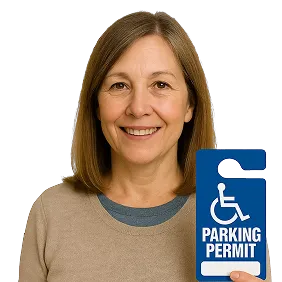

Handicap Placard for Autism
 by Nida Hammad
Last updated:


According to the CDC, 1 in 36 children in the United States has autism spectrum disorder. Many face safety challenges that qualify them for a handicap placard for autism. If your child experiences elopement risks, sensory overload, or behavioral safety concerns in parking areas, an autism disability parking permit can provide essential relief during vulnerable moments.
Most families don’t realize autism qualifies for disability parking based on safety navigation standards rather than walking distance alone. The application process seems confusing when the disability isn’t visible. You need to understand which autism-related safety concerns qualify, what medical documentation doctors must provide, and how to navigate your state’s specific requirements.
This guide explains everything about obtaining a handicap placard for autism through safety navigation criteria. You’ll learn qualifying conditions specific to autism spectrum disorder, required medical documentation, state-by-state application processes, costs, and how to use your permit correctly. We’ll also cover renewal procedures, addressing invisible disability challenges, and special considerations for children with autism.
Let’s start with how autism qualifies under safety navigation standards and what makes your situation eligible for parking accommodations.
Understanding Handicap Placards for Autism Based on Safety Navigation
What Makes Autism Qualify Under Safety Navigation Standards
Autism qualifies as an invisible disability when it creates significant risks in parking environments. The focus is on safety navigation, not walking distance limitations.
Key qualifying factors include documented elopement risk and sensory processing challenges. Behavioral safety concerns and inability to navigate parking areas safely also qualify. Documentation must show how autism creates dangerous situations in these environments. This is covered in detail in autism disability parking placard guidelines.
Temporary vs. Permanent Permits for Autism
Both temporary and permanent placards are available for autism. The choice depends on whether symptoms are expected to improve or remain lifelong.
Temporary permits typically last six months to two years. Permanent permits require renewal every few years but don’t expire based on symptom improvement. Your physician determines which type fits your situation best.
How Autism Placards Differ from Mobility-Based Permits
Autism placards provide identical parking privileges to other disability permits. You get access to designated spaces and meter exemptions.
The key difference lies in qualification criteria. Mobility permits focus on physical limitations and walking distance. Autism permits focus on safety navigation challenges instead.
Your documentation must demonstrate specific safety risks. This includes elopement tendencies, sensory overload in parking areas, or behavioral concerns. The permit addresses cognitive and behavioral safety, not physical mobility alone.
Safety Navigation Conditions and Symptoms That Qualify
Autism creates unique safety challenges in parking environments that many people don’t recognize. These risks go beyond physical mobility. They involve how someone processes their surroundings and responds to danger.
Understanding qualifying medical conditions helps families secure the parking access they need. A handicap placard for autism addresses real safety concerns that put individuals at risk every day.

Elopement and Wandering as Safety Navigation Risks
Elopement poses one of the most dangerous risks for people with autism. This means suddenly running or wandering away from caregivers without warning. It happens most often in busy, overwhelming environments like parking lots.
Your child may qualify if they have a documented history of these behaviors:
-
Running into traffic lanes without checking for cars
-
Darting away from caregivers toward interesting stimuli
-
Entering dangerous situations in parking areas
-
Inability to recognize moving vehicle hazards
According to the Centers for Disease Control and Prevention, nearly half of children with autism attempt to elope. Many incidents occur in parking lots where vehicles move unpredictably.
An autism elopement parking permit reduces exposure time in these high-risk zones. Closer parking means less distance to cover. That translates to fewer opportunities for dangerous wandering episodes.
Sensory Processing Dangers in Parking Environments
Parking lots assault the senses. Car engines roar. Horns honk. Bright lights flash. For someone with autism, this sensory overload creates genuine safety risks.
Severe sensory processing issues can cause dangerous reactions:
-
Freezing in active traffic lanes when overwhelmed
-
Running from overwhelming stimuli into unsafe areas
-
Covering ears and closing eyes while crossing traffic
-
Inability to process environmental dangers during overload
These aren’t behavioral choices. They’re involuntary responses to sensory assault. A person might stop moving entirely when sounds become too intense. They can’t process danger signals while their brain struggles with sensory input.
Research from the Autism Speaks organization shows that over 90% of people with autism experience sensory processing differences. Many find parking environments particularly challenging due to unpredictable stimuli.
Behavioral Safety Concerns That Create Navigation Hazards
Behavioral challenges in autism often intensify in stressful environments. Parking lots trigger meltdowns that prevent safe navigation to building entrances.
These behavioral patterns create legitimate safety navigation risks:
-
Meltdowns triggered by environmental stimuli that stop forward movement
-
Inability to follow caregiver directions during behavioral episodes
-
Physical resistance to moving through crowded or noisy spaces
-
Self-injurious behaviors that emerge in overwhelming settings
A meltdown isn’t a tantrum. It’s a neurological response to overwhelming input. During these episodes, the person can’t process safety information or respond to danger.
An autism disability parking permit minimizes exposure to these triggers. Shorter distances mean less time in the environment that causes distress.
Comorbid Conditions Affecting Safe Navigation
Autism rarely occurs alone. Many people have additional conditions that compound parking safety risks. These comorbid conditions strengthen the case for autism parking placard requirements.
Common conditions that increase navigation dangers include:
-
Epilepsy that causes unpredictable seizures in stressful environments
-
Severe anxiety that triggers panic responses near traffic
-
ADHD that impairs impulse control around moving vehicles
-
Motor coordination difficulties that affect walking stability
Someone with autism and epilepsy faces double risk. Sensory overload might trigger a seizure in a busy parking lot. That person needs immediate access to safe indoor environments.
Severe anxiety combined with autism creates urgent safety needs. Panic attacks in parking areas prevent rational navigation decisions. The person might freeze, run, or move unpredictably into traffic.
These comorbid conditions aren’t rare. Studies show that 70% of people with autism have at least one additional diagnosis. Many have multiple conditions that affect safe parking navigation.
The need for quick access during behavioral crises or medical emergencies is real. An invisible disability parking permit autism provides that critical safety buffer when seconds matter most.
Required Medical Documentation for Safety Navigation Certification
Getting a handicap placard for autism requires specific medical documentation that explains safety navigation challenges. Your doctor must certify how autism symptoms create real parking environment risks. This goes beyond listing a diagnosis or measuring walking distance.
Most states accept certification from licensed physicians, psychiatrists, psychologists, or nurse practitioners. These professionals can evaluate autism-related safety concerns and complete your application. The key is finding someone who understands how autism affects navigation in public spaces.

What Your Doctor Must Certify About Safety Risks
Your medical certification must describe specific safety navigation limitations. Doctors need to explain how autism symptoms create hazards in parking areas. This includes elopement tendencies, sensory overload responses, or behavioral safety concerns.
For example, a child who bolts toward moving cars when overwhelmed needs documented elopement history. An adult who experiences severe sensory crises in crowded parking lots requires detailed incident reports. These real safety risks justify your need for closer parking access.
Understanding what medical records support your application helps you gather the right documentation before starting. Your certification should connect autism symptoms directly to parking environment dangers.
Specialists Who Can Sign Safety Navigation Applications
Some states require certification from developmental pediatricians or autism specialists. These professionals can better attest to safety navigation risks specific to autism spectrum disorder handicap parking needs. They understand how autism affects spatial awareness and impulse control.
Telehealth services like Parking MD connect you with licensed physicians who specialize in autism disability parking permit evaluations. This eliminates office visits while ensuring proper safety navigation criteria assessment. You can complete your evaluation from home without added stress.
Supporting Documentation That Strengthens Safety-Based Applications
Strong applications include multiple types of supporting evidence. Behavioral assessments from therapists show ongoing safety concerns. Therapy reports document intervention strategies for elopement or sensory issues.
Incident documentation proves real-world safety risks. This might include school safety plans, police reports from elopement incidents, or emergency room visits. The more evidence you provide, the stronger your case becomes.
Your documentation package should tell a complete story. It must show why standard parking distances create genuine safety hazards for you or your child. This evidence-based approach helps DMV reviewers understand your specific needs.
State-by-State Application Process and Requirements
Getting a handicap placard for autism requires understanding your state’s specific rules. Each state manages its own disability parking program. The process varies by location.
How to Apply in Your State
Start by downloading your state’s disability parking permit application from the official DMV website. You can find detailed state-specific requirements for each jurisdiction. Complete the applicant information section carefully.
Use the disabled person’s details, not the caregiver’s information. This matters for legal compliance. Many parents make this mistake when applying for their autistic children.
Have a licensed healthcare provider complete the medical certification section. They must describe safety navigation limitations clearly. The doctor should explain specific risks in parking environments, such as autism elopement dangers or sensory overload issues.
Online vs. In-Person Application Options
Most states now offer online submission portals. These typically process faster than mail applications. You can upload documents directly and track your application status.
In-person applications work well if you need immediate assistance. Visit your local DMV office with completed forms. Staff can answer questions and verify your documentation on the spot.
Mail submissions remain available in all states. Send your completed application with medical certification to your state’s designated office. Use certified mail to track delivery and confirm receipt.
Processing Times and Expedited Options
Most states process applications within 2-4 weeks. Online submissions typically process faster than mail. Some states complete digital applications in 7-10 business days.
Several states offer temporary permits or receipts for immediate use. You can park legally while waiting for your permanent autism disability parking permit. This helps families with urgent safety concerns.
Contact your DMV about expedited processing if needed. Explain urgent safety concerns or documented dangerous incidents. Some states prioritize applications involving children with severe elopement risks.
Cost of Autism Disability Parking Permits by State
Most states offer free or low-cost autism disability parking permits to ensure families can access essential parking accommodations. Understanding your state’s fee structure helps you budget for the application process and identify potential savings.
Free Permit States
Many states provide free permanent disability parking permits for autism and other qualifying conditions. California, New York, Illinois, and Michigan lead this group. These states recognize that families managing autism already face significant medical expenses.
New York offers both temporary and permanent permits at no cost. Illinois follows the same approach. Michigan provides free permits across all categories. This eliminates financial barriers for families seeking accessible parking.
Low-Cost Application Fees
Some states charge minimal fees for temporary permits while keeping permanent permits free. Texas charges $5 for temporary permits but waives fees for permanent ones. Virginia and Louisiana maintain similar structures at $3-5.
Florida charges $15 for temporary permits to cover administrative processing costs. This remains affordable compared to daily parking fees at therapy centers and medical facilities. California charges $6 for temporary permits while offering free permanent options.
Fee Waivers and Financial Assistance
Veterans with autism may qualify for fee waivers regardless of standard state fees. Many states offer reduced costs or complete waivers for low-income families. You can request these accommodations during the application process.
According to Children’s Hospital of Philadelphia, medical certification costs vary by provider. Telehealth options often cost less than traditional office visits. This helps families save on both permit fees and medical evaluation expenses.
How to Use Your Autism Handicap Placard Correctly
Getting your autism disability parking permit is just the first step. Using it correctly protects your rights and ensures access remains available for everyone who needs it.

Parking Privileges and Rights
Your autism parking placard grants access to all designated handicap spaces marked with the International Symbol of Access. These spaces are available nationwide, regardless of which state issued your permit.
Most states provide parking meter exemptions for permit holders. However, you should verify local regulations before assuming free parking. Some cities maintain specific rules about meter fees even with valid permits.
The permit travels with you rather than staying with one vehicle. You can use it in any car when you’re present, whether driving or riding as a passenger. This flexibility helps families manage transportation needs for autistic children who require accessible parking.
Proper Display and Usage Rules
According to the New York DMV, you must hang the placard from your rearview mirror with the expiration date and permit number visible to enforcement officers. This ensures officials can verify your permit’s validity at a glance.
Remove the placard while driving to avoid obstructing your view. Leaving it hanging can result in traffic violations and safety hazards. Store it flat away from direct sunlight when not in use to prevent fading and damage.
The permit holder must be present in the vehicle when parking in designated handicap spaces. This rule applies even when parking for brief errands or quick stops.
Common Mistakes to Avoid
Never lend your placard to others, even family members, when the permit holder isn’t present. This constitutes misuse and can result in significant fines or permit revocation.
Keep your permit ID card with you at all times. Report any loss or theft immediately to your DMV to prevent unauthorized use. Check the expiration date monthly to ensure continued validity.
Don’t use expired permits or attempt to alter your placard in any way. These actions violate disability parking laws and reduce access for those who genuinely need these spaces.
Addressing Invisible Disability Challenges and Public Perception
Autism qualifies as an invisible disability for handicap placard eligibility when it creates safety navigation limitations. You don’t need mobility impairments to qualify. Many people with autism face challenges like elopement, sensory overload, or difficulty processing complex parking environments.
Handling Questions About Your Safety-Based Placard
You’re not required to explain your disability to strangers. If someone questions your autism disability parking permit use, you can simply state you have a valid permit. Some people carry awareness cards explaining autism-related safety navigation needs, but this is optional.
According to federal ADA accessible parking protections, your right to use designated parking with a valid permit is protected. Private property owners must honor valid state-issued disability parking permits regardless of qualifying criteria.
Educating Others About Autism as a Safety Navigation Disability
Autism spectrum disorder handicap parking addresses safety concerns, not just mobility. Elopement risks, sensory processing challenges, and navigation difficulties all qualify. These conditions can make parking lots dangerous without accessible spaces near building entrances.
If you choose to educate others, focus on safety navigation disability parking concepts. Explain how autism elopement parking permits help prevent dangerous situations. Many people don’t realize invisible disabilities qualify for parking accommodations.
Your Legal Rights and Protections
Your placard is valid across all 50 states. It doesn’t matter where it was issued or whether it’s based on mobility or safety navigation standards. Document any harassment or discrimination incidents and report them to local authorities immediately.
The Americans with Disabilities Act protects your right to accessible parking. You don’t owe anyone an explanation about your invisible disability parking permit autism qualification. Your medical provider certified your need, and that’s what matters legally.
Renewal, Replacement, and Transitioning Between Permit Types
Autism disability parking permits require regular renewal to maintain your parking access. Understanding the renewal timeline helps you avoid gaps in coverage.
When and How to Renew Your Autism Placard
Temporary autism placards typically expire within 6 months to 1 year. You need renewal if safety navigation concerns persist beyond the initial period.
Permanent placards usually expire every 2-6 years depending on your state. Start the renewal process 60 days before expiration to avoid gaps in parking access.
Renewal requires new medical certification confirming continued safety navigation limitations from autism. Your doctor must document how autism-related challenges still affect your ability to navigate parking areas safely.
Many states now offer online renewal options for greater convenience. According to the California DMV, you can complete most renewal steps through their online portal without visiting an office.
Replacing Lost or Stolen Permits
Report lost or stolen permits immediately to local police and your DMV to prevent misuse. This protects you from liability if someone uses your permit illegally.
Replacement permits typically cost $5-15 and require completing a replacement form with identification. Most states process replacements within 3-5 business days.
Bring your ID and disability documentation to your local DMV office. Some states offer same-day temporary permits while processing your permanent replacement.
Transitioning from Temporary to Permanent Permits
If autism-related safety navigation concerns haven’t improved after maximum temporary permit renewals, apply for a permanent permit. This prevents repeated renewal paperwork every few months.
Your doctor must certify that the condition is permanent or expected to last more than 6 months. The application process mirrors the initial temporary permit but requires different medical documentation.
Permanent permits provide the same parking privileges but require less frequent renewal. This gives families with autistic children long-term parking security for safety navigation needs.
Special Considerations for Children with Autism
Parents or legal guardians apply for a handicap placard for autism on behalf of minor children who meet safety navigation criteria. The placard is issued in the child’s name. However, caregivers can use it when transporting the child to appointments or activities.
Applying for Safety Navigation Placards for Minor Children
Your child’s physician must document specific safety navigation concerns on the application. These include elopement history, sensory triggers that create dangerous responses, or behavioral challenges in parking environments.
The autism disability parking permit focuses on safety risks rather than physical mobility alone. For instance, a child who bolts toward moving cars when overwhelmed qualifies based on safety navigation needs. Children with severe sensory sensitivities to parking lot noise or crowds also meet criteria.
School and Therapy Transportation Needs
Placards help with safe drop-off and pick-up at schools, therapy centers, and medical appointments. Parking proximity reduces transition stress and meltdown risks for autistic children.
Close parking minimizes exposure to dangerous situations. Your child faces fewer sensory triggers and less time in unpredictable environments. This protection matters most during high-stress transitions between locations.
Transitioning Permits as Children Grow
As children grow, reassess whether they still meet qualifying safety navigation disability parking criteria. Some symptoms improve with therapy and maturity.
Teenagers with autism may need their own permits as they begin driving independently. Focus on their ability to safely navigate parking areas alone. Their permit requirements shift from caregiver transport to independent mobility assessment.
Real Family Experiences: How Safety Navigation Placards Improve Daily Life
Real families show how autism placards transform daily safety. These stories reveal the life-changing impact of accessible parking.
Elopement Prevention Success Stories
Maria’s 8-year-old son has severe elopement tendencies. He ran into traffic twice in parking lots before they got their placard.
The closer parking spaces give her family critical extra seconds. They can safely exit the vehicle before he unbuckles and runs. This prevents dangerous situations that once happened weekly.
She parks near cart returns now. The physical barriers add another layer of protection. Her stress levels dropped significantly since getting approved.
Sensory Safety Improvements
James is a teenager with autism and sensory processing disorder. He experiences severe meltdowns in crowded parking areas.
These episodes create safety hazards for him and others. His family’s placard allows parking near building entrances. This reduces exposure to overwhelming stimuli that trigger dangerous responses.
The shorter walk means less time in chaotic environments. His meltdowns decreased by 70% after six months of using accessible parking.
Behavioral Crisis Management
The Chen family uses their placard for weekly therapy appointments. Their daughter gets anxious before sessions, increasing elopement risk.
The placard eliminates stress from navigating busy parking lots. They arrive calmer and more prepared for therapy. This improves treatment outcomes significantly.
These experiences show how autism placards offer essential safety improvements. They provide more than conveniencethey protect vulnerable individuals every single day.
Conclusion
Getting a handicap placard for autism starts with understanding how safety navigation qualifies you. This guide covered the medical documentation you need and state-specific application steps. You learned about costs, proper placard use, and renewal requirements. We explored invisible disability challenges and special considerations for children.
Real family stories showed how autism disability parking permits transform daily safety. These placards reduce elopement risks and parking lot dangers. They give families the access they need for therapy and school activities.
Start by gathering medical records that document safety navigation limitations. Schedule an appointment with your healthcare provider to complete the certification. Download your state’s application and submit all required documents. Your autism parking placard will provide the parking access your family deserves.
Parking MD connects you with licensed physicians who understand autism-related safety concerns. Our fast, HIPAA-compliant process helps you get approved within 24 to 48 hours. Take the first step toward safer parking access today.
Frequently Asked Questions
Can my child with autism qualify for a handicap placard even if they can walk normally?
Yes, your child can qualify based on safety navigation standards rather than walking distance alone. Autism qualifies as an invisible disability when it creates significant risks in parking environments. The focus is on documented elopement risk, sensory processing challenges, and behavioral safety concerns. Your child doesn't need mobility limitations. They need documented proof that autism creates dangerous situations in parking areas, such as sudden running or inability to navigate safely around vehicles.
What specific autism symptoms make someone eligible for a disability parking permit?
Key qualifying factors include documented elopement risk and sensory processing challenges that create danger in parking areas. Behavioral safety concerns and inability to navigate parking environments safely also qualify. Your documentation must show how autism creates dangerous situations, such as sensory overload that causes unpredictable behavior or elopement tendencies where your child suddenly runs away from caregivers. The permit addresses cognitive and behavioral safety risks, not just physical mobility issues.
Should I apply for a temporary or permanent handicap placard for my child with autism?
The choice depends on whether your child's symptoms are expected to improve or remain lifelong. Temporary permits typically last six months to two years and work well if symptoms might change. Permanent permits require renewal every few years but don't expire based on symptom improvement. Your physician determines which type fits your situation best. Since autism is often a lifelong condition, many families qualify for permanent permits that provide long-term parking access.
How does an autism parking placard differ from one issued for mobility problems?
Autism placards provide identical parking privileges to other disability permits, including access to designated spaces and meter exemptions. The key difference lies in qualification criteria. Mobility permits focus on physical limitations and walking distance. Autism permits focus on safety navigation challenges instead. Your documentation must demonstrate specific safety risks like elopement tendencies, sensory overload in parking areas, or behavioral concerns. The permit addresses cognitive and behavioral safety rather than physical mobility alone.
What medical documentation do I need from my doctor to get a handicap placard for autism?
You need documentation that shows how autism creates dangerous situations in parking environments. Your physician must provide specific details about elopement risk, sensory processing challenges, or behavioral safety concerns your child experiences. The documentation should explain why parking closer to entrances reduces safety risks. Your doctor needs to certify that these challenges qualify under safety navigation standards. Most states require the physician to complete specific sections of the application form detailing these autism-related safety concerns.
Does a handicap placard for autism work the same way in every state?
While the basic concept remains consistent, each state has specific requirements for application processes and documentation. You need to navigate your state's particular rules for obtaining an autism disability parking permit. Some states may have different forms, renewal periods, or documentation standards. The qualification criteria based on safety navigation applies broadly, but you should check your state's DMV or motor vehicle department for exact procedures. The guide covers state-by-state application processes to help you understand your local requirements.

Meet the author
Nida Hammad
With over 5 years of experience in accessibility content, I create clear resources on handicap parking permits, state requirements, and applications.
Get an Accessible Parking Permit Evaluation in Minutes.