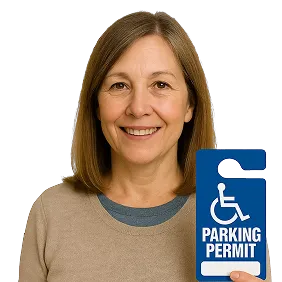

How to Get a Handicap Placard for Anxiety (Step-by-Step)
 by Nida Hammad
Last updated:


Wondering if you can get a handicap placard for anxiety? Many people do. Over 40 million American adults have anxiety disorders, and for lots of them, it’s much more than occasional worry. When severe anxiety triggers panic attacks in crowded areas, causes intense physical symptoms during daily tasks, or makes busy parking lots unsafe to manage, a placard can make a real difference.
Most people don’t know anxiety can qualify for a disability parking permit. Anxiety qualifies when it creates serious mobility limits or safety risks. You need to know which symptoms meet state rules. Each state sets its own eligibility bar. You also need to know what documentation physicians must provide. The application process varies by location.
This guide walks through the complete process of obtaining a handicap placard for anxiety. You’ll learn what state agencies look for in applications. You’ll learn how doctors check anxiety limits. You’ll discover the specific steps required in your state. We cover medical documentation requirements. We cover state-by-state variations. We cover common denial reasons. We cover how to use your placard after approval.
Let’s start with the medical criteria that determine whether your anxiety qualifies.
What Qualifies as Disabling Anxiety for a Handicap Placard for Anxiety
Not all anxiety qualifies for a mental health handicap placard. States don’t approve placards based on a diagnosis alone. They look at how anxiety affects your ability to walk safely. Your anxiety creates documented mobility limits. It puts you at risk in parking lots. You may qualify for a placard. If it causes emotional distress without physical impairment, you won’t.
This distinction matters. Anxiety becomes disabling when it stops you from walking normal distances. Severe physical symptoms must also occur. That’s the standard most states use when evaluating applications.
Medical Criteria States Use to Evaluate Anxiety
States evaluate anxiety using functional standards, not diagnostic labels. Most states want proof of your condition. Your condition must limit your walk to 200 feet. You cannot stop during this walk. Some states also consider whether walking creates a safety risk. States apply these rules to all medical conditions that qualify for a handicap placard, such as anxiety disorders.
Your physician must document specific impairments. A generalized anxiety disorder diagnosis won’t be enough. States want to see how anxiety affects your body during physical activity. That means describing symptoms that happen when you walk, not just when you feel stressed.
Common medical criteria include: Read the full breakdown in the mental health handicap placard.
-
Inability to walk 200 feet without stopping to rest
-
Severe cardiovascular symptoms triggered by walking or physical exertion
-
Balance problems or dizziness that make walking unsafe
-
Panic attacks that occur in open spaces or parking lots
-
Physical symptoms like chest pain, shortness of breath, or fainting episodes
These aren’t subjective feelings. They’re measurable physical responses that a physician can observe and document. If your anxiety makes your heart rate spike, that is a real impairment. If you faint in crowds, that is also a real impairment. If you feel nervous but can still walk without physical symptoms, that’s not.
Functional Limitations That Support Eligibility
Functional limitations describe what you can’t do because of your condition. For anxiety, this means physical tasks that become impossible or dangerous. States don’t care if you feel uncomfortable. They care if you can’t complete the task safely.
Here’s what counts as a functional limitation:
-
Panic attacks triggered by walking across large parking lots
-
Agoraphobia that prevents you from navigating open spaces without severe physical distress
-
PTSD that causes dissociative episodes or hypervigilance in parking areas
-
Cardiovascular symptoms like tachycardia or chest pain during minimal exertion
-
Severe dizziness or balance loss that increases fall risk
-
Fainting or near-fainting episodes triggered by anxiety in public spaces
Take a patient with agoraphobia. Walking from a distant parking spot to a store entrance might trigger a panic attack so severe they can’t breathe. Their heart rate jumps to 160 beats per minute. They feel dizzy and need to sit down immediately. That’s a functional limitation. It’s not about fear. It’s about the body’s physical response making the task unsafe.
Or consider someone with PTSD from a parking lot assault. Open parking areas trigger hypervigilance in them. This hypervigilance becomes so strong they can’t walk safely. They tripped and fell twice in the past year. Their focus stayed on threats they saw around them. That’s a documented safety risk.
States also recognize anxiety-related cardiovascular symptoms. Walking 100 feet can cause chest pain. It can cause shortness of breath. It can cause a dangerous rise in heart rate. These signs count as a physical impairment. Your doctor must document these symptoms with facts. Your own words alone are not enough.
How Anxiety Differs From Other Qualifying Conditions
Anxiety differs from other qualifying conditions because the impairment isn’t always visible. Someone with arthritis has joint damage you can see on an X-ray. Someone with heart failure has measurable cardiac function. Anxiety creates physical symptoms that are real but harder to document.
That’s why the bar for anxiety-related placards is higher. States want proof that your symptoms are severe, consistent, and physically limiting. A one-time panic attack won’t qualify. A pattern of panic attacks triggered by specific mobility tasks might.
Here’s how anxiety compares to other conditions:
| Condition Type | Primary Evidence | Documentation Standard |
|---|---|---|
| Arthritis | Imaging, joint examination | Objective structural damage |
| Heart Disease | Cardiac testing, functional class | Measurable organ function |
| Anxiety Disorder | Symptom patterns, physical responses | Documented functional impairment |
The difference is in what physicians can measure. For anxiety, they document symptom frequency, severity, and physical manifestations. They note how far you can walk before symptoms start. They record your heart rate during panic episodes. They describe balance problems or fainting spells.
Another key difference is consistency. Arthritis pain is constant. Anxiety symptoms might be episodic. States need to see that your symptoms are frequent enough to create a persistent mobility limitation. If you only have panic attacks once a month, that’s different from having them every time you enter a parking lot.
Some anxiety disorders create more obvious functional limitations than others. Agoraphobia often qualifies because it directly prevents people from navigating open spaces. Social anxiety disorder does not often qualify for a placard. It may qualify if it causes severe body symptoms during movement tasks. The distinction is whether the anxiety stops you from walking safely, not whether it makes you uncomfortable.
Your physician’s evaluation will focus on these functional questions. Can you walk 200 feet without stopping? Do you experience dangerous physical symptoms when you try? Have you fallen or nearly fallen because of anxiety-related balance problems? These are the questions that determine eligibility, not the name of your diagnosis.
Get Your Handicap Placard for Anxiety Application Approved Today.
Types of Anxiety Disorders That May Qualify

Not all anxiety disorders affect how you move around. Some create physical symptoms that make walking harder. Others might trigger panic in certain places. What matters most is how your anxiety actually impacts your day-to-day movement. Can you comfortably walk through parking areas? Can you move through public spaces without trouble?
At Parking MD, we look at how your specific anxiety diagnosis creates real, functional challenges. Here’s the thing: a diagnosis alone isn’t enough to qualify. Your doctor needs to document how your symptoms actually prevent you from walking or getting around safely.
Generalized Anxiety Disorder and Physical Symptoms
Generalized Anxiety Disorder (GAD) involves chronic, excessive worry about everyday situations. When severe, it produces physical symptoms that directly limit mobility.
Common physical manifestations include:
-
Muscle tension and pain that make walking difficult
-
Dizziness and lightheadedness that affect balance
-
Chest tightness and rapid heartbeat during physical activity
-
Shortness of breath that worsens with exertion
-
Chronic fatigue that limits walking distance
These symptoms can make crossing a parking lot genuinely unsafe. If you need to stop frequently to catch your breath, or if muscle tension causes pain after 100 feet, your physician may determine you meet eligibility criteria.
What strengthens a GAD application is documentation of symptom frequency and intensity. Your doctor needs to show these aren’t occasional episodes. They happen consistently and prevent normal walking ability.
Panic Disorder and Agoraphobia
Panic disorder brings sudden, intense fear episodes called panic attacks. These attacks often strike in open spaces like parking lots. Symptoms include a racing heart, sweating, trembling, and feeling like you can’t breathe.
Agoraphobia frequently develops alongside panic disorder. It’s the fear of places where escape feels difficult. Large parking areas are common triggers. People with agoraphobia may avoid parking lots entirely or experience severe distress when forced to navigate them.
According to Colorado disability parking privileges, panic disorder with agoraphobia can qualify. Symptoms must create safety risks in parking areas. The key is showing how attacks make walking through parking areas dangerous.
For example, someone who experiences panic attacks triggered by open spaces may freeze mid-walk. They might need immediate access to their vehicle for safety, or they may require a companion to navigate parking areas safely.
Your physician evaluates:
-
How often panic attacks occur in parking or public settings
-
Whether attacks cause physical collapse or inability to move
-
If you avoid parking lots due to attack frequency
-
Whether you need immediate vehicle access for safety
Temporary placards may be appropriate during active treatment phases. Permanent placards fit cases where symptoms remain severe despite ongoing therapy and medication.
PTSD and Trauma-Related Mobility Limitations
Post-Traumatic Stress Disorder (PTSD) can create specific mobility challenges in parking environments. Trauma survivors may experience triggers in parking lots, garages, or similar spaces.
Common PTSD-related limitations include:
-
Hypervigilance that makes walking through parking areas exhausting
-
Flashbacks triggered by specific parking lot features
-
Severe anxiety when walking alone in open or enclosed parking spaces
-
Physical freeze responses that prevent safe navigation
-
Dissociative episodes that create safety risks while walking
A veteran who experienced combat trauma in open areas may find large parking lots triggering. Someone assaulted in a parking garage may experience panic when entering similar structures. These aren’t just uncomfortable feelings. They create genuine safety risks.
Your physician documents how PTSD symptoms specifically affect parking lot navigation. This includes whether you need a companion for safety, how far you can walk before symptoms escalate, and whether certain parking environments are impossible to navigate.
Many people wonder why doctors deny placards for mental health conditions. The answer often comes down to documentation. Your application needs to show clear functional limitations, not just a diagnosis.
Social Anxiety Disorder in Severe Cases
Social Anxiety Disorder involves intense fear of social situations and judgment from others. In severe cases, crowded parking lots can trigger incapacitating symptoms.
Most social anxiety cases don’t qualify for a disability parking permit for anxiety. But extreme presentations might. This happens when symptoms create physical limitations or safety risks.
Severe social anxiety may qualify when:
-
Crowded parking lots trigger panic attacks that prevent walking
-
Fear of judgment causes physical symptoms like trembling or dizziness
-
Symptoms escalate to the point of collapse or inability to move
-
You require immediate vehicle access to manage overwhelming anxiety
Your physician needs to document symptom severity and frequency. Occasional discomfort doesn’t meet the threshold. The condition must consistently prevent safe parking lot navigation.
Co-occurring conditions strengthen applications. Someone with social anxiety plus cardiovascular issues faces compounded risks. Anxiety plus chronic pain creates additional mobility barriers. Your doctor evaluates the combined impact of all conditions.
What matters most is functional impact. Can you walk 200 feet safely? Do symptoms create genuine safety risks? Does your condition prevent normal parking lot navigation? These questions guide eligibility decisions across all anxiety disorders.
Medical Documentation Required for Anxiety-Based Applications
Getting a handicap placard for anxiety isn’t about proving you have a diagnosis,it’s about showing how anxiety affects your ability to walk safely. States approve applications based on functional limitations, not condition names alone. Your physician needs to document specific mobility problems caused by anxiety, including physical symptoms like dizziness, chest pain, or muscle weakness during panic attacks, as well as safety risks from dissociative episodes or agoraphobia that make parking lots unsafe.
At Parking MD, we connect patients with licensed physicians who know how to evaluate and document anxiety-related mobility limitations according to state requirements.
What Physicians Must Certify on State Forms
State placard applications require physicians to certify specific functional impairments. According to the Massachusetts Registry of Motor Vehicles, doctors must confirm that a patient cannot walk 200 feet without stopping to rest, or that walking poses a health risk.
For anxiety-based applications, physicians document how panic attacks, dissociation, or severe agoraphobia limit safe walking. They must explain the physical manifestations. These include rapid heart rate, shortness of breath, dizziness, or muscle weakness that occur during episodes.
The certification section typically asks physicians to check boxes indicating the nature of the disability. Options include cardiovascular, respiratory, neurological, or orthopedic conditions. Mental health conditions often fall under neurological or require a written explanation in the “other” category.
Physicians must also specify whether the condition is temporary or permanent. Temporary placards typically last six months to two years. Permanent placards apply when the condition is unlikely to improve significantly.
Some states require physicians to include their medical license number and specialty. This helps DMV staff verify that the certifying provider is qualified to make the assessment. Not all healthcare providers can certify applications in every state.
Supporting Medical Records That Strengthen Your Case
Medical records provide evidence that backs up your physician’s certification. Strong documentation shows a pattern of treatment and functional limitation over time. It’s not enough to have one doctor’s visit noting anxiety symptoms.
Psychiatric evaluations carry weight because they detail symptom severity and functional impact. These assessments often include standardized testing results. They show how anxiety affects daily activities like leaving home, being in crowds, or walking in open spaces.
Treatment records demonstrate ongoing care. This includes therapy session notes, medication management visits, and crisis intervention records. Consistent treatment shows the condition is serious and persistent, not situational or temporary.
Medication history matters because it shows what treatments you’ve tried. A long list of failed medications or frequent dosage adjustments indicates severe, treatment-resistant anxiety. This strengthens the case that your condition causes lasting functional limitations.
Emergency room visits for panic attacks provide concrete evidence of acute episodes. ER records document physical symptoms like chest pain, difficulty breathing, and vital sign changes. They show that your anxiety causes real, measurable physical distress.
Here are records that strengthen disability parking permit applications for anxiety:
-
Psychiatric evaluation reports with functional assessments
-
Therapy session notes documenting agoraphobia or panic disorder
-
Medication lists showing treatment for anxiety disorders
-
ER records from panic attack episodes
-
Cardiology reports ruling out heart conditions during panic symptoms
-
Neurological testing results if dissociation or seizure-like episodes occur
Lab work and diagnostic tests help rule out other causes. If you’ve had cardiac workups, neurological scans, or vestibular testing, include those results. They show physicians have investigated physical causes and confirmed anxiety as the primary issue.
Mental Health Professional vs. Primary Care Physician Certification
Not all states accept certifications from every type of healthcare provider. Most states allow physicians (MDs and DOs) to certify placard applications. Some also accept certifications from physician assistants or nurse practitioners.
Psychiatrists are medical doctors who can certify applications in all states. They specialize in mental health conditions and can document both psychiatric symptoms and physical manifestations. Their certifications carry strong credibility for anxiety-based applications.
Psychologists hold doctoral degrees but aren’t medical doctors in most states. Some states accept psychologist certifications for mental health conditions. Others require a physician’s signature. Check your state’s specific requirements before scheduling an evaluation.
Primary care physicians can certify applications if they’ve treated your anxiety and documented functional limitations. They must be familiar with how your condition affects mobility. A single visit usually isn’t enough. They need treatment history to support the certification.
Guidance from the Children’s Hospital of Philadelphia notes that physicians must evaluate how a condition limits walking ability and document specific functional impairments on state forms.
Nurse practitioners and physician assistants can certify applications in some states. Others require a physician’s signature. If your regular provider is an NP or PA, ask whether they can certify applications in your state or if you need a supervising physician’s signature.
Here’s a comparison of provider types for anxiety placard certification:
| Provider Type | Can Certify in Most States | Best For |
|---|---|---|
| Psychiatrist (MD/DO) | Yes | Complex anxiety disorders, medication management, strong documentation |
| Primary Care Physician | Yes | Patients with established treatment history and documented physical symptoms |
| Psychologist (Ph D/Psy D) | Varies by state | Detailed functional assessments, but may need MD co-signature |
| Nurse Practitioner | Some states | Ongoing care, but check state requirements for certification authority |
The provider you choose should have detailed knowledge of your condition. They need to explain how anxiety causes functional limitations that meet state criteria. A provider who’s treated you for months or years can document this better than someone seeing you for the first time.
If your current provider can’t certify applications in your state, ask for a referral. Some patients see a psychiatrist for medication management and a primary care physician for general health. Either may be able to certify, depending on who has better documentation of mobility limitations.
Standardized anxiety assessments support applications by quantifying symptom severity. The GAD-7 (Generalized Anxiety Disorder-7) is a seven-question screening tool. Scores above 15 indicate severe anxiety. Including GAD-7 scores in your application shows objective measurement of symptoms.
The Panic Disorder Severity Scale measures panic attack frequency and intensity. High scores demonstrate that panic episodes are frequent and disabling. This helps physicians explain why walking in parking lots or public spaces poses safety risks.
Agoraphobia scales measure fear and avoidance of specific situations. High scores on these assessments show that leaving home or being in open spaces causes severe distress. This directly relates to the functional limitation of walking through parking lots.
Step-by-Step Application Process by State

Getting a handicap placard for anxiety involves several clear steps. Each state has its own forms and rules. But the basic process stays the same across the country.
This section walks you through each step. You’ll learn where to find forms, how to get evaluated, and what to expect after you submit your application.
Finding Your State’s Disability Parking Application Form
Every state has its own disability parking permit for anxiety application form. Most states post these forms on their DMV website. Some states call it a disability parking placard application. Others use terms like accessible parking permit or handicap parking permit.
Start by visiting your state’s DMV website. Look for a section on disability services or accessible parking. The form is often available as a PDF download. You can print it at home.
According to the Illinois disability parking program guide, most states require both a patient section and a medical certification section. Some states also ask for proof of residency. Others require a copy of your driver’s license or state ID.
Here’s what you’ll typically find on the form:
-
Your personal information (name, address, date of birth)
-
Your driver’s license or state ID number
-
The type of placard you’re requesting (temporary or permanent)
-
A medical certification section for your physician to complete
Some states let you apply online through their DMV portal. Others require you to mail or hand-deliver the completed form. Check your state’s specific instructions before you start.
Scheduling a Physician Evaluation for Anxiety
Once you have the form, you need a physician evaluation. This is the most important step. Your doctor must confirm that your anxiety creates a functional limitation that meets state criteria.
You have two main options for this evaluation. First, you can schedule an in-person visit with your primary care doctor or psychiatrist. Second, you can use a telehealth service like Parking MD that connects you with licensed physicians who understand anxiety disorder parking placard eligibility.
Telehealth evaluations work well for people with severe anxiety. You don’t have to leave your home. You don’t have to sit in a waiting room. The evaluation happens through a secure video call.
During the evaluation, your physician will ask about:
-
How anxiety affects your ability to walk or stand
-
Whether you experience panic attacks in parking lots or crowded spaces
-
If you have PTSD or other conditions that make walking long distances unsafe
-
What symptoms you experience (rapid heartbeat, dizziness, shortness of breath)
-
How often these symptoms occur and how severe they are
The physician needs to determine if your anxiety creates a substantial walking limitation. This means you can’t walk 200 feet without stopping to rest. Or that walking causes severe physical symptoms that put you at risk.
Parking MD can complete this evaluation within 24 to 48 hours. The service is HIPAA-compliant and connects you with physicians licensed in your state.
Completing the Medical Certification Section
The medical certification section is where your physician documents your condition. This section is what the DMV reviews to approve or deny your application. It’s not enough to just have a diagnosis of anxiety.
Your physician must explain how anxiety limits your mobility. They need to describe the functional impact. Most states ask physicians to check boxes that indicate the severity of your limitation.
Common certification requirements include:
-
A statement that you can’t walk 200 feet without stopping to rest
-
Confirmation that walking causes severe physical symptoms
-
Documentation that you use a mobility aid due to anxiety-related symptoms
-
A description of how anxiety affects your cardiovascular or respiratory function
-
The expected duration of your limitation (temporary or permanent)
Some states require physicians to use specific diagnostic codes. Others ask for a written explanation. Your physician should be familiar with your state’s requirements. If they’re not, Parking MD’s network includes physicians who specialize in mental health disability parking permit applications.
The physician must sign and date the certification. They also need to include their medical license number. Some states require the physician’s office stamp or seal.
Submitting Your Application to the DMV
After your physician completes the medical certification, you submit the full application to your state DMV. Submission methods vary by state. Some states accept online submissions. Others require mail or in-person delivery.
Before you submit, double-check that:
-
All patient information sections are filled out completely
-
Your physician signed and dated the medical certification
-
You included any required fees (these range from free to $25 depending on state)
-
You attached copies of required documents (ID, proof of residency)
Most states charge a small fee for disability parking placards, though some waive fees for veterans or people with certain conditions. Before mailing your application, check your state’s fee schedule. Use certified mail with tracking so you have proof of delivery and can monitor when the DMV receives it. While some states process applications faster in person, mailing remains a valid choice if in-person submission would be difficult for you.
Processing Times and What to Expect After Submission
Processing times vary widely by state. Most states take two to six weeks to review applications. Some states process applications in as little as one week. Others take up to eight weeks during busy periods.
You won’t hear anything during the review period. The DMV doesn’t send status updates. They only contact you if they need additional information or when they approve or deny your application.
If approved, you’ll receive your placard by mail. Temporary placards are usually printed on paper or cardstock. Permanent placards are made of more durable material. Both types hang from your rearview mirror when you park in accessible spaces.
Here’s what happens if your application is denied:
-
You’ll receive a denial letter explaining why
-
You can appeal the decision within a specific timeframe (usually 30 to 60 days)
-
You may need additional medical documentation to support your appeal
-
Some states allow you to request a hearing to present your case
If you used Parking MD for your evaluation and your application is denied, they offer a money-back guarantee. This protects you if the physician’s certification doesn’t meet your state’s standards.
Once you receive your placard, read the instructions that come with it. Each state has specific rules about how to display and use your placard. Some states require you to carry the placard with you when you exit your vehicle. Others let you leave it hanging while parked.
Temporary placards typically last three to six months. Permanent placards are valid for two to five years depending on your state. You’ll need to renew before the expiration date. Some states require a new medical certification for renewal. Others let you renew without additional documentation.
Get Your Anxiety Handicap Placard Today!
State-Specific Requirements and Variations
Getting a handicap placard for anxiety depends heavily on where you live. Each state writes its own eligibility rules. Some states list mental health conditions by name. Others use broader language about mobility or functional limits. This creates real differences in how anxiety-based applications get reviewed.
Before you apply, check your state’s current rules. What works in California may not work in Texas. Understanding these differences helps you know what to expect.
States With Mental Health-Friendly Eligibility Criteria
A handful of states explicitly recognize mental health conditions in their disability parking statutes. These states make it easier to apply with an anxiety disorder parking placard eligibility claim. They don’t require you to prove a physical mobility issue first.
California stands out as one of the most accessible states for mental health applicants. According to the California DMV disability parking requirements, the state accepts conditions that limit mobility or require oxygen use. Mental health providers can certify applications when anxiety causes functional limits that affect daily activities.
Other states with mental health provisions include:
-
New York: Accepts psychiatric conditions that substantially limit walking or mobility
-
Illinois: Recognizes mental health diagnoses when they affect physical function
-
Washington: Allows applications based on conditions that impair mobility, including psychiatric disorders
-
Oregon: Permits mental health certifications when the condition limits walking distance or endurance
Even in these states, approval isn’t automatic. Your physician must document how anxiety affects your ability to walk, stand, or navigate parking areas safely. The focus stays on functional impact, not just the diagnosis itself.
States Requiring Additional Documentation for Anxiety
Many states use stricter standards for mental health conditions. They may require extra documentation beyond a standard physician certification. This often means working with a psychiatrist or psychologist instead of a primary care doctor.
Texas requires that mental health conditions be certified by a psychiatrist or licensed psychologist. A family doctor can’t sign off on an anxiety-based application. The specialist must explain how the condition creates a mobility limitation that meets state criteria.
Florida takes a similar approach. The state asks for detailed documentation showing how anxiety prevents you from walking 200 feet without stopping. You may need medical records, treatment history, or specialist evaluations to support your claim.
Other states with stricter documentation rules include:
-
Georgia: Requires specialist certification for psychiatric conditions
-
Ohio: Asks for detailed functional assessments from mental health providers
-
Pennsylvania: May request treatment records or hospitalization history for anxiety-based claims
-
North Carolina: Requires documentation of how anxiety affects physical mobility specifically
These requirements don’t mean you can’t qualify. They just mean you need to work with the right provider and gather thorough documentation before you apply.
Common Reasons Anxiety Applications Are Denied

Getting a disability parking permit for anxiety isn’t automatic. States reject many applications each year. Most denials happen because the paperwork doesn’t show how anxiety limits walking or creates safety risks.
The problem isn’t the diagnosis itself. It’s the lack of proof that anxiety affects your physical mobility. States need clear evidence that your condition makes walking dangerous or impossible.
Insufficient Medical Documentation
Many applications fail because they don’t include enough medical detail. A letter saying “patient has anxiety” won’t work. States want specific information about your symptoms and how they affect you.
Your doctor needs to document panic attacks, agoraphobia, or severe PTSD symptoms. They must explain how these symptoms stop you from walking safely. For example, if panic attacks cause dizziness or chest pain that makes you collapse, that needs to be in your file.
According to medical conditions supporting placard applications, documentation must show both the diagnosis and the functional impact. Treatment records help too. If you take medication or see a therapist regularly, include that proof.
Missing records are a red flag. States may question whether your anxiety is severe enough if you’re not getting ongoing care. Keep copies of all prescriptions, therapy notes, and hospital visits related to your anxiety.
Lack of Functional Limitation Evidence
A diagnosis alone doesn’t qualify you. States need proof that anxiety stops you from walking 200 feet without resting. Or that it creates a serious safety risk when you walk.
This is where many applications fail. The doctor writes about anxiety symptoms but never explains the mobility impact. Does your anxiety cause fainting? Do panic attacks make your legs weak? Can you walk across a parking lot without stopping?
States look for specific functional limits. These include:
-
Can’t walk 200 feet without severe symptoms
-
Need to stop and rest due to panic or dizziness
-
Risk of falling or collapsing during episodes
-
Severe agoraphobia that makes open spaces dangerous
-
PTSD triggers in parking lots that cause disorientation
Your doctor must connect your anxiety to these physical problems. If they don’t, the state will likely deny your application. Be clear about what happens when you try to walk in public spaces.
Physician Certification Issues
Even with good documentation, applications fail if the doctor’s certification is incomplete. Each state has specific requirements. Your physician must address all of them.
Some doctors check a box without explaining why you qualify. That’s not enough. The certification needs details about your walking limitation or safety risk. It should match your state’s exact eligibility criteria.
Not all healthcare providers can certify applications. Some states only accept signatures from licensed physicians. Nurse practitioners or physician assistants may not be authorized in your state. Check your state’s rules before scheduling an evaluation.
Out-of-state doctors can also cause problems. If your physician isn’t licensed in your state, the DMV may reject the certification. This happens often with telehealth services that don’t verify state licensing.
Understanding how to complete a handicap placard application correctly matters from the start. Missing signatures, incomplete dates, or vague descriptions all lead to denials.
If your application gets denied, most states let you appeal. You’ll need to submit additional medical evidence or clarify the functional limitations. Some people reapply with a different doctor who understands the state’s requirements better.
Don’t assume a denial means you’ll never qualify. It often means the paperwork wasn’t strong enough. Work with your doctor to address the specific reasons for denial. Then resubmit with better documentation.
Using Parking MD for Your Anxiety Placard Evaluation
Getting a disability parking permit for anxiety doesn’t have to mean scheduling multiple doctor visits or navigating confusing DMV paperwork alone. Parking MD connects you with licensed physicians who understand state-specific eligibility requirements and can complete your evaluation through a secure telehealth platform. Over 33,000 patients have used this service to get the medical documentation they need without leaving home.
The process is designed for people who find in-person appointments difficult. If anxiety makes crowded waiting rooms or unfamiliar medical offices overwhelming, this online option removes those barriers. You can complete your evaluation from wherever you feel most comfortable.
How the Online Evaluation Process Works
Parking MD’s evaluation starts with a brief online intake form. You’ll answer questions about your anxiety symptoms, how they affect your daily mobility, and any treatments you’re currently using. This takes about 10 minutes to complete.
Once you submit your intake, the system matches you with a licensed physician in your state. This matters because each state has different rules for who can certify disability parking applications. Some states accept nurse practitioners or physician assistants, while others require a medical doctor. Parking MD handles these variations automatically.
The physician reviews your medical history before your consultation. They look at how anxiety affects your ability to walk safely, stand for extended periods, or navigate parking lots without triggering panic attacks. According to the Washington State Department of Licensing, functional limitations like severe shortness of breath or inability to walk 200 feet without stopping are what determine eligibility, not the diagnosis alone.
Your consultation happens through a HIPAA-compliant video platform. No special software is needed. You can join from your phone, tablet, or computer. The physician will ask about specific situations where anxiety limits your mobility and assess whether those limitations meet your state’s criteria.
What to Expect During Your Physician Consultation
The consultation typically lasts 15 to 20 minutes. Your physician will ask detailed questions about your anxiety symptoms and how they affect your physical functioning. They’re not just confirming you have anxiety. They’re determining whether it creates mobility limitations that qualify under state law.
Here’s what physicians typically assess during the evaluation:
-
How far you can walk before anxiety symptoms become overwhelming
-
Whether panic attacks cause dizziness, chest pain, or shortness of breath that makes walking unsafe
-
If crowded or open spaces trigger symptoms that prevent you from crossing parking lots
-
Whether you’ve had falls or near-falls related to anxiety-induced physical symptoms
-
How often these limitations occur and whether they’re temporary or ongoing
The physician may also review any existing medical records you’ve provided. Documentation from a psychiatrist, therapist, or primary care doctor strengthens your application. But it’s not always required if your current symptoms clearly meet eligibility standards.
After the evaluation, the physician decides whether your condition qualifies. If it does, they’ll complete the medical certification section of your state’s application form. If it doesn’t, you’ll receive a full refund under Parking MD’s money-back guarantee. This policy protects you from paying for an evaluation that doesn’t result in approval.
The physician also provides guidance on what happens next. They’ll explain your state’s specific submission process and answer questions about temporary versus permanent placards. Some states issue temporary placards for anxiety that may improve with treatment, while others offer permanent options for chronic conditions.
Timeline From Evaluation to Placard Receipt
Most patients receive their physician certification within 24 to 48 hours after their consultation. This is the medical documentation you need to submit to your state DMV or motor vehicle agency. Parking MD sends it to you electronically, so there’s no waiting for mail.
Once you have your certification, you’ll submit it along with your state’s application form. Processing times vary widely by state. Some states approve applications within a week, while others take three to four weeks. The Florida Department of Highway Safety and Motor Vehicles notes that proper documentation and complete applications speed up processing significantly.
Here’s a typical timeline breakdown:
-
Day 1: Complete online intake form and schedule consultation
-
Day 2-3: Video consultation with licensed physician
-
Day 3-4: Receive medical certification electronically
-
Day 4-5: Submit application to state DMV with certification
-
Week 2-4: State processes application and mails placard
Parking MD doesn’t submit the application to your state on your behalf. You handle that step yourself, either online, by mail, or in person, depending on what your state allows. But the service provides clear instructions for your specific state’s process.
The platform also tracks your application status. You’ll get email updates when your physician completes the certification and when it’s ready to download. This removes the uncertainty that comes with traditional medical appointments where you might wait days for paperwork.
If your state requires additional documentation or has questions about your application, Parking MD’s support team can help you understand what’s needed. They don’t provide legal advice, but they can clarify common DMV requirements and help you avoid delays caused by incomplete submissions.
Living With a Handicap Placard for Anxiety

Getting a handicap placard for anxiety is just the first step. Using it correctly and managing the daily reality of an invisible disability brings its own challenges. You need to know when to display your placard, how to handle judgment from others, and when renewal is due.
Beyond that, a disability parking permit for anxiety works best as part of a broader treatment plan. It helps reduce stress in public spaces. But it doesn’t replace therapy, medication, or other coping strategies.
Proper Placard Display and Usage Rules
Every state has strict rules about how and when you can use your placard. Breaking these rules can result in fines, placard revocation, or even criminal charges in some cases.
Your placard must hang from your rearview mirror when parked in an accessible space. Remove it before driving. Leaving it up while driving is illegal in most states and blocks your view.
Only the person named on the placard can use it. You can’t lend it to friends or family members, even if they’re driving you somewhere. The placard holder must be in the vehicle, either as driver or passenger.
Use accessible spaces only when your anxiety symptoms make the shorter walk necessary. If you’re having a good day and can walk the extra distance comfortably, consider leaving the space for someone who needs it more.
According to the Braun Ability handicap placard guide, misuse of disability parking permits can result in fines ranging from $250 to $1,000 depending on your state. Some states also impose community service or placard suspension for repeat offenders.
Never park in striped access aisles next to accessible spaces. These areas allow wheelchair users to enter and exit their vehicles safely. Blocking them is both illegal and dangerous.
Addressing Stigma and Invisible Disabilities
Anxiety doesn’t show on the outside. You won’t have a visible mobility aid or physical marker signaling your disability. This leads to judgment, confrontation, and unwanted comments.
Strangers may stare, make rude remarks, confront you in parking lots, or leave notes questioning your right to park there. These encounters can trigger the very anxiety your placard is meant to help manage.
You don’t owe anyone an explanation. Your medical condition is private, and you’re not required to justify your placard use to strangers, store employees, or other shoppers. Having a brief response ready can help you feel more prepared. Keep it simple: “I have a medical condition that qualifies me for this placard.” Then walk away.
Some people carry small cards explaining invisible disabilities. You can hand these to confrontational individuals without lengthy discussions. Find printable versions online or make your own.
Most people who question your placard are uninformed about invisible disabilities. Their behavior isn’t acceptable, but understanding their ignorance can help you not take it personally.
Join support groups for people with invisible disabilities. Sharing experiences with others facing similar challenges reduces isolation and provides practical coping strategies.
When to Renew or Update Your Placard
Placards don’t last forever. Most states issue temporary placards for six months and permanent placards for two to five years. Check your placard’s expiration date regularly.
Start the renewal process at least 30 days before expiration. This gives you time to schedule a doctor’s appointment, complete paperwork, and wait for DMV processing. Driving with an expired placard is the same as driving without one.
Your doctor will need to recertify that your anxiety still meets state eligibility criteria. Don’t assume automatic renewal. Your physician must confirm that your condition continues to limit your mobility or ability to function in public spaces.
If your anxiety symptoms improve significantly through treatment, you may no longer qualify. Honest reassessment is important. Continuing to use a placard you no longer need is fraud.
On the other hand, if your anxiety worsens or you develop additional qualifying conditions, tell your doctor. You might need to upgrade from a temporary to a permanent placard.
Some states allow online renewal for permanent placards. Others require in-person visits or mailed applications. Check your state DMV website for specific procedures.
Lost or stolen placards must be reported immediately. Most states charge a replacement fee, usually between $10 and $25. You’ll need to file a police report in some jurisdictions.
Complementary Strategies for Managing Anxiety in Public Spaces
A handicap placard reduces one source of stress. But it doesn’t treat your anxiety disorder. You need a comprehensive approach that addresses the root causes of your symptoms.
Cognitive behavioral therapy (CBT) is the gold standard treatment for anxiety disorders. It teaches you to identify and challenge anxious thoughts, then replace them with more realistic ones. Many people see improvement within 12 to 16 weeks.
Exposure therapy gradually introduces you to anxiety-triggering situations in a controlled way. Over time, this reduces your fear response. For someone with agoraphobia or panic disorder, this might mean slowly increasing time spent in public spaces.
Medication can help manage severe symptoms while you work on long-term coping skills. SSRIs, SNRIs, and benzodiazepines are commonly prescribed. Work closely with your psychiatrist to find the right medication and dosage.
Grounding techniques help during acute anxiety episodes. The 5-4-3-2-1 method works well: identify five things you see, four you can touch, three you hear, two you smell, and one you taste. This brings your focus back to the present moment.
Deep breathing exercises activate your parasympathetic nervous system, which calms your body’s stress response. Try box breathing: inhale for four counts, hold for four, exhale for four, hold for four. Repeat until you feel calmer.
According to Atticus disability qualification standards, anxiety disorders must cause marked limitations in daily functioning to qualify for disability accommodations. Regular treatment and documentation of these limitations strengthen your case for continued placard eligibility.
Consider other accessibility accommodations that might help. Many stores offer curbside pickup or delivery services. Some have quiet shopping hours with reduced lighting and noise. Movie theaters may allow you to sit near exits.
Build a support network of people who understand your condition. This might include family, friends, therapists, support groups, or online communities. Having people to call during difficult moments makes a real difference.
Track your symptoms and triggers in a journal. This helps you identify patterns, measure progress, and communicate more effectively with your healthcare team. Note what situations cause anxiety and which coping strategies work best.
Your placard is one tool in a larger toolkit. Use it when you need it. But keep working on the underlying anxiety with professional help, medication if needed, and proven coping strategies.
Conclusion
Anxiety can qualify you for a disability parking permit when it creates real mobility limits. You’ve learned what types of anxiety disorders meet state criteria. You’ve seen how medical documentation proves functional impairment, not just diagnosis. You now know the step-by-step application process and why states deny some requests.
Each state sets its own rules for anxiety disorder parking placard eligibility. Your success depends on three things: understanding your state’s requirements, gathering strong medical evidence, and working with a physician who knows the process. The right documentation shows how anxiety affects your ability to walk safely or move through parking areas.
If severe anxiety makes parking lot movement unsafe, you may qualify. A licensed physician can evaluate whether you meet your state’s criteria. Parking MD connects you with experienced doctors who understand mental health disability parking permit requirements. They guide you through your state’s specific application process. Start your evaluation today to see if a handicap placard for anxiety fits your situation.
Frequently Asked Questions
Can anxiety alone qualify me for a handicap placard?
Anxiety alone won't qualify you. States don't approve placards based on diagnosis. They look at how anxiety affects your ability to walk safely. Your condition must create documented mobility limits or safety risks. If anxiety causes severe physical symptoms when you walk, you may qualify. If it causes emotional distress without physical impairment, you won't. Your physician must prove anxiety stops you from walking 200 feet without rest. They must show it triggers dangerous symptoms like chest pain or fainting.
What physical symptoms from anxiety count as functional limitations?
Physical symptoms must make walking unsafe or impossible. Panic attacks triggered by crossing large parking lots count. Severe cardiovascular symptoms during physical exertion qualify. Balance problems or dizziness that make walking dangerous work. Chest pain, shortness of breath, or fainting episodes support applications. These aren't subjective feelings. They're measurable physical responses a physician can observe. If your heart rate spikes dangerously or you experience syncope in crowded areas, those are functional impairments. Feeling nervous without physical symptoms doesn't count.
How far must I be unable to walk to qualify for a placard?
Most states require proof you can't walk 200 feet without stopping to rest. This is the standard distance used across most state programs. Your physician must document this specific limitation. They can't just say you have trouble walking. They must state you cannot complete 200 feet safely. Some states also consider whether walking creates safety risks beyond distance. If panic attacks or severe symptoms happen before you reach 200 feet, document that. The distance standard applies to all medical conditions, including anxiety disorders.
What documentation does my doctor need to provide for approval?
Your physician must complete state-specific forms with detailed functional assessments. A diagnosis alone won't work. They must describe how anxiety limits your walking ability. Documentation should include specific symptoms that occur during physical activity. They need to note cardiovascular responses, balance issues, or panic episodes. The form requires their medical license number and signature. Some states want treatment history showing ongoing care. Your doctor must use clinical language that matches state criteria. Vague statements about stress or worry will get denied.
Does agoraphobia help my case for a handicap placard?
Agoraphobia can support your application if it prevents safe parking lot navigation. This counts as a functional limitation when it stops you from reaching store entrances. Your physician must document how agoraphobia creates physical danger. If you experience panic attacks in open spaces that cause fainting or severe symptoms, that strengthens your case. The condition must make walking across parking areas unsafe. Simply feeling uncomfortable in open spaces won't qualify. States need proof the phobia creates measurable physical impairment or safety risks during routine tasks.
How long does the application process take after my doctor signs?
Processing times vary by state and application method. Online applications through services process faster than mail submissions. Most states review applications within two to four weeks. Some approve within days if documentation is complete. Mail applications can take six to eight weeks. Incomplete forms cause delays and require resubmission. Your physician's documentation quality affects speed. Clear, detailed functional assessments get approved faster. Missing information triggers requests for additional documentation. Once approved, you receive your placard by mail within one to two weeks.
What are the most common reasons anxiety placard applications get denied?
Applications fail when physicians don't document functional limitations. Stating you have anxiety without describing walking impairment causes denial. Vague language about stress or worry doesn't meet criteria. Missing the 200-foot walking standard leads to rejection. Applications without specific physical symptoms get turned down. If your doctor writes about emotional distress instead of mobility limits, states deny it. Incomplete forms or missing signatures cause automatic rejection. Not showing how anxiety creates safety risks during walking fails. Your physician must use clinical terms that match state eligibility standards.
Can I use my anxiety handicap placard in other states?
Yes, handicap placards work in all 50 states under federal reciprocity laws. Your state-issued placard is valid nationwide. You can park in designated accessible spaces anywhere in the country. The same rules apply regardless of where you travel. Time limits posted on signs must be followed. Some cities have additional local restrictions. Your placard doesn't exempt you from parking fees unless specifically stated. Keep your placard visible when parked. Remove it when driving to avoid obstructing your view. Misuse in any state can result in fines or revocation.

Meet the author
Nida Hammad
With over 5 years of experience in accessibility content, I create clear resources on handicap parking permits, state requirements, and applications.
Get an Accessible Parking Permit Evaluation in Minutes.