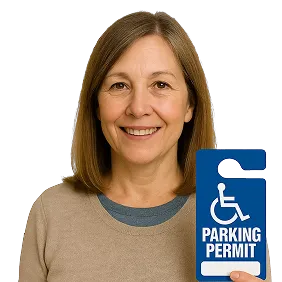

Disability Parking Permit & Spinal Cord Injury
 by Areeba Imran
Last updated:


One moment: a crash, a fall, a hard tackle. And everything changes. A spinal cord injury disrupts the connection between your brain and body, changing how you move, feel sensation, and handle daily tasks. Essentially, it can affect nearly every physical function below the point of damage, from walking to grip strength to bladder control. If you’re facing this firsthand, you’re not alone. Most people don’t realize how much shifts until mobility challenges become part of everyday life.
Walking short distances becomes harder. Getting in and out of cars takes more time. Parking lots turn into obstacles when accessible spots aren’t available. These daily struggles add up fast for anyone living with spinal cord injury and trying to maintain independence.
This guide covers what you need to know about spinal cord injury handicap placard eligibility. You’ll learn how these injuries affect mobility, when you qualify for disability parking after spinal cord injury, and how to work through the application process. We also break down state-by-state requirements and share practical strategies for managing mobility limitations spinal cord damage creates.
Let’s start with the basics of what a spinal cord injury is and how it impacts your body.
What Is a Spinal Cord Injury?
A spinal cord injury is damage to the spinal cord that disrupts communication between the brain and body. According to the National Institute of Neurological Disorders and Stroke, this damage can affect movement, sensation, and bodily functions below the injury site. The spinal cord doesn’t need to be severed for serious impairment to occur. Even partial damage can cause lasting mobility limitations.

For people with spinal cord injuries, everyday tasks like walking across a parking lot can become difficult or impossible. This is why many individuals with these injuries qualify for qualifying medical conditions that support disability parking permits. Accessible parking helps reduce physical strain and supports safer mobility in daily life.
Complete vs. Incomplete Spinal Cord Injuries
Spinal cord injuries fall into two main categories. Mayo Clinic explains that complete injuries result in no function below the injury site. People with complete injuries lose all movement and sensation in affected areas. Incomplete injuries allow some function to remain below the injury level.
With incomplete injuries, people may retain partial movement or sensation. Some can walk with assistance or use adaptive equipment. Others may have limited hand function or bowel control. The degree of function varies widely based on injury severity and location.
Levels of Spinal Cord Injury and Their Effects
The injury level determines which body parts are affected. Cervical injuries occur in the neck region. They can affect arms, hands, trunk, legs, and breathing. Thoracic injuries happen in the upper back. These typically affect the trunk and legs while sparing arm function. spinal cord injury definition goes into more depth on this.

Lumbar injuries occur in the lower back. They often affect the hips and legs. Sacral injuries happen at the base of the spine. These may affect the hips, legs, and bowel or bladder control. Higher injuries generally cause more widespread impairment.
How Spinal Cord Injuries Happen
Motor vehicle accidents are the leading cause of spinal cord injuries. Falls are the second most common cause, especially among older adults. Sports injuries can damage the spinal cord during high-impact activities. Violence, including gunshot wounds, accounts for a portion of cases.
Medical conditions can also cause spinal cord damage. These include tumors, infections, and degenerative diseases. Some injuries happen suddenly through trauma. Others develop gradually due to disease or compression. Both types can result in mobility limitations that affect daily life and parking needs.
How Spinal Cord Injuries Affect Mobility and Daily Life
Spinal cord injuries disrupt the signals between your brain and body. This damage affects how you move, stand, and walk. The level and completeness of the injury determine which functions you keep or lose.
Walking Limitations After Spinal Cord Injury
Paralysis, weakness, and loss of coordination make walking difficult or impossible. Complete injuries cut off all signals below the injury site. Incomplete injuries leave some pathways intact, but movement remains unpredictable.
According to Good Shepherd Rehabilitation, even incomplete spinal cord injuries can leave you with reduced strength and balance. You might walk short distances but tire quickly. Stairs become dangerous. Uneven surfaces feel unstable.
Secondary Complications That Impact Movement
Beyond paralysis, other problems make mobility harder. These complications develop over time and affect your ability to move safely.
-
Muscle spasticity causes involuntary tightening and jerking
-
Chronic pain limits how far you can walk before stopping
-
Fatigue drains your energy after minimal activity
-
Bladder and bowel issues interrupt daily routines
-
Pressure sores develop from prolonged sitting or lying down
Research from the Model Systems Knowledge Translation Center shows these complications make walking distances harder, even with incomplete injuries. At Parking MD, we help people with spinal cord injuries get evaluated for disability parking after spinal cord injury when these limitations affect their daily mobility.
Assistive Devices and Mobility Equipment
Most people with spinal cord injuries rely on assistive devices. The type depends on injury level and remaining function.

-
Wheelchairs for those who can’t walk independently
-
Walkers and rollators for balance support
-
Canes for mild weakness or coordination problems
-
Braces and orthotics to stabilize joints and improve gait
Mobility limitations vary widely. Some people walk short distances with a cane. Others need a wheelchair full-time. Your injury level and completeness shape what’s possible.
When Spinal Cord Injury Qualifies for a Handicap Placard
Qualification for a disability parking placard after spinal cord injury depends on how the injury affects your ability to walk. It’s not about the diagnosis itself. States look at functional walking ability instead.
Most states use similar criteria. You may qualify if you can’t walk 200 feet without stopping to rest. You may also qualify if you need a wheelchair, walker, cane, or other mobility aid. Neurological conditions that limit walking often meet state standards too.
State Eligibility Requirements for Spinal Cord Injuries
Each state sets its own rules. However, most follow similar patterns. According to the Massachusetts disability placard eligibility guidelines, you qualify if you can’t walk 200 feet without stopping or if you have a neurological condition that limits mobility.
Common state criteria include:
-
Can’t walk 200 feet without stopping to rest
-
Need a wheelchair, walker, cane, or brace to move safely
-
Have a neurological or orthopedic condition that limits walking
-
Face high fall risk due to balance problems
Incomplete spinal cord injuries can still qualify. What matters is whether walking limitations are significant enough to meet your state’s standard.
What Physicians Evaluate During Assessment
Doctors assess several factors during your evaluation. They look at how far you can walk before needing to stop. They check your balance and whether you’ve fallen recently.
Physicians also evaluate:
-
Walking distance and endurance levels
-
Balance stability and fall history
-
Type of assistive device you use daily
-
Pain levels during walking or standing
-
Muscle strength and coordination
At Parking MD, licensed physicians complete these evaluations through secure telehealth visits. This makes the process faster for people with mobility limitations.
Temporary vs. Permanent Placards for Spinal Cord Injury
Not all spinal cord injuries result in permanent walking limitations. Some people recover function through rehabilitation. Others face lasting impairment that won’t improve.

Temporary placards work well during recovery periods. You might get one after surgery or during intensive physical therapy. These typically last three to six months.
Permanent placards fit better for lasting mobility limitations. If your injury caused paralysis or permanent weakness, you’ll likely qualify for a permanent placard. Your physician determines which type fits your situation based on expected recovery. Understanding state-specific requirements helps you know what to expect during the application process.
State-by-State Comparison: Spinal Cord Injury Placard Requirements
Spinal cord injury placard eligibility varies widely across states. Some states list paralysis or neurological conditions explicitly. Others use general mobility standards that apply to all conditions. This creates confusion for people with spinal cord injuries who need accessible parking.

Common Eligibility Standards Across States
Most states use walking distance as the primary measure. The standard is typically 200 feet without stopping to rest. Some states set the bar at 100 feet. Others use broader language like “cannot walk without significant difficulty.”
According to the California DMV, applicants must be unable to walk 200 feet without stopping or have a specific orthopedic, neurological, or cardiovascular condition. This functional approach applies to spinal cord injuries alongside other mobility conditions.
State-specific rules also matter for applicants in Texas, New York, Illinois, and Ohio, since paperwork and processing steps differ from state to state. You can find the full requirements for New York, Illinois, Ohio, and every other state in our state-by-state placard guide.
Physician certification is required in all states. Most accept signatures from MDs and DOs. Some states also allow nurse practitioners or physician assistants to certify applications.
States With Specific Neurological Condition Criteria
A handful of states explicitly mention paralysis or neurological conditions in their eligibility criteria. This makes approval more straightforward for people with spinal cord injuries. The Michigan Secretary of State lists paralysis as a qualifying condition, along with other mobility limitations.
States without explicit neurological criteria still approve spinal cord injury applications. They evaluate based on functional walking ability. Incomplete spinal cord injuries may require more detailed documentation showing how the condition limits mobility.
Processing Times and Renewal Requirements by State
Processing times range from same-day approval to 4-6 weeks. States with online applications tend to process faster. In-person submissions often take longer due to mail handling and manual review.
Renewal periods vary significantly. Temporary placards typically last 6 months. Permanent placards may be valid for 2-5 years depending on the state. Some states require updated physician certification at renewal. Others allow self-renewal for permanent conditions.
Application Process for Spinal Cord Injury Handicap Placard
Getting a disability parking after spinal cord injury placard follows a clear four-step path. You start with a physician evaluation. Then you get your application certified. Next, you submit it to your state DMV. Finally, you receive your placard.
Getting Medical Certification
A licensed physician must certify that your mobility limitations spinalf cord damage meets your state’s criteria. This isn’t automatic. Your doctor evaluates how far you can walk, whether you need assistive devices, and if walking puts you at risk.
According to the Pennsylvania Department of Motor Vehicles, physicians must document specific functional limitations that prevent safe walking. Parking MD can complete these evaluations through secure telehealth visits for eligible patients. This saves you a trip to the doctor’s office.
Required Documentation and Forms
Strong documentation helps your application. Medical records showing your spinal cord injury diagnosis matter. Imaging results like MRIs or CT scans support your case. Physical therapy notes demonstrate ongoing mobility challenges.
Assistive device prescriptions show what you need to move safely. Wheelchair or walker documentation strengthens your application. Some states ask for additional proof of your condition’s severity.
What to Expect After Submission
Processing times vary by state. Some approve applications in two weeks. Others take up to six weeks. Fees also differ, ranging from free to $50 depending on where you live.
The Americans with Disabilities Act sets federal standards for accessible parking spaces that work with state placard programs. Once approved, you’ll get either a temporary or permanent placard. Temporary placards suit recovery situations. Permanent ones fit long-term paralysis and accessible parking needs.
Conclusion
A spinal cord injury can change how you move through daily life. Walking may become harder, more painful, or less safe. Not every injury qualifies for accessible parking. But many people with substantial mobility limits do meet state requirements.
This guide covered what spinal cord injuries are and how they affect movement. You learned when these injuries qualify for disability parking. We compared state requirements and walked through the application process. Each state has different rules for spinal cord injury placard eligibility.
The key factor is documenting your functional limits. Your doctor needs to show how your injury affects walking distance and safety. The diagnosis alone doesn’t determine eligibility.
If your spinal cord injury makes walking difficult, start with a physician evaluation. Parking MD connects you with licensed doctors who know your state’s rules. They can assess your mobility and guide you through the application. Get your evaluation today to see if you qualify for accessible parking.
Frequently Asked Questions
How does a spinal cord injury affect the brain?
A spinal cord injury disrupts the connection between your brain and body by damaging nerve pathways. This prevents signals from traveling past the damaged area, affecting movement and sensation below the injury site.
What is a spinal cord injury?
A spinal cord injury is damage to the spinal cord that disrupts communication between the brain and body. It can affect movement, sensation, and bodily functions below the injury site, ranging from partial to complete loss of function.
What are spinal cord injury symptoms?
Symptoms include loss of movement, reduced sensation, pain, weakness, and loss of coordination below the injury site. Depending on severity, people may experience paralysis, difficulty walking, or loss of bladder and bowel control.
Can you recover from a spinal cord injury?
Some people recover partial function through rehabilitation, while others face permanent impairment. Recovery depends on injury severity, location, and how quickly treatment begins.
What causes spinal cord injuries?
Motor vehicle accidents are the leading cause, followed by falls, sports injuries, and violence. Medical conditions like tumors and infections can also cause spinal cord damage.
How long does it take to recover from a spinal cord injury?
Recovery timelines vary widely based on injury severity and type. Most improvement occurs within the first six months, though rehabilitation may continue for years.
What qualifies for a spinal cord injury handicap placard?
Most states qualify people who can't walk 200 feet without stopping or who need mobility aids like wheelchairs or walkers. Functional walking ability, not diagnosis alone, determines eligibility.
How do you apply for disability parking with a spinal cord injury?
You need physician certification of your mobility limitations, then submit your application to your state DMV. Processing times typically range from two to six weeks depending on your state.

Meet the author
Areeba Imran
I am a healthcare professional and seasoned medical writer with 13+ years of experience across health, wellness, and clinical content. My work focuses on delivering trustworthy, evidence-based information that empowers readers to make informed decisions. With a keen interest in innovation and evolving areas of patient care, I bring a modern perspective to today's healthcare setup.
Get an Accessible Parking Permit Evaluation in Minutes.