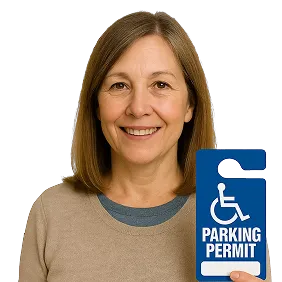

How to Get a Handicap Placard Online : Step-by-Step
 by Areeba Imran
Last updated:


Over 70 million Americans live with functional disabilities. Many struggle with traditional DMV processes for parking permits. How to get a handicap placard online has become simpler through telehealth services. You can now complete medical evaluations from home without visiting a doctor’s office.
Most people don’t know which states allow online handicap placard applications. They get confused about required documentation and common application mistakes. The process seems complicated, but it doesn’t have to be. You can complete most steps digitally and save time.
This guide shows you everything about getting a handicap placard online in 2026. You’ll learn eligibility requirements and the step-by-step application process. We cover telehealth versus in-person evaluations, required forms, and processing times. You’ll also discover costs by state and mistakes that delay approval. By the end, you’ll know precisely how to get your placard without unnecessary hassle.
Can You Get a Handicap Placard Online? How to Get a Handicap Placard Online

Quick Answer: Yes, But With State Variations
Yes, you can get a Handicap Placard online in most states. The medical evaluation portion happens through telehealth services. You connect with licensed physicians via video consultation. They assess your condition and provide the required certification.
However, state DMV applications still need submission. Some states accept online forms. Others require mail or in-person visits. The process varies by location.
States That Allow Online Medical Evaluations
Over 40 states now accept telehealth certifications for disability parking permits. This includes major states like California, Texas, Florida, New York, Illinois, Pennsylvania, Ohio, Michigan, Georgia, and North Carolina.

Services like Parking MD connect you with licensed physicians who can legally certify your disability. These doctors review your medical history and conduct video evaluations. They complete the medical certification section of your state’s application.
The online process eliminates doctor’s office visits. You avoid waiting rooms and travel challenges. Most evaluations finish within 24 to 48 hours.
When an In-Person Visit May Still Be Required
Some situations still need in-person visits. Complex medical conditions requiring physical examination fall into this category. States with stricter verification requirements may mandate DMV visits for final submission. For a deeper look, see Handicap Placard.
Certain jurisdictions require notarized signatures on applications. Renewal applications in specific states also need in-person processing. Check your state’s DMV website for exact requirements.
The online process handles medical certification remotely. But DMV interaction isn’t always eliminated. Some states require you to submit final paperwork in person or through certified mail.
Who Qualifies for a Handicap Placard? (Eligibility Snapshot)
Understanding who qualifies for a handicap placard helps you determine if you meet state requirements. Most states follow similar guidelines, but specific criteria can vary. Let’s break down the three main categories of qualifying conditions.
Temporary Disabilities
Temporary disabilities limit your mobility for a specific period. These conditions typically last from six months to one year. You can get a red placard during your recovery.
Common temporary conditions include:
-
Post-surgical recovery from hip, knee, or back surgery
-
Broken bones or fractures affecting your legs or feet
-
Severe sprains that need mobility aids like crutches
-
Pregnancy complications that make walking difficult
-
Short-term cardiac conditions limiting physical activity
-
Recovery from accidents or injuries affecting movement
According to the California DMV, temporary placards are issued for up to six months and can be renewed if your condition persists. Most states follow this timeline, though some allow up to one year for initial temporary permits.
Permanent Disabilities
Permanent disabilities affect your mobility long-term or for life. These conditions qualify you for a blue placard that doesn’t expire annually. You’ll need periodic renewal, but the process is simpler.
Qualifying permanent conditions include:
-
Severe arthritis that limits your ability to walk
-
Chronic lung disease, like COPD or emphysema
-
Heart conditions causing fatigue or breathlessness with minimal activity
-
Neurological disorders such as MS, Parkinson’s, or stroke effects
-
Vision impairments that make walking safely difficult
-
Amputation or paralysis affecting your legs
-
Permanent use of mobility devices like wheelchairs or walkers
Functional Limitations That May Qualify
Beyond specific diagnoses, functional limitations determine your eligibility. States focus on how your condition affects daily mobility. Your doctor must verify these limitations when certifying your application.
According to the Washington State Department of Licensing, you qualify if you meet any of these functional criteria:
-
You can’t walk 200 feet without stopping to rest
-
You need assistive devices like a wheelchair, walker, crutches, a cane, or oxygen.
-
You have severe balance disorders that make walking unsafe.
-
You experience extreme pain when walking even short distances.
-
You have cardiovascular issues that limit physical exertion
A licensed physician, nurse practitioner, or physician assistant must certify your condition. They’ll verify that your disability significantly impairs your mobility and walking ability. Services like Parking MD connect you with licensed physicians online to complete this certification quickly, often within 24 to 48 hours.
How to Get a Handicap Placard Online
Getting a handicap placard online is faster than traditional methods. You can complete the process from home without visiting a doctor’s office. This guide walks you through each step to secure your placard quickly.
The online process takes 24-48 hours for most applicants. You’ll connect with licensed physicians who evaluate your condition remotely. This saves time and reduces stress during recovery.
Step 1: Check Your Eligibility
Review qualifying conditions before you start. Most states accept mobility limitations that prevent walking 200 feet without rest. Conditions like severe arthritis, heart disease, and lung disorders typically qualify.
Determine if you need a temporary or permanent placard. Temporary placards work for short-term conditions lasting six months or less. Permanent placards suit long-term disabilities. According to medical qualification standards, your doctor must verify that your condition meets state requirements.
Verify your state accepts telehealth certifications. Most states now allow online evaluations. This eliminates in-person visits during your recovery period.
Step 2: Complete a Medical Evaluation
Schedule an online consultation with a telehealth service. Parking MD connects you with licensed physicians who specialize in disability parking evaluations. Prepare your medical history and current medications list before your appointment.
The video appointment takes 10-15 minutes. Your doctor will discuss mobility limitations and daily challenges. They assess your walking ability and need for parking accommodation. Be honest about how your condition affects daily activities.
Step 3: Receive Your Medical Certification
Your doctor completes the medical certification form electronically. You’ll receive the signed document within 24-48 hours. Most services provide digital downloads for immediate access.

The certification includes your diagnosis and expected duration. It also contains your doctor’s license information. Keep this document safe for your state application.
Step 4: Submit Your State Application
Download your state’s DMV application form from their official website. Complete all personal information sections accurately. Attach your medical certification to the application.
Submit online if your state offers this option. Mail submissions work too, but take longer. Pay applicable state fees during submission. For detailed guidance on State by State Renewal processes, check your local DMV requirements.
Step 5: Receive Your Handicap Placard
Wait 2-4 weeks for processing in most states. Your placard arrives by mail with usage instructions. Some states provide temporary permits during processing.
Display your placard properly from your rearview mirror when parking. Remove it while driving to avoid obstructing your view. Store it flat when not in use to prevent damage from heat and sunlight.
Telehealth vs. In-Person Evaluations
Choosing between telehealth and in-person evaluations affects how quickly you get your handicap placard. Both options work, but they serve different needs.
Benefits of Online Evaluations
Telehealth offers clear advantages for people with mobility challenges. You don’t need to travel to a doctor’s office. This matters when walking or driving causes pain.
Online evaluations cost less than traditional visits. Most telehealth disability parking evaluations range from $30 to $79. In contrast, specialist office visits often cost $100 to $300 or more.
You can schedule appointments faster with telehealth. Many services offer same-day or next-day availability. This speed helps when you need parking access quickly for medical appointments.
HIPAA-compliant video consultations protect your privacy. Licensed physicians in your state conduct these evaluations. You get the same quality care without leaving home.
Rural residents benefit most from telehealth access. You avoid long drives to find specialists. Documentation arrives electronically, so you can skip the DMV wait and submit your application faster.
Processing speed stands out with telehealth. Most certifications complete within 24 to 48 hours. This timeline beats traditional methods by days or weeks.
When an In-Person Visit May Be Required
Some situations need face-to-face evaluations. Complex conditions requiring physical examination can’t be assessed remotely. Your doctor may need to test reflexes or check joint mobility.
Certain states require notarized doctor signatures. This rule forces an in-person visit. Check your state’s specific requirements before choosing telehealth.
New diagnoses often need in-person care first. Your doctor must establish baseline health data. Conditions requiring diagnostic testing also need office visits.
Over 45 states accept telehealth certifications for disability parking permits. Verify your provider uses licensed physicians. Check for HIPAA compliance and read approval rates before booking.
What Forms Will You Need?
Getting a handicap placard online starts with gathering the right paperwork. You’ll need two main documents: a medical certification form and your state’s DMV application. Each serves a specific purpose in proving your eligibility.
The medical certification form comes from your healthcare provider. It includes your personal information, diagnosis, and mobility limitation details. Your doctor specifies whether your condition is temporary or permanent. For temporary placards, they note the expected duration. The form requires your doctor’s signature and license number. Most states need this on official letterhead or a state-specific form.
Medical Certification Form
Your licensed healthcare provider completes this document. It verifies your qualifying medical condition and mobility restrictions. The form details how your condition limits walking distance or requires assistive devices.
According to Texas disabled parking regulations, the certification must include specific mobility limitation details. Your doctor indicates if you need a wheelchair, walker, or crutches. They also note if you can’t walk 200 feet without stopping to rest.
State DMV Application
This form collects your personal details for the placard. You’ll provide your name, current address, and driver’s license number. Some states ask for vehicle information if you’re applying for plates instead of a placard.
You’ll sign and date the application. Many states require an emergency contact. You’ll also make a declaration confirming your need for accessible parking. This protects against misuse of disability parking privileges.
State-Specific Requirements
Requirements vary by location. Some states need notarized signatures on your application. Others ask for proof of residency, like a utility bill or lease agreement.
You’ll need a valid driver’s license or state ID. A few states require a passport-style photo. Certain conditions may need extra medical documentation. Payment methods include check, money order, or credit card.
Before submitting, create a checklist. Include your completed medical certification and state DMV application form. Add a copy of your driver’s license or ID. Attach proof of address and payment for any fees. If mailing your application, include a return envelope.
How Long Does It Take to Get a Handicap Placard?
Getting a handicap placard online takes 1-3 weeks total. The process splits into two parts: medical certification and state processing. Each step has its own timeline.

Online Evaluation Timeline
The medical portion moves fast with online services. You can schedule an appointment within 24-48 hours. Most platforms offer same-day slots if you need urgent care.
Your video consultation takes 10-20 minutes. The doctor reviews your condition and mobility limitations. After approval, you receive medical certification within 24-48 hours.
The entire medical portion takes 1-3 days from start to finish. This speed helps you get the documentation you need without delays.
State Processing Times
State DMVs process applications at different speeds. According to the New York DMV disability parking office, processing takes 2-4 weeks for complete applications. California and New York typically need 2-4 weeks. Texas processes most applications in 1-3 weeks. Florida and Illinois average 2-3 weeks.

Some states offer temporary permits while processing your permanent placard. This gives you immediate parking access during the wait. Online submissions process is 1-2 weeks faster than mail applications.
What Can Delay Your Application?
Several issues can slow down your approval. Incomplete forms are the most common problem. Missing signatures or illegible handwriting also cause delays.
Payment issues create holdups, too. Wrong fee amounts or declined cards stop processing. Address mismatches between your ID and application trigger verification checks.
To avoid delays, double-check every form field before submitting. Make sure your medical certification is complete and signed. Include all required documents in one submission. Use the correct payment method and verify your address matches your ID.
Some states let you track your application online. Call DMV customer service for updates if needed. Keep copies of all submitted documents for your records.
How Much Does a Handicap Placard Cost?
Getting a handicap placard online involves two main costs: the medical evaluation and state fees. The total expense varies based on your chosen evaluation method and state requirements.
Medical Evaluation Costs
Telehealth services offer the most affordable option. These evaluations typically cost $30-$79 on average. Traditional doctor visits run much higher at $100-$300 or more. Specialist consultations can reach $200-$500, depending on your condition.
Insurance may cover in-person visits. However, most plans don’t cover telehealth evaluations specifically for parking permits. This makes online services a cost-effective choice for many applicants.
State Fees
Many states offer free permanent placards. Temporary placards cost $0-$15 in most locations. Here’s how major states compare:
| State | Temporary Fee | Permanent Fee |
|---|---|---|
| California | $6 | Free |
| Texas | $5 | Free |
| Florida | $15 | Free |
| New York | Free | Free |
| Illinois | Free | Free |
According to the Illinois parking program guide, the state provides free placards for all types through a streamlined online application process. Michigan also charges nothing for any permit type.
Renewal Costs
Renewal fees often match initial application costs. Some states offer free renewals for permanent placards. Temporary placard renewals require new medical certification, adding another evaluation cost.
Permanent placards may need renewal every 4-6 years. This timeline depends on your state’s specific regulations.
Common Mistakes to Avoid When Applying Online
Applying for a handicap placard online saves time and effort. However, simple errors can delay approval or lead to rejection. Understanding common pitfalls helps you complete your online handicap placard application correctly the first time.
Common Mistakes to Avoid When Applying Online Overview
The most frequent mistake involves choosing unlicensed providers. Always verify your doctor holds a valid license in your state. Check for legitimate medical credentials before starting your telehealth disability parking evaluation. Avoid services that skip actual physician consultations.
Research company reviews and approval rates carefully. Ensure the service maintains HIPAA compliance and data security. According to The Zebra, proper verification prevents issues with permit validity and protects your medical information.
Incomplete paperwork causes significant delays. Missing signatures on medical forms stop processing immediately. Forgetting to date documents creates confusion about application timing. Leaving blank fields on your application triggers automatic rejection in most states.
Not including all required attachments extends your wait time. Illegible handwriting on forms forces DMV staff to request clarification. Mismatched information between forms raises red flags and requires resubmission.
Key Considerations
State-specific requirements vary widely across the country. Some states require notarization, while others don’t. Forgetting proof of residency documents halts your application. Using the wrong form version causes rejection since states update forms regularly.
Not including the correct fee amount delays processing. Missing vehicle information for plate applications requires additional paperwork. Check your state’s current handicap placard eligibility requirements before submitting.
Timing matters more than most applicants realize. Applying after your permit expires may require a completely new application. Missing renewal deadlines creates gaps in your parking access. Not tracking your expiration date leads to last-minute stress.
Never assume automatic renewal. Most states don’t offer this option. Set calendar reminders 60 days before expiration to avoid problems.
Other errors include using an expired medical certification. Applying in the wrong state fails since permits must match your residence. Not updating your address with the DMV causes delivery issues. Lending your placard to others is illegal and risks permit revocation.
Displaying your placard while driving violates regulations. You must remove it before operating your vehicle. Create a checklist of all requirements before starting. Review your application twice before submitting to catch errors.
Keep copies of everything you submit for your records. Read the state instructions carefully since rules differ by location. Ready to start your application? Begin your online evaluation with a licensed provider today.
Conclusion
Getting a handicap placard online in 2026 is faster and easier than ever. You can complete your medical evaluation through telehealth. You can submit your state forms digitally. You can skip the in-person doctor visits that once made this process difficult.
This guide covered everything you need to know. You learned about eligibility requirements and qualifying conditions. You discovered how telehealth evaluations work compared to traditional visits. You found out which forms your state requires. You learned about costs, timelines, and common mistakes to avoid.
The process breaks down into simple steps. First, verify your state’s specific requirements. Then, complete your online medical certification for a parking permit through a licensed provider. After that, submit your paperwork to your state DMV. Finally, wait 1-3 weeks for your placard to arrive.
Don’t let mobility challenges keep you from accessing the parking you need. Start your online handicap placard application today with Parking MD. Connect with a licensed physician who understands how to get a handicap placard online. Get your medical certification within 24-48 hours and take the first step toward easier parking access.
Ready to start your application? Start Your Application Today!
Frequently Asked Questions
Can I complete the entire handicap placard application process online without visiting the DMV?
You can complete the medical evaluation online through telehealth services in over 40 states. Licensed physicians assess your condition via video consultation and provide required certification. However, most states still need DMV submission for final processing. Some states accept online forms. Others require mail or in-person visits. The online process handles medical certification remotely but doesn't always eliminate DMV interaction. Check your state's DMV website for exact submission requirements.
How long does it take to get a handicap placard through online medical evaluation?
Most online medical evaluations finish within 24 to 48 hours. Services connect you with licensed physicians who review your medical history and conduct video assessments. They complete the medical certification section of your state's application quickly. After you receive medical certification, processing time depends on your state's DMV. Some states process applications faster than others. The online evaluation eliminates doctor's office visits and waiting rooms. This speeds up the medical portion significantly compared to traditional methods.
What types of disabilities qualify for a temporary handicap placard?
Temporary disabilities that limit mobility for six months to one year qualify for red placards. Common conditions include post-surgical recovery from hip, knee, or back surgery. Broken bones or fractures affecting legs or feet also qualify. Severe sprains needing mobility aids like crutches meet requirements. Pregnancy complications that make walking difficult can qualify. Short-term cardiac conditions limiting physical activity are eligible. Recovery from accidents or injuries affecting movement also qualifies. These conditions need medical certification from a licensed physician.
Which states accept telehealth certifications for handicap placard applications?
Over 40 states now accept telehealth certifications for disability parking permits. Major states include California, Texas, Florida, New York, Illinois, Pennsylvania, Ohio, Michigan, Georgia, and North Carolina. Services like Parking MD connect you with licensed physicians who can legally certify your disability in these states. These doctors review your medical history and conduct video evaluations. They complete the medical certification section of your state's application. The online process eliminates doctor's office visits and travel challenges for most applicants.
When do I still need an in-person visit to get a handicap placard?
Complex medical conditions requiring physical examination may need in-person visits. States with stricter verification requirements sometimes mandate DMV visits for final submission. Certain jurisdictions require notarized signatures on applications. Renewal applications in specific states also need in-person processing. The online process handles medical certification remotely but doesn't eliminate all DMV interaction. Some states require you to submit final paperwork in person or through certified mail. Check your state's DMV website to see if your situation requires an in-person visit.
How does the online medical evaluation process work for handicap placards?
You connect with licensed physicians through telehealth services via video consultation. These doctors assess your condition and review your medical history remotely. They evaluate whether you meet state eligibility requirements for a disability parking permit. After the assessment, they provide required medical certification. This certification completes the medical section of your state's application. The process avoids waiting rooms and travel challenges. Most evaluations finish within 24 to 48 hours. You then submit the certified application to your state's DMV according to their specific requirements.

Meet the author
Areeba Imran
I am a healthcare professional and seasoned medical writer with 13+ years of experience across health, wellness, and clinical content. My work focuses on delivering trustworthy, evidence-based information that empowers readers to make informed decisions. With a keen interest in innovation and evolving areas of patient care, I bring a modern perspective to today's healthcare setup.
Get an Accessible Parking Permit Evaluation in Minutes.