
Out-of-State Handicap Placard Rules: See If Yours Works in All 50 States — 2026 Map
 by Nida Hammad
Last updated:


When you travel to another state, your handicap placard is still valid. All 50 states, Washington D.C., and U.S. territories accept disability placards and license plates from other states — meaning you do not need to apply for a new permit every time you visit a different state.
The Americans with Disabilities Act (ADA) is a federal law that requires businesses, non-profits, and local governments to provide accessible parking spaces. If you have a handicap placard, it is generally recognized in every state you visit. However, the exact rules change depending on the state. Rules about free parking at meters, extra parking time, and special parking zones depend entirely on the local laws of the state you are visiting.
Before you travel, check the official ADA Accessible Parking Requirements to learn about federal rules. And remember: a handicap placard is issued to a person, not a car. The permit holder must be inside the vehicle, either driving or riding as a passenger. Using the placard when the permit holder is not present is illegal in all 50 states and can result in large fines and the placard being confiscated.
What Out-of-State Handicap Placard Reciprocity Actually Means
Out-of-state handicap placard reciprocity means every state is legally required to recognize a valid disability placard issued by any other state. This is not a courtesy or an informal agreement — it is a binding federal requirement that applies uniformly across the country, including Washington D.C. and U.S. territories.
In practical terms, your valid blue permanent placard or red temporary placard lets you park in any accessible parking space in any other state, just as you would at home. The International Symbol of Access on your placard is the universal identifier that enforcement officers use to confirm your permit belongs to the recognized class of documents.
Recognition, however, does not mean identical privileges. Meter exemptions, time limit extensions, and local city rules vary significantly from one state to another.
How Out-of-State Handicap Placard Rules Differ by State
States That Fully Accept Your Disabled Parking Permit
Most states let you use your disabled parking permit from another state without any extra steps. States like Texas, Georgia, Ohio, Illinois, Pennsylvania, and Oregon accept valid permits from other states in all accessible parking spaces. In many of these states, you may also receive free meter parking or extra parking time.
Key examples:
- Texas: Texas out-of-state handicap placard rules — valid permits from other states are accepted in all accessible parking spaces without extra steps.
Maryland residents can start on the Maryland handicap placard page.
Kentucky residents can start on the Kentucky handicap placard page.
-
Oregon: Visitors with a placard can park at meters for free with no time limit.
-
Illinois: Meter parking is free with no time limit, except in areas with a 30-minute limit or less.
-
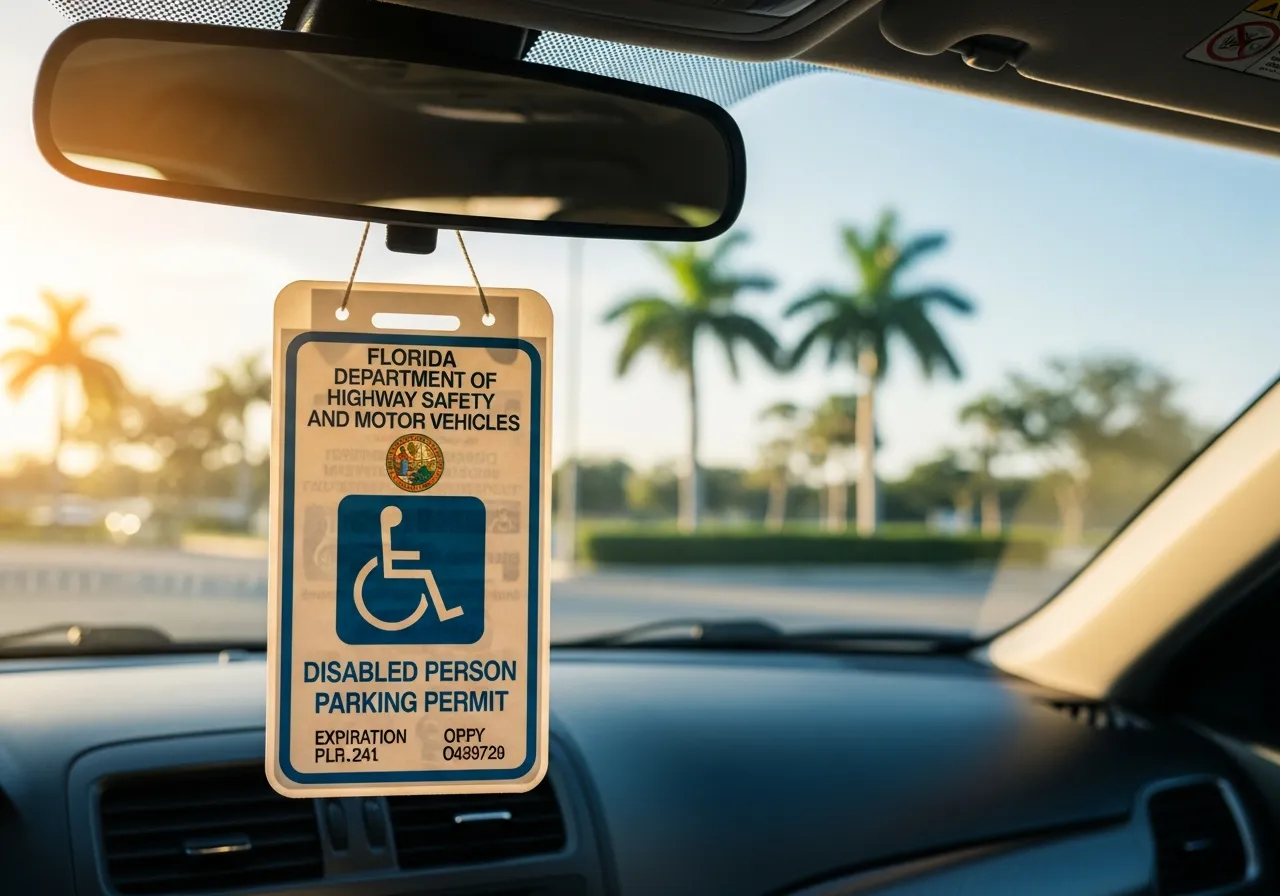
Florida: Your out-of-state permit is accepted if it displays the International Symbol of Access (ISA). If it does not show the ISA symbol, you must obtain a Florida visitor permit for $15, available in person or by mail.
-
Hawaii: Placard holders can park at meters for up to 2.5 hours or the posted time limit, whichever is longer — but you still must pay the meter fee.
California Has Extra Rules
Visitors with a permanent disability who plan to travel in California can apply for a California Travel Parking Placard through the California DMV, valid for up to 90 days.
This travel placard is free and requires a form signed by a licensed medical professional. You do not always need this special placard if you already carry a regular portable placard from your home state — but getting a California travel placard is strongly recommended if you are flying into the state, renting a car, or using a vehicle that does not have your home placard attached to it.
New York City Has Different Rules
New York City has its own parking permit system. While New York State accepts out-of-state placards for accessible parking lots and garages, street parking in NYC follows different rules.
Visitors with a valid placard can use accessible spaces in shopping centers, garages, and other off-street areas. However, parking in accessible street spots in NYC requires the city’s own NYC Parking Permit for People with Disabilities (NYC PPPD). This rule also applies to people from other parts of New York State. Knowing these rules before visiting New York City can help you avoid parking tickets.
Visiting or moving to New Jersey? Review the New Jersey out-of-state rules before you park. NJ residents frequently drive into NYC, and it’s worth knowing both.
If you need medical paperwork signed before your trip, you can start your placard evaluation with ParkingMD for a fast online consultation with a licensed doctor.
State-by-State Reference Table
| State / Region | Recognizes Out-of-State Placard | Free Metered Parking | Time Limit Extensions | Special Requirements |
|---|---|---|---|---|
| Florida | Yes (ISA symbol required) | Free for first 4 hours in most lots | Varies by lot | Visitor permit ($15) if no ISA symbol |
| California | Yes, but travel placard recommended | Yes, in many areas | Yes | 90-day visitor travel placard via CA DMV |
| New York (statewide) | Yes | Yes, with metered waiver | Yes | Separate NYC permit for on-street parking |
| New York City | Limited (off-street only) | Only with NYC PPPD | No | NYC PPPD required for street access |
| Texas | Yes | No universal exemption | Varies by city | None for standard placard use |
| Illinois | Yes | Yes (except zones under 30 min) | Unlimited in most zones | None |
| Oregon | Yes | Yes, no time limit | Unlimited | None |
| Hawaii | Yes | No (payment required) | 2.5 hours or posted limit | None |
| Ohio | Yes | Varies by municipality | Varies | None |
| All other states | Yes | Varies by city | Varies | Check local ordinances |
What Privileges Are Not Guaranteed With a Visitor Disability Permit
Having a visitor disability permit or an out-of-state placard does not always give you the same benefits as residents of that state. Here are the main differences:

-
Metered parking: Some states let you park for free at parking meters with a disability placard, but others still require payment. In some places, free parking only applies if the meter is for longer time limits, usually 30 minutes or more. Always read the parking sign before assuming it is free.
-
Residential parking areas: Many cities have special street parking reserved for local residents with permits. A disability placard from another state may not allow you to park in these areas.
-
Time limits in accessible parking spots: Even in designated disability parking spaces, some states still set a time limit. If you stay longer than allowed, you can receive a ticket even if your placard is valid.
-
Loading zones and restricted areas: Disability placards only work in marked disability parking spots or some meter spaces. They do not allow parking in fire lanes, loading zones, or no-parking areas.
Rules are different in every state, so always check signs before you park. Breaking the rules can lead to fines that range from minor to very expensive depending on the jurisdiction.
How to Prepare Before Traveling With an Out-of-State Handicap Placard
Planning ahead takes very little time and can prevent problems during your trip. Here is a practical checklist:

Confirm your placard is current. Expired placards are not recognized in any state. Check the expiration date before you leave. Permanent placards typically last between two and six years depending on your home state.
Verify the ISA symbol is visible. Make sure the International Symbol of Access is clearly displayed on your placard. A faded or damaged placard may not satisfy enforcement in states like Florida.
Look up your destination state’s rules. Each state’s DMV website is the most reliable source. Look specifically for information on out-of-state visitors, meter rules, and time limits. The ADA guidance on accessible parking provides a helpful overview of federal standards, but local rules layer on top of that baseline.
Apply for a California travel placard if needed. If California is on your itinerary for an extended stay, apply for the 90-day non-resident travel placard through the California DMV in advance. You will need a medical professional’s signature.
Carry backup documentation. Some states allow officers to request verification that the permit holder is in the vehicle. Carrying your original certification paperwork or a copy of your placard registration card can help resolve any questions quickly.
Know the NYC rules in advance. If you are driving into New York City, understand that on-street accessible parking requires the city’s own permit. Plan to use off-street parking lots and garages instead, where your out-of-state placard is fully recognized.
For travelers who do not yet have a valid placard and want to get the medical evaluation done before their trip, get started with ParkingMD’s licensed physician evaluation, trusted by over 33,000 patients across all 50 states.
Conclusion
Your out-of-state handicap placard gives you real, nationwide access to designated parking wherever you travel in the United States. All 50 states honor valid disability permits, and the federal framework under the ADA sets a consistent baseline for accessible parking. Still, the details matter. Meter rules, time limits, residential zones, and city-specific exceptions like those in New York City and California mean that knowing your destination’s rules is always worth a few minutes of research.
The core rules remain constant wherever you go: your placard must be current, the ISA symbol must be visible, and you must be present in the vehicle. Travel with confidence, check local regulations for each destination, and keep your documentation current before hitting the road.
If you need a physician evaluation to renew or obtain your placard before your next trip, get started at ParkingMD and receive your physician-signed DMV-ready forms in as little as 24 to 48 hours, trusted by over 33,000 patients across all 50 states.
Frequently Asked Questions
Can I use my out of state handicap placard in every U.S. state?
Yes. All 50 states, Washington D.C., and U.S. territories recognize valid out-of-state disability placards for use in designated accessible parking spaces. However, the specific privileges that come with your placard — such as free metered parking or time limit extensions — vary by state and city. California recommends that most out-of-state visitors apply for a 90-day travel placard through the California DMV.
Does traveling with a disabled parking permit give me free metered parking everywhere?
No. Meter exemptions are not universal. States like Oregon and Illinois provide free metered parking to placard holders, but others like Hawaii require payment. New York City requires a separate city-specific permit for metered street parking. Always check local signs and research the destination state's rules before assuming metered parking is free.
What is the International Symbol of Access and why does it matter when traveling?
The International Symbol of Access is the white wheelchair image on a blue background. It appears on disability placards and license plates. States like Florida specifically require that your permit displays this symbol to be recognized without additional steps. A placard without a visible ISA symbol may require you to apply for a local visitor permit.
Can someone drive my car and use my handicap placard while I'm not in the vehicle?
No. The placard is issued to you as a person, not to a vehicle. Anyone driving your car may only use the placard in accessible spaces if you are a passenger or the driver. Using the placard when you are not present is illegal in all 50 states and can result in fines, citation, and permit revocation.
What should I do if I will be in California for more than a few days?
Apply for a non-resident travel placard through the California DMV before your trip. This placard is valid for up to 90 days and requires a signed medical professional's certification on the application. You can apply online through the California DMV portal. Relying solely on your home state placard in California can create complications with local enforcement.
What are the rules for using my placard in New York City?
New York State broadly recognizes out-of-state placards for accessible spaces in off-street lots. On-street accessible parking in New York City, however, requires the NYC Parking Permit for People with Disabilities (NYC PPPD). Out-of-state visitors without an NYC permit should use off-street parking lots and garages, where their valid placard is recognized.

Meet the author
Nida Hammad
With over 5 years of experience in accessibility content, I create clear resources on handicap parking permits, state requirements, and applications.
Get an Accessible Parking Permit Evaluation in Minutes.