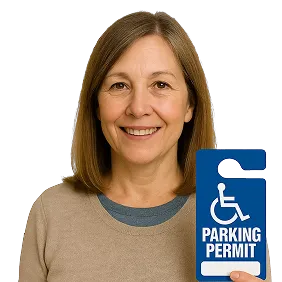

Traveling With a Handicap Placard: State-by-State Rules
 by Areeba Imran
Last updated:


Your trip shouldn’t become a research project just because you’re crossing state lines. When traveling with handicap placard, you can use your valid permit in all 50 states. But here’s what catches most people off guard: meter exemptions, time limits, and parking restrictions change from state to state. You might park free at meters in your home state, but face fines elsewhere if you assume the same rules apply.
This guide shows you precisely how handicap placard reciprocity between states works and what rules you need to check before you park. You’ll learn which parking privileges transfer across state lines and which don’t. We break down out-of-state handicap placard rules for 10 popular travel destinations, explain whether temporary visitors need new permits, and show you where to find accurate parking regulations fast.
Most placard holders don’t need a new permit when they travel. You just need to know which local rules apply to you. Skip the guesswork and park with confidence when traveling with handicap placard in any state.
Can You Travel Out of State With a Handicap Placard?
Yes, you can travel out of state with a handicap placard. Valid placards are recognized across all 50 states through reciprocity agreements. This means your permit works anywhere in the country when you travel.

However, reciprocity doesn’t mean your home state’s rules follow you everywhere. Your placard remains valid, but the benefits it provides depend on where you park. This distinction is critical to avoid parking violations.
How Handicap Placard Reciprocity Works
Reciprocity means states accept each other’s disability parking permits. Your placard grants access to designated accessible spaces nationwide. The ADA accessible parking standards establish baseline requirements that all states must follow.
That said, reciprocity only covers basic access rights. It doesn’t extend your home state’s specific privileges to other locations. For example, if your state offers free meter parking, that benefit may not apply elsewhere.
Each state maintains its own parking regulations beyond federal minimums. These differences affect how you use your placard when traveling. Understanding these variations prevents costly mistakes and ensures proper space usage.
Which State’s Handicap Parking Rules Apply?
When you visit another state, you must follow that state’s parking rules. Your placard is accepted, but local regulations determine what you can do with it. This includes meter exemptions, time limits, and display requirements.

Key differences you’ll encounter include:
-
Meter exemptions vary by city and state.
-
Time limits in accessible spaces differ significantly.
-
Display rules may require different placard positioning.
-
Local restrictions can limit where you park
Before traveling, check the State-by-State Handicap Placard requirements for your destination. Some cities require payment at meters despite your permit. Others enforce strict time limits even in accessible spaces.
Always display your placard properly according to local rules. Keep your permit ID card with you as proof of authorization. This preparation ensures smooth parking access throughout your trip.
Handicap Placard Rules in 10 Popular Travel States
When traveling with handicap placard across state lines, you need quick access to parking rules. Each state recognizes out-of-state disability permits. However, meter exemptions and time limits vary by location.
This table shows key rules for 10 popular travel destinations. Use it to plan your trip and avoid parking violations.
| State | Out-of-State Recognition | Meter Rules | Time Limits | Visitor Notes |
|---|---|---|---|---|
| California | Yes | Free at most meters | No limits in most areas | Check local city ordinances |
| Florida | Yes | Free at meters | No limits | Private lots may charge fees |
| Texas | Yes | Free at meters | No limits | Display the permit clearly |
| New York | Yes | Free at meters | 3-hour limit in some zones | NYC has strict enforcement |
| Nevada | Yes | Free at meters | No limits | Las Vegas Strip has special rules |
| Arizona | Yes | Free at meters | No limits | Hot weather can damage permits |
| Colorado | Yes | Free at meters | No limits | Mountain areas may have restrictions |
| Tennessee | Yes | Free at meters | No limits | Tourist areas strictly enforced |
| North Carolina | Yes | Free at meters | No limits | Beach towns may have peak season rules |
| Hawaii | Yes | Free at meters | No limits | Resort parking may require validation |
Handicap Placard Rules in 10 Popular Travel States Overview
All 50 states honor valid disability parking permits from other states. This means your home state placard works nationwide. However, local rules about meters and time limits differ.
Most states exempt permit holders from paying parking meters. Some cities impose time limits even with valid permits. For example, according to Colorado disability parking privileges, permit holders can park in designated spaces statewide.
Private property owners can set their own rules. Hotels, shopping centers, and hospitals may charge parking fees. Always check posted signs at your destination.
Key Considerations
Before you travel, verify local parking ordinances online. City websites often list specific rules for visitors. Tourist areas tend to have stricter enforcement than residential zones.
Keep your permit visible at all times. Hang it from your rearview mirror with the expiration date facing out. Remove it while driving to prevent damage.
Services like Parking MD can help you get proper documentation before your trip. This ensures you have valid permits for the entire journey.
Weather conditions affect permit durability. Hot climates like Arizona and Nevada can fade placards quickly. Store your permit in a cool place when not in use.
State-by-State Handicap Placard Rules for Travelers
When traveling with handicap placard across state lines, understanding handicap placard reciprocity between states helps you park legally. All 50 states honor valid out-of-state disability parking permits. However, each state has specific rules for visitors worth knowing.

Traveling With a Handicap Placard in California
According to the California DMV disability parking rules, the state accepts all valid out-of-state placards indefinitely. Visitors face no time restrictions when using disability placard in another state. You get full access to designated spaces and meter exemptions.
Traveling With a Handicap Placard in Florida
Florida honors valid out-of-state placards for temporary visitors. Once you establish residency, you must register your permit with the state. This applies to anyone staying beyond six months.
Traveling With a Handicap Placard in Texas
Texas accepts all valid out-of-state disability parking permits. Visitors receive full parking privileges at designated spaces. The state requires no additional registration for short-term stays.
Traveling With a Handicap Placard in New York
Data from the New York disability parking laws confirms the state accepts all valid state-issued permits. Visitors can use designated spaces and receive meter exemptions throughout their stay.
Traveling With a Handicap Placard in Nevada
Nevada recognizes out-of-state placards for visitors. You can park in designated spaces without time limits. The state requires residency registration only after establishing permanent residence.
Traveling With a Handicap Placard in Arizona
Arizona honors valid out-of-state permits for temporary visitors. You get access to all designated parking spaces. No additional documentation is needed for short trips.
Traveling With a Handicap Placard in Colorado
Colorado accepts valid disability parking permits from other states. Visitors receive the same parking privileges as residents. This includes meter exemptions and designated space access.
Traveling With a Handicap Placard in Tennessee
Tennessee recognizes out-of-state placards for visitors. You can use designated spaces during your stay. The state requires no special registration for temporary visits.
Traveling With a Handicap Placard in North Carolina
North Carolina honors valid out-of-state disability permits. Visitors get full access to designated parking spaces. Meter exemptions apply in most areas.
Traveling With a Handicap Placard in Hawaii
Hawaii accepts valid out-of-state placards for visitors. You can park in designated spaces throughout the islands. The state requires registration only after establishing residency.
Do Temporary Visitors Need a New Handicap Placard?
Most temporary visitors don’t need a new handicap placard when traveling between states. Your existing valid placard should work across state lines. However, you must follow local parking rules wherever you go.
Visiting Another State With Your Existing Placard
All 50 states honor out-of-state handicap placards under reciprocity agreements. This means your home state placard grants you access to designated handicap spaces nationwide. You can park in any marked accessible spot without getting a new permit.
That said, handicap placard reciprocity between states doesn’t exempt you from local parking regulations. Each state sets its own rules for meter fees, time limits, and restricted zones. Some cities charge meter fees even with a valid placard. Others enforce strict time limits in downtown areas.
Always check posted signs before parking. Your placard grants space access but doesn’t override local restrictions. Display your placard properly from the rearview mirror with the expiration date visible.
When a Temporary Visitor Placard May Be Relevant
Short-term visitors rarely need a temporary visitor handicap parking permit. Your existing placard covers most trips. However, some situations may require additional documentation.
If you’re renting a vehicle for an extended period, keep your placard ID card with you. Rental agencies may ask for proof that you’re the authorized permit holder. Some states require both the placard and ID card for verification.
What If You’re Staying for Several Months?
Extended stays create more complex requirements. According to the Florida Department of Highway Safety and Motor Vehicles, visitors staying longer than six months may need to establish residency status. This affects your vehicle registration and parking permit validity.
Snowbirds, students, and extended vacationers face unique challenges. If you register your vehicle in the destination state, you’ll likely need a local placard. Some states tie parking permits to vehicle registration. Others link them to driver’s license status.
Check with the issuing authority in your destination state rather than assuming short-term visitor rules apply. State Rules vary significantly for stays exceeding several months. Contact the local DMV office to clarify requirements before your extended stay begins.
Check Handicap Placard Rules for Your Destination!
5 Rules to Check Before Using Your Placard in Another State
When traveling with handicap placard across state lines, you can’t assume your home state’s rules apply everywhere. Each state sets its own parking regulations. What works in your home state might not work at your destination.

Here are five rules to verify before you park.
1. Parking Meter Rules
Don’t assume your home-state meter exemption applies elsewhere. Some states offer free parking at meters with a valid placard. Others require you to pay the standard rate.
According to the Washington State Department of Licensing, meter exemptions vary by location. Check your destination city’s parking authority website before you travel. This saves you from unexpected fines.
2. Parking Time Limits
Time limits at accessible spaces differ by state. Some states waive posted time limits for placard holders. Others enforce them strictly.

Check whether your destination extends or maintains standard time limits. This affects how long you can park at medical appointments or shopping centers.
3. Placard Display Requirements
Every state requires proper placard display. Most want it hanging from your rearview mirror with the number visible. Some states have specific rules about removing it while driving.
Know your destination state’s display rules. Improper display can result in tickets even with a valid permit.
4. Local City Parking Rules
State-level rules aren’t always the end of your research. Cities often add their own parking provisions on top of state laws.
Major cities may have stricter enforcement or additional requirements. Check both state and local regulations for complete compliance.
5. Placard Misuse Rules
A placard is for the benefit of the eligible holder. You can’t lend it to someone simply because they want accessible parking.
Misuse can result in fines up to $500 in many states. It also reduces availability for those who genuinely need accessible spaces. Only use your placard when you’re present in the vehicle.
What to Bring When Traveling With a Handicap Placard
Preparing for a trip with your handicap placard takes just a few minutes. That small effort prevents confusion and stress once you’re on the road. You’ll need specific items to use your placard legally across different locations.
Check Your Placard Before Leaving Home
Start by checking your placard’s expiration date. An expired placard won’t work in any state. Look for physical damage like cracks or fading that might make it hard to read.
Keep your placard ID card with you at all times. This card proves you’re authorized to use the placard. Some parking enforcement officers ask to see it along with your driver’s license.
Test your placard’s visibility before you leave. Hang it from your rearview mirror and check if the numbers show clearly. Replace it if the text has faded or become hard to read.
Check Each State on a Multi-State Road Trip
Each state sets its own parking rules for handicap placards. According to the Texas Department of Motor Vehicles, most states honor out-of-state placards through reciprocity agreements. However, specific regulations vary by location.
Research parking meter requirements for each state on your route. Some cities waive meter fees with a valid placard. Others require payment regardless of your permit status.
Download parking apps that show accessible space availability in real time. These tools help you find open spots quickly in unfamiliar areas. Plan your route to include accessible rest stops and parking at major destinations.
Check time limits at your destinations before you arrive. Some cities enforce maximum parking durations even with a valid placard. This prevents all-day parking in high-demand areas.
Where to Find Reliable Handicap Parking Rules
When traveling with handicap placard, you need accurate parking rules for each location. Outdated or incorrect information can lead to fines or parking violations. Finding reliable sources helps you park legally and confidently wherever you go.
Start With Official State Sources
Official state agencies provide the most current and accurate parking regulations. Start with your state’s DMV, BMV, MVD, or Department of Transportation website. These sites list specific rules for handicap placard reciprocity between states and local enforcement policies.
State government accessibility offices also maintain detailed parking guides. They explain meter exemptions, time limits, and special restrictions. According to Texas accessible parking guidance, state resources outline enforcement procedures and parking rights for permit holders.
Check these official sources for state-by-state handicap parking laws:
-
Department of Motor Vehicles (DMV) disability parking sections
-
State Department of Transportation accessibility pages
-
Official state government disability services offices
-
State-specific parking enforcement agency websites
Check Local Government Sources for City Parking Rules
City and county rules often differ from state regulations. Local government websites explain meter exemptions, street parking restrictions, and time limits specific to that area. These details matter when using disability placard in another state.
Municipal parking authorities publish enforcement policies and special event restrictions. City transportation departments list accessible parking locations and temporary visitor handicap parking options. Always verify local rules before parking in a new city.
Don’t Rely on an Old Blog for Current Parking Laws
Parking laws change frequently. Blog posts from 2026 or earlier may contain outdated information. Always check the last reviewed date on any parking guide you read.
Look for official source citations in any article you consult. Content without government links or recent update dates can’t be trusted. Verify information currency before following any parking advice, especially for out-of-state handicap placard rules.
Legal and regulatory sources matter more than general advice. Government agencies update their sites when laws change. This makes them more reliable than third-party content for current parking regulations.
Conclusion
Your handicap placard works across all 50 states. That’s the baseline. But each state sets its own parking rules. You need to check meter exemptions, time limits, and fee waivers before you arrive. This guide covered reciprocity basics, state-specific rules, and where to find reliable information.
Start with three quick checks. First, verify your placard hasn’t expired. Second, research parking policies at your destination. Third, print or save your state’s placard rules as backup. These steps take 10 minutes but prevent parking violations and fines.
Don’t have a placard yet, but qualify for one? Get certified before your trip. Parking MD connects you with licensed physicians who can evaluate your eligibility online. You’ll receive approval within 24 to 48 hours. No office visits required.
When traveling with handicap placard, preparation makes the difference. Use the state-by-state handicap parking laws above to plan your accessible parking strategy. Check your destination’s rules today and travel with confidence.
Need Handicap Placard Before You Hit The Road? Get Your Placard Before Your Trip!
Frequently Asked Questions
Can I use my handicap placard when I travel to another state?
Yes, you can use your handicap placard in all 50 states. Valid permits are recognized nationwide through reciprocity agreements. Your placard grants access to designated accessible spaces anywhere you travel. However, while your permit remains valid across state lines, the specific benefits it provides depend on local parking regulations. You must follow the parking rules of the state you're visiting, not your home state's rules.
Do I need to get a new handicap placard when I visit a different state?
No, most placard holders don't need a new permit when they travel. Your valid home state placard works in all 50 states through reciprocity. You just need to understand which local parking rules apply to you at your destination. Keep your permit ID card with you as proof of authorization. Display your placard properly according to the local rules where you park to avoid violations.
Why do meter exemptions change when I travel with my handicap placard?
Meter exemptions vary because each state and city sets its own parking regulations beyond federal minimums. Reciprocity only covers basic access rights to designated accessible spaces. It doesn't extend your home state's specific privileges to other locations. You might park free at meters in your home state but face fines elsewhere if you assume the same rules apply. Always check local meter rules before parking to avoid costly mistakes.
What parking rules should I check before traveling with my handicap placard?
Before you travel, check meter exemptions, time limits, display requirements, and local restrictions for your destination. Some cities require payment at meters despite your permit. Others enforce strict time limits even in accessible spaces. Display rules may require different placard positioning than you're used to. Local restrictions can limit where you park. Research state-by-state handicap placard requirements for accurate information about your specific destination.
Does handicap placard reciprocity mean my home state rules follow me everywhere?
No, reciprocity doesn't mean your home state's rules follow you everywhere. Reciprocity means states accept each other's disability parking permits for basic access. Your placard remains valid, but the benefits it provides depend on where you park. When you visit another state, you must follow that state's parking rules. This distinction is critical to avoid parking violations and ensures you use accessible spaces properly.
How can I find accurate parking regulations for the state I'm visiting?
Check state-by-state handicap placard requirements before your trip to find accurate regulations. Look up the specific city or state parking rules for your destination. Many states provide online resources detailing meter exemptions, time limits, and display requirements. You can also contact local parking authorities directly for clarification. This preparation helps you park with confidence and avoid fines when traveling with your handicap placard.

Meet the author
Areeba Imran
I am a healthcare professional and seasoned medical writer with 13+ years of experience across health, wellness, and clinical content. My work focuses on delivering trustworthy, evidence-based information that empowers readers to make informed decisions. With a keen interest in innovation and evolving areas of patient care, I bring a modern perspective to today's healthcare setup.
Get an Accessible Parking Permit Evaluation in Minutes.