
How Dr. Cooper Got His Handicap Placard Fast
 by Alisha Shabbir
Last updated:


Dr. Raymond Cooper travels frequently. When he needed a disability parking placard, timing was not optional. His primary care office did not see it that way.
“I’ve had an excellent experience with ParkingMD. My Primary Care Office was indifferent about the urgency with which I needed a parking pass, I travel a lot. I was somewhere in their pile. ParkingMD was clear about their requirements, my responsibilities, and honest about their turn around time. I was well informed throughout the process and I received timely professional assistance at every step. I highly recommend ParkingMD for your Handicapped Parking needs.”
— Dr. Raymond Cooper on Trustpilot
His primary care office gave him no timeline and no priority. ParkingMD told him exactly what to expect, kept him informed throughout, and delivered. That gap in experience is what his review is really about.
Why General Practices Deprioritize Disability Parking Placard Requests
A disability parking certification is not a clinical emergency in a busy general practice. Primary care physicians manage full schedules — acute illness, chronic condition management, specialist referrals, and administrative load. A placard certification enters that queue without any urgency attached to it.
The result is predictable. No estimate of when the paperwork will move forward. No dedicated person to contact when it stalls. No accountability when weeks pass without progress. Dr. Cooper described it plainly: he was somewhere in their pile. For a patient who travels regularly and depends on accessible parking at airports, hotels, and unfamiliar locations, an indefinite wait is not workable.
This is not a matter of negligence. General practices are not built around this specific task, and the patient experience reflects that structural reality.

Four Things ParkingMD Does That Most Primary Care Offices Don’t
Dr. Cooper’s review names four specific things. Each one is the absence of a problem he encountered at his primary care office.
-
Requirements were clear from the start. He knew what the evaluation involved and what documentation to prepare before he submitted anything. No surprises mid-process.
-
His responsibilities were spelled out. ParkingMD told him what his role was upfront. He did not discover what was needed from him after the fact.
-
The turnaround time was disclosed honestly. He knew how long the process would take before he committed. Not an estimate given after the visit — disclosed before intake began.
-
Professional communication at every step. At each stage, he received timely assistance. He was not left to follow up and chase status updates on his own.
In his own words: “I was well informed throughout the process and I received timely professional assistance at every step.”
These are not exceptional features. They are the baseline of a process designed around the patient rather than around the provider’s existing workload. Learn how the ParkingMD evaluation works before starting your application.

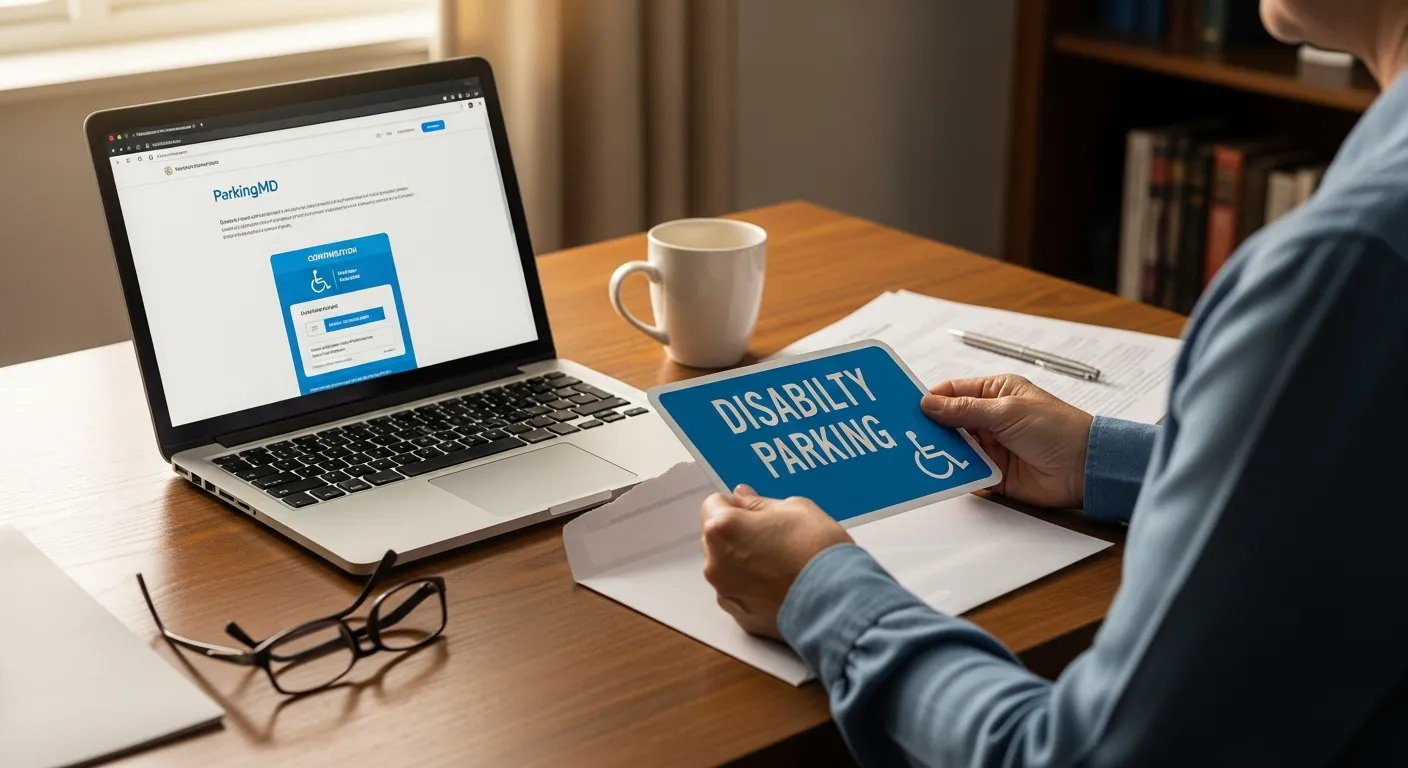
How ParkingMD Handles Disability Parking Placard Certifications Online
For patients unfamiliar with the telehealth certification route, the process is straightforward:
-
Complete the online intake. Submit your qualifying condition details and contact information through ParkingMD’s secure platform.
-
Upload supporting documentation. Medical records, physician notes, imaging results, or prescription history related to your qualifying condition.
-
Attend a telehealth evaluation. A licensed physician reviews your documentation and conducts a real clinical evaluation — not an auto-approval.
-
Receive your signed certification. Once approved, your completed certification paperwork is prepared and delivered.
-
Submit to your local issuing authority. Take your signed certification to your state’s DMV or local agency to receive your placard.
Because ParkingMD physicians handle placard certifications routinely, they are familiar with each state’s form requirements and how to complete them correctly the first time.
Primary Care Office vs. ParkingMD: Getting a Handicap Placard Without the Runaround
Most patients who go through their general practice first encounter the same pattern Dr. Cooper described: a long wait for an appointment, no communication about where the paperwork stands, and no clear process for what happens when it stalls.
| Primary Care Office | ParkingMD | |
|---|---|---|
| Scheduling | 2 to 6 week wait for an opening | Same-day or next-day evaluation |
| Timeline transparency | Rarely provided before or after the visit | Disclosed before the process begins |
| Communication during process | Patient follows up independently | Proactive updates at each stage |
| Urgency acknowledged | No — placard requests are low priority | Yes — process is built around patient timelines |
| Where you complete it | In-person office visit required | Fully online from home |
| Cost structure | Co-pay + transportation + potential time off work | Flat evaluation fee |
| If something stalls | Start the queue over | Support team assists with corrections |
What to Have Ready Before Your Online Placard Evaluation
The most common reason applications slow down after intake is documentation. Having the right records ready before you start makes the process faster and reduces back-and-forth.
Gather medical records from the provider managing your qualifying condition. Include physician notes that describe your diagnosis, prescription history related to your mobility or the underlying condition, and any imaging results that are relevant to your case.
You will also need a valid government-issued photo ID and your driver’s license information. If your records are not easily accessible, contact your provider’s records department before starting your ParkingMD intake. That step is entirely outside ParkingMD’s control and is often the one that takes the most time. Review state-by-state disability parking permit requirements to understand what your specific state needs.

Concluding Remark - ParkingMD Works for Patients Who Can’t Afford to Wait
Dr. Cooper’s primary care office put his placard request in a pile. ParkingMD told him what to expect, kept him informed, and delivered professional assistance at every step. That is the full comparison.
“I was well informed throughout the process and I received timely professional assistance at every step. I highly recommend ParkingMD for your Handicapped Parking needs.”
Start your online evaluation at ParkingMD
Dr. Raymond Cooper is a verified ParkingMD patient. His review on Trustpilot was shared with his consent. Individual experiences may vary. ParkingMD provides telehealth evaluations for disability parking permit medical certifications. Placards and plates are issued by your state’s DMV or local issuing authority.
Frequently Asked Questions
Does my primary care doctor need to be involved in the ParkingMD process?
No. ParkingMD physicians conduct an independent evaluation based on the documentation you upload during intake. A referral or coordination with your existing provider is not required.
What if my general practice already started the paperwork but it has stalled?
You can begin the ParkingMD process independently. A new physician certification does not depend on what your primary care office started. If the existing paperwork is incomplete or incorrect, starting fresh through ParkingMD avoids compounding delays.
Can a family member complete the intake on behalf of a patient?
In most cases, yes. A caregiver or family member can submit the intake information on a patient's behalf. All documentation and personal details should accurately reflect the patient's condition and identity.
Does the process work for patients who travel frequently between states?
Yes. Most U.S. states honor placards issued by other states through reciprocity. The placard is issued by your home state's authority and is valid in most other states for temporary visits.

Meet the author
Alisha Shabbir
Hey, I'm Alisha and I help people understand disability parking laws and medical services. At ParkingMD, I write about state regulations, patient rights, and healthcare access to make confusing processes straightforward. I believe good information should be easy to find and understand. When I'm not researching state laws or writing guides, you'll find me reading and practicing mindfulness.
Get an Accessible Parking Permit Evaluation in Minutes.