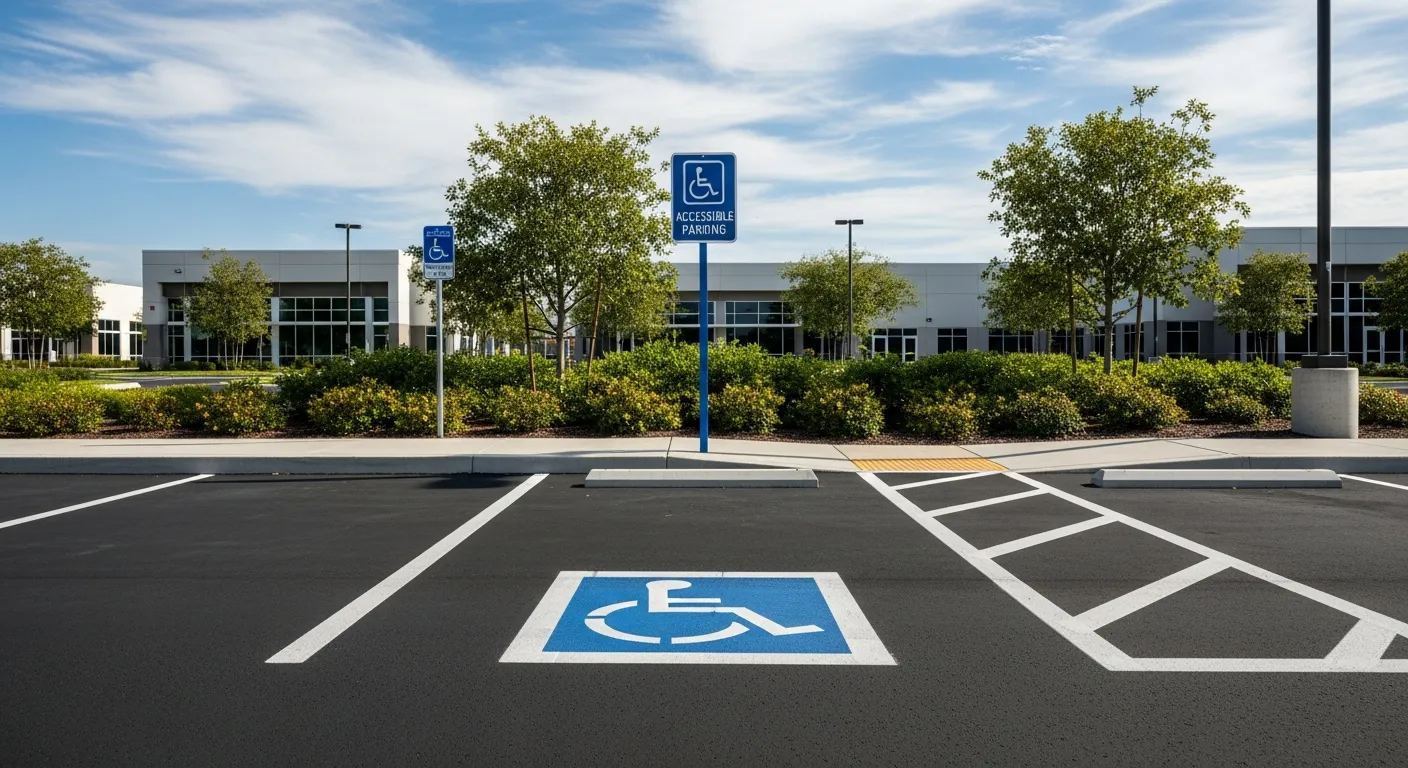
The ADA Rules Nobody Explains: Your Rights, Your Eligibility, and How to Claim Your Spot
 by Alisha Shabbir
Last updated:


For the roughly 61 million Americans living with a disability, accessible parking is not a convenience. It is a legal right protected under the Americans with Disabilities Act (ADA), and one that directly affects independence, safety, and quality of life.
Yet the topic remains widely misunderstood. Property owners underestimate their compliance obligations. Individuals with qualifying conditions assume they don’t meet the threshold. And the general public often conflates the physical design standards for parking spaces with the medical criteria for obtaining a permit, two distinct but related areas of law.
This guide covers both. Below, you’ll find the current ADA standards for accessible parking space design, the medical conditions that qualify individuals for a handicap parking permit, the DMV handicap placard application process across all 50 states, and the penalties for violations. Whether you’re evaluating your own eligibility or ensuring a facility meets federal requirements, this is a comprehensive reference for handicap parking requirements in 2026. If you’re in Illinois, you can start the Illinois handicap placard online application right now
What the ADA Requires for Handicap Parking Spaces
The Americans with Disabilities Act (ADA), signed into law in 1990, is the federal legislation that sets the baseline for accessible parking across the United States. The most current standards come from the 2010 ADA Standards for Accessible Design, enforced by the Department of Justice. These apply to virtually every parking facility that serves the public, whether it’s a shopping center, hospital, government building, or private business.
Here’s the core principle: any facility that provides parking must also provide a minimum number of accessible parking spaces. The exact number depends on the total size of the lot, and the requirements are calculated separately for each parking structure on a site, not combined across all lots.
The table below shows the minimum accessible spaces required under ADA standards:
| Total Parking Spaces | Required Accessible Spaces |
|---|---|
| 1–25 | 1 |
| 26–50 | 2 |
| 51–75 | 3 |
| 76–100 | 4 |
| 101–150 | 5 |
| 151–200 | 6 |
| 201–300 | 7 |
| 301–400 | 8 |
| 401–500 | 9 |
| 501–1,000 | 2% of total |
| 1,001+ | 20 + 1 for each 100 over 1,000 |
There are two important exceptions to note. Medical facilities with outpatient services must reserve at least 10% of patient and visitor parking as accessible. Rehabilitation centers and physical therapy clinics bump that number to 20%. On the other end, lots used exclusively for buses, trucks, or law enforcement vehicles don’t need accessible spaces, though they must provide an accessible passenger loading zone if the public accesses the facility.
At least one out of every six accessible spaces (or fraction of six) must be van-accessible. So if your lot requires six accessible spaces, at least one needs to accommodate vans. If you only have a single accessible space in a small lot with 25 or fewer stalls, that one space needs to be van-accessible.
Handicap Parking Space Dimensions and Design Standards
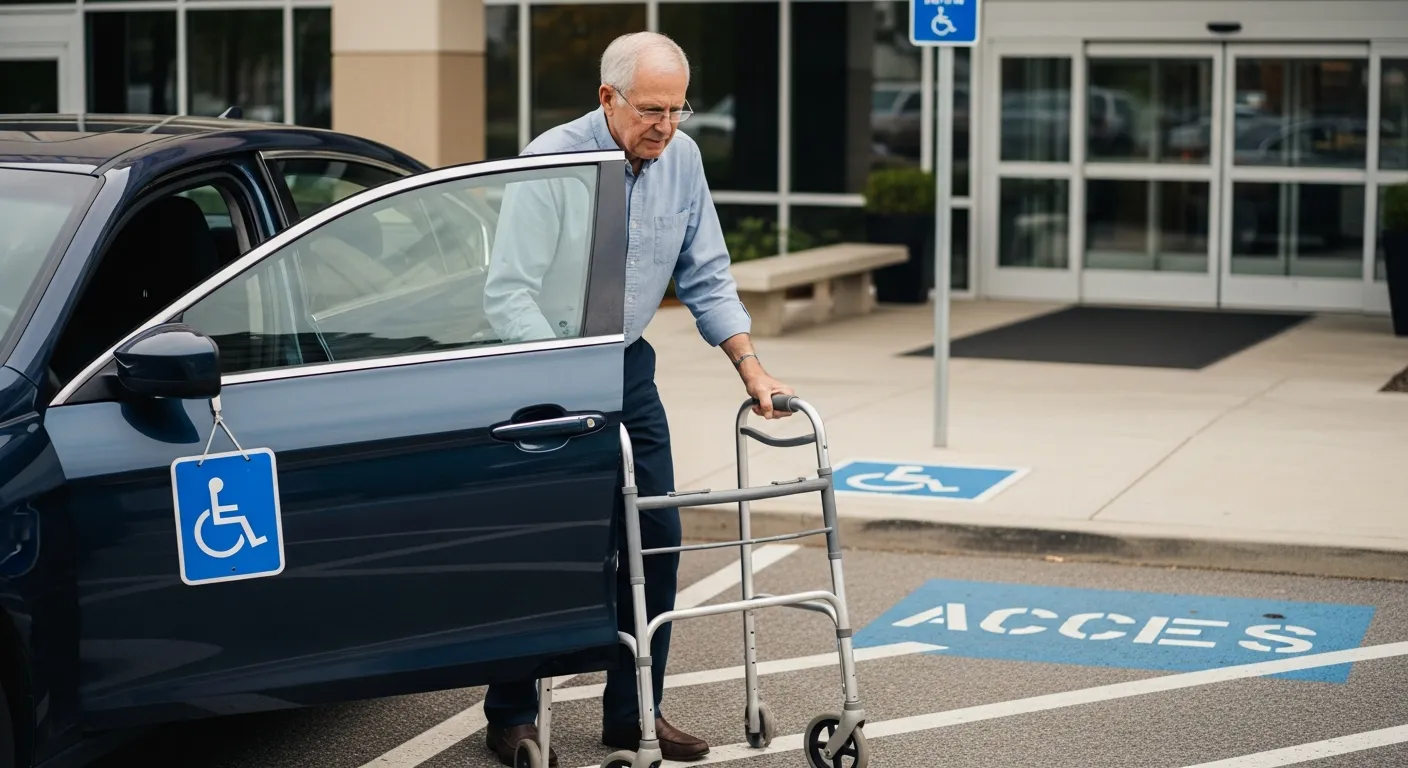
Not all accessible parking spaces are created equal. The ADA spells out precise measurements to ensure people using wheelchairs, walkers, and other mobility devices can safely enter and exit their vehicles.
Standard accessible parking
Standard accessible parking spaces must be at least 96 inches (8 feet) wide, with an adjacent access aisle of at least 60 inches (5 feet). That access aisle is the striped area next to the space where wheelchair users deploy lifts and ramps. Two adjacent accessible spaces can share a single access aisle between them, which is a common layout you’ll see in most parking lots.
Van-accessible parking
Van-accessible spaces follow one of two design options:
| Design Option | Space Width | Access Aisle Width | Total Width |
|---|---|---|---|
| Option A | 132 inches (11 ft) | 60 inches (5 ft) | 192 inches (16 ft) |
| Option B | 96 inches (8 ft) | 96 inches (8 ft) | 192 inches (16 ft) |
Both options provide the same total width. The difference is whether the extra room goes into the space itself or into the aisle. The access aisle for van spaces should be on the passenger side, since that’s where most wheelchair lifts deploy.
Beyond width, several other design standards apply. The surface of accessible spaces and aisles must be firm, stable, and slip-resistant. The slope cannot exceed 2% (a 1:48 grade) in any direction, which matters more than most people realize. A wheelchair on a sloped surface can roll unexpectedly, creating a serious safety hazard. Van-accessible spaces, their access aisles, and the vehicular route to reach them must have at least 98 inches (about 8 feet 2 inches) of vertical clearance to accommodate the height of lift-equipped vehicles.

Location matters too. Accessible spaces must sit on the shortest accessible route to the building entrance they serve. If a parking facility serves multiple entrances, accessible spaces should be dispersed among them so people don’t have to travel across an entire lot to reach the door closest to where they need to go.
Signage and Marking Requirements
Proper signage is what makes an accessible parking space enforceable. Without correct signs and markings, law enforcement often can’t issue citations for violations, and the space fails to serve its purpose.
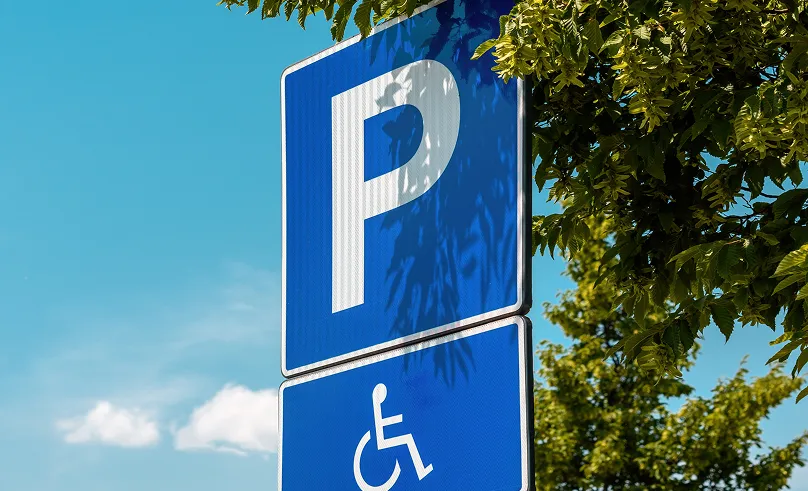
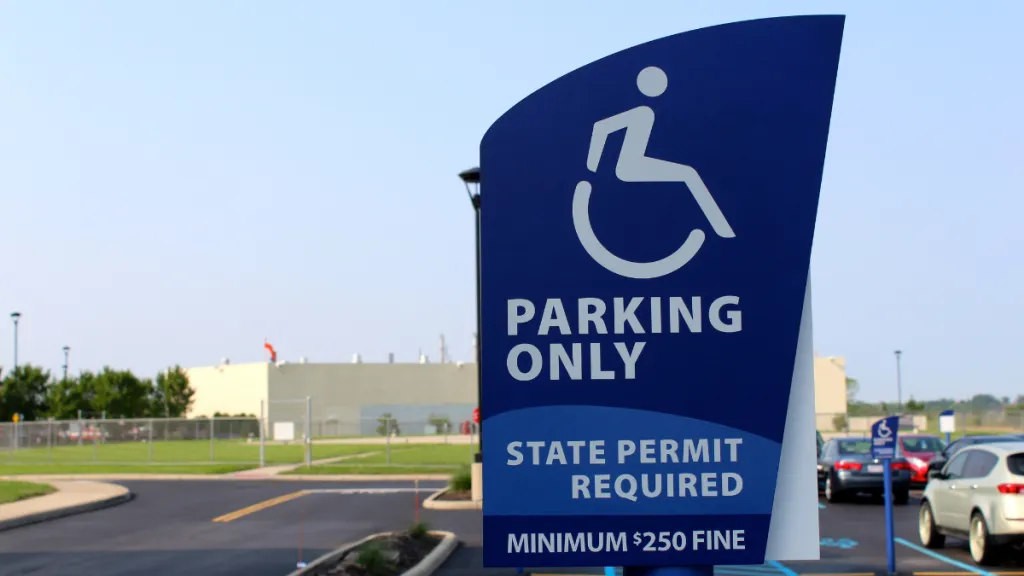
Every accessible parking space must display the International Symbol of Accessibility (the familiar blue-and-white wheelchair figure) on a sign mounted at least 60 inches above the ground, measured to the bottom of the sign. This height ensures the sign remains visible even when a vehicle is parked in the space. Van-accessible spaces require an additional sign below the accessibility symbol indicating “Van Accessible.”
Access aisles need their own treatment. They should be outlined and painted with hatched (diagonal) lines, and many states require “No Parking” markings within the aisle. The purpose is clear: if someone parks in the access aisle, a wheelchair user in the adjacent space may be completely unable to get out of their vehicle.
There are two narrow exceptions to the signage requirement. Lots with four or fewer total parking spaces don’t need to post a sign at the accessible space, though every other requirement (dimensions, access aisle, surface) still applies. And at residential facilities where spaces are assigned to specific units, identification signs aren’t required either. But in both cases, the spaces themselves must still meet all ADA design standards.
States often add their own requirements on top of the federal baseline. California, for instance, requires blue-painted curbs and specific penalty amounts posted on the sign. Check your state’s DMV website for local variations that go beyond the ADA minimum.
Who Qualifies for a Handicap Parking Permit
While the sections above cover what’s required of the parking spaces themselves, this is the question most people are really asking when they search for handicap parking requirements: do I qualify for a permit?
The short answer is that eligibility is based on functional limitations, not a specific diagnosis. If your medical condition significantly impairs your ability to walk or navigate a parking environment, you likely qualify. And the threshold is lower than many people expect.
While each state sets its own criteria, the qualifying conditions are remarkably consistent nationwide. You generally qualify if you meet one or more of these criteria:
-
Inability to walk 200 feet without stopping to rest due to a medical condition (this is the most commonly used qualification, and 200 feet is roughly the length of two-thirds of a football field)
-
Inability to walk without an assistive device such as a cane, crutch, brace, walker, prosthetic, or wheelchair
-
Lung disease severe enough that forced expiratory volume is less than one liter, or arterial oxygen tension is below 60 mm/hg on room air at rest
-
Cardiac condition classified as Class III or IV under American Heart Association standards
-
Legal blindness (visual acuity of 20/200 or less in the better eye with correcting lenses)
-
Severe limitation in walking due to arthritic, neurological, or orthopedic conditions
What catches many people off guard is how many conditions fall under these criteria that aren’t immediately visible. Chronic back pain, severe arthritis, fibromyalgia, COPD, multiple sclerosis, Parkinson’s disease, neuropathy, certain cardiac conditions, and even complications from pregnancy can all qualify. The medical community sometimes calls these “invisible disabilities,” and they’re among the most common qualifying conditions for handicap placards.
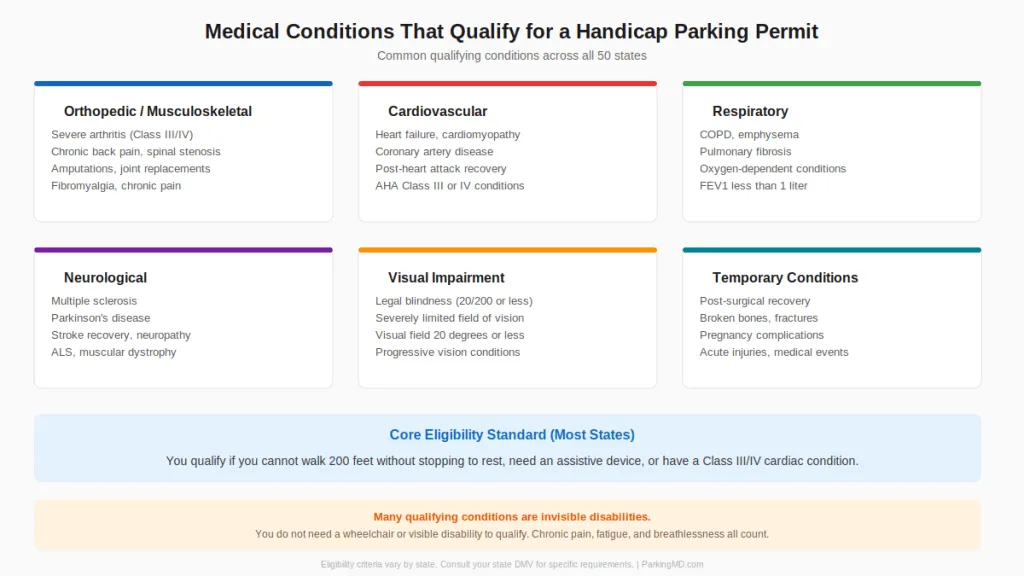
You don’t need to be in a wheelchair. You don’t need a condition that others can see. If walking from the far end of a parking lot causes you genuine pain, breathlessness, or risk of falling, talk to a physician about whether your condition meets your state’s eligibility standards.
How to Get a Handicap Parking Permit
Once you know you might qualify, the application process is more straightforward than most people expect. It generally involves three steps: medical certification, completing your state’s application form, and submitting everything to the DMV.
Step 1: Get medical certification.
A licensed healthcare provider (physician, physician assistant, nurse practitioner, or in some states, a chiropractor or podiatrist) must examine you and certify that your condition meets the state’s eligibility criteria. This is the step that trips most people up. Your regular doctor may not be familiar with the specific form your state requires, the appointment could be weeks out, and some providers charge $100 to $300+ just to complete FMLA or disability paperwork.
An increasingly popular alternative is getting your medical certification through a telehealth evaluation. Services like ParkingMD connect you with licensed physicians who specialize in disability parking evaluations. The consultation happens by phone or video, the physician reviews your medical history and assesses your functional limitations, and if you qualify, you receive your completed, physician-signed state form, often within 24 to 48 hours.

Step 2: Complete your state’s application form.
Every state has its own form (California uses REG 195, Texas uses VTR-214, Florida uses HSMV 83039, and so on). You fill out the patient section, and your physician completes the medical certification section. When you apply through ParkingMD, you receive the correct form for your state already filled out and signed.
Step 3: Submit to the DMV.
Depending on your state, you can submit in person, by mail, or sometimes online. Processing times vary from same-day to several weeks. In most states, permanent placards are free or cost under $20. Temporary placards may carry a small fee (typically $6 to $15). In most cases, getting a physician’s certificate is the biggest cost, which you can avoid by getting your documents via ParkingMD.
There are two main types of permits to know about. Permanent placards (usually blue) are for long-term or permanent conditions, typically valid for 4 to 5 years before renewal. Temporary placards (usually red) cover short-term situations like post-surgical recovery, pregnancy complications, or acute injuries, and they expire after 6 months or less.

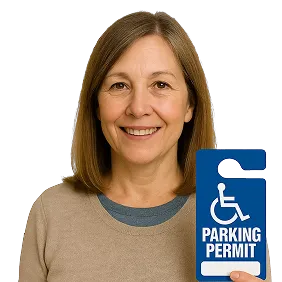
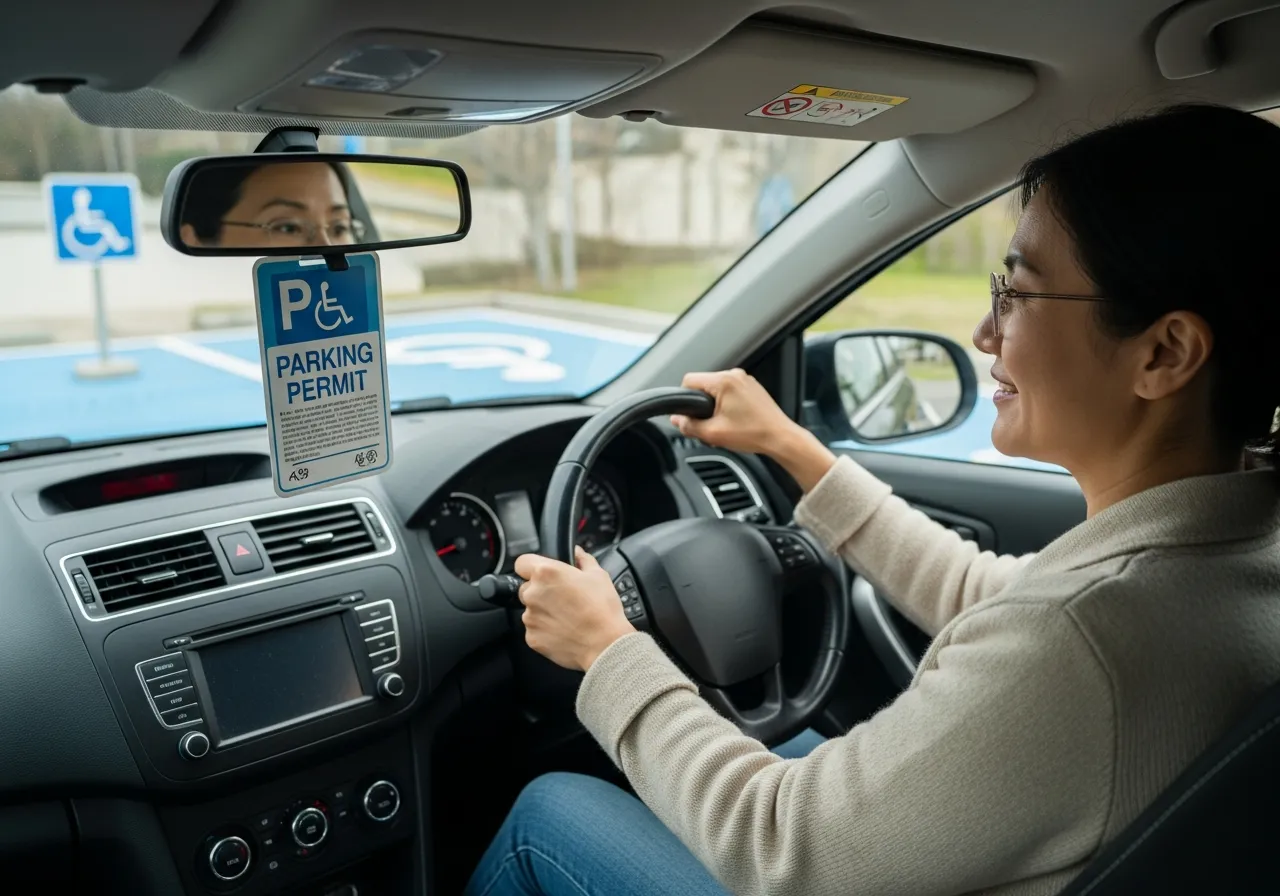
Your placard belongs to you, not your vehicle. You can use it in any car you’re traveling in, whether you’re driving or riding as a passenger. But it’s only valid when you’re present. Family members can’t borrow your placard when you’re not in the vehicle.
Penalties for Violating Handicap Parking Laws
Handicap parking violations carry real consequences, and they’re enforced more aggressively than many people realize. Every state treats unauthorized use of accessible spaces as a serious offense, with penalties that go well beyond a standard parking ticket.
Fines for Illegal Parking in Handicap Spaces
Fines for parking in a handicap space without a valid permit typically range from $100 to $500 for a first offense, though the ceiling is considerably higher in some states. California can impose fines between $250 and $1,000, plus an additional $1,500 civil penalty. Florida’s minimum penalty sits at $100, with the court able to impose up to $500. In several jurisdictions, repeat offenders face escalating fines that can reach well into the thousands.
Towing and Criminal Charges
Beyond fines, violators may have their vehicle towed at their own expense. In Texas and some other states, the offense is classified as a misdemeanor, which means it’s a criminal charge rather than a simple parking ticket. That distinction matters: a misdemeanor can show up on background checks and carry consequences well beyond the fine itself.
Placard Misuse Penalties
Placard misuse carries its own set of penalties. Using someone else’s placard, lending yours to a non-disabled person, or displaying a placard that has been revoked or expired can result in fines ranging from $250 to $1,000 in most states. In New York, making false statements to obtain a parking permit is a misdemeanor under the Penal Law, with fines up to $1,000 and potential additional civil penalties. States may also confiscate the placard and deny future renewals.
How Violations Are Enforced
Enforcement methods vary by location. Local police, parking enforcement officers, and in some cities, trained volunteer enforcers all have the authority to issue citations. Many municipalities also maintain online reporting systems where citizens can document violations with photos and license plate numbers.
Takeaway Note
Your right to accessible parking is protected by federal law, and the process to obtain a handicap parking permit is more straightforward than most people assume. The requirements outlined in this guide, from ADA-compliant space dimensions and signage standards to the medical criteria that determine individual eligibility, represent a framework designed to ensure equal access for people with disabilities across every state.
If you are living with a condition that limits your mobility, whether it is visible or not, the first step is a medical evaluation to determine whether you meet your state’s eligibility criteria. That evaluation no longer requires weeks of waiting for an in-person appointment. Through ParkingMD, you can connect with a licensed physician online, complete your assessment, and receive your signed certification form, often within 24 to 48 hours.
Frequently Asked Questions
What are the ADA requirements for handicap parking spaces?
The ADA requires that all public and private parking facilities provide a minimum number of accessible spaces based on lot size. Standard accessible spaces must be at least 8 feet wide with a 5-foot access aisle, and at least one in every six accessible spaces must be van-accessible. All spaces need proper signage with the International Symbol of Accessibility mounted at least 60 inches above the ground, and they must be located on the shortest accessible route to the building entrance.
What qualifies you for a handicap parking permit?
You generally qualify if you cannot walk 200 feet without resting, need an assistive device to walk, have a cardiac condition classified as Class III or IV, have severe lung disease, are legally blind, or have a neurological, orthopedic, or arthritic condition that significantly limits your mobility. Many invisible disabilities like chronic pain, fibromyalgia, and COPD also qualify. A licensed physician must certify your condition on your state's application form.
How many handicap spots are required per parking spaces?
For lots with up to 100 spaces, one accessible space is required for every 25 total spaces. The ratio changes for larger lots: lots with 101 to 150 need 5 spaces, 151 to 200 need 6, and so on. Lots over 500 spaces need 2% of total spaces to be accessible. At least one in every six accessible spaces must be van-accessible. Medical facilities require 10% to 20% depending on the type of care provided.
What is the penalty for parking in a handicap spot?
Fines for illegally parking in a handicap space typically range from $100 to $500 for a first offense, though some states impose higher penalties. California fines can reach $1,000 plus a $1,500 civil penalty. In several states, the violation is classified as a misdemeanor criminal offense. Vehicles may also be towed at the owner's expense, and repeat offenders face escalating penalties.
Do you need a doctor's note for a handicap placard?
Yes. Every state requires medical certification from a licensed healthcare provider to obtain a handicap placard. The provider must complete a specific section of your state's application form confirming that your condition meets eligibility criteria. You can get this certification through an in-person doctor's visit or through an online telehealth evaluation with a licensed physician. Some states waive the medical certification requirement if you have an obvious, visually identifiable disability and appear in person at the DMV.

Meet the author
Alisha Shabbir
Hey, I'm Alisha and I help people understand disability parking laws and medical services. At ParkingMD, I write about state regulations, patient rights, and healthcare access to make confusing processes straightforward. I believe good information should be easy to find and understand. When I'm not researching state laws or writing guides, you'll find me reading and practicing mindfulness.
Get an Accessible Parking Permit Evaluation in Minutes.