Is ParkingMD Legit? Real Patient Experiences
 by Alisha Shabbir
Last updated:


If you’ve never done ParkingMD’s online evaluation before, the process can feel uncertain before you begin. Is it a real medical evaluation or just a formality? Will the physician actually review your records? How long does it take? What happens if they have questions?
Rather than answer these questions ourselves, we asked patients who have been through it. Every quote below is from a verified ParkingMD patient. Their answers cover the evaluation experience from every angle, including how the physician review works, what the interaction feels like, how long it takes, and what happens when you’re approved.
Before you start, check confirmed whether your condition qualifies, conditions that qualify for a handicap placard cover a broader range of diagnoses than most patients expect.
”Is this actually a real medical evaluation?”
This is the most important question to answer before anything else. A disabled parking permit requires a licensed physician to certify that your condition meets your state’s eligibility criteria. That certification carries the same clinical and legal weight whether the evaluation happens in person or via telehealth.
Tony Salerno’s experience captures what the evaluation actually involves:
“This process was seamless and well worth it. The doctor reviewed all my medical history and they even requested additional health clarification before issuing the certificate. Staff was professional and helpful. Great company.”
— Tony Salerno, Verified Trustpilot Review
The detail that matters most in Tony’s review is that the physician requested additional clarification before issuing the certificate. That’s not a rubber stamp. That’s a physician doing exactly what a physician should do, reviewing the full clinical picture and asking questions when documentation needs to be filled out. A licensed doctor does not certify a patient who doesn’t qualify, and that professional stake is what makes the evaluation legitimate.
Telehealth evaluations conducted by licensed physicians are held to the same regulatory standards as in-person care — a framework established and maintained by CMS, which governs telehealth practice across all 50 states.

“Will the physician actually review my records?”
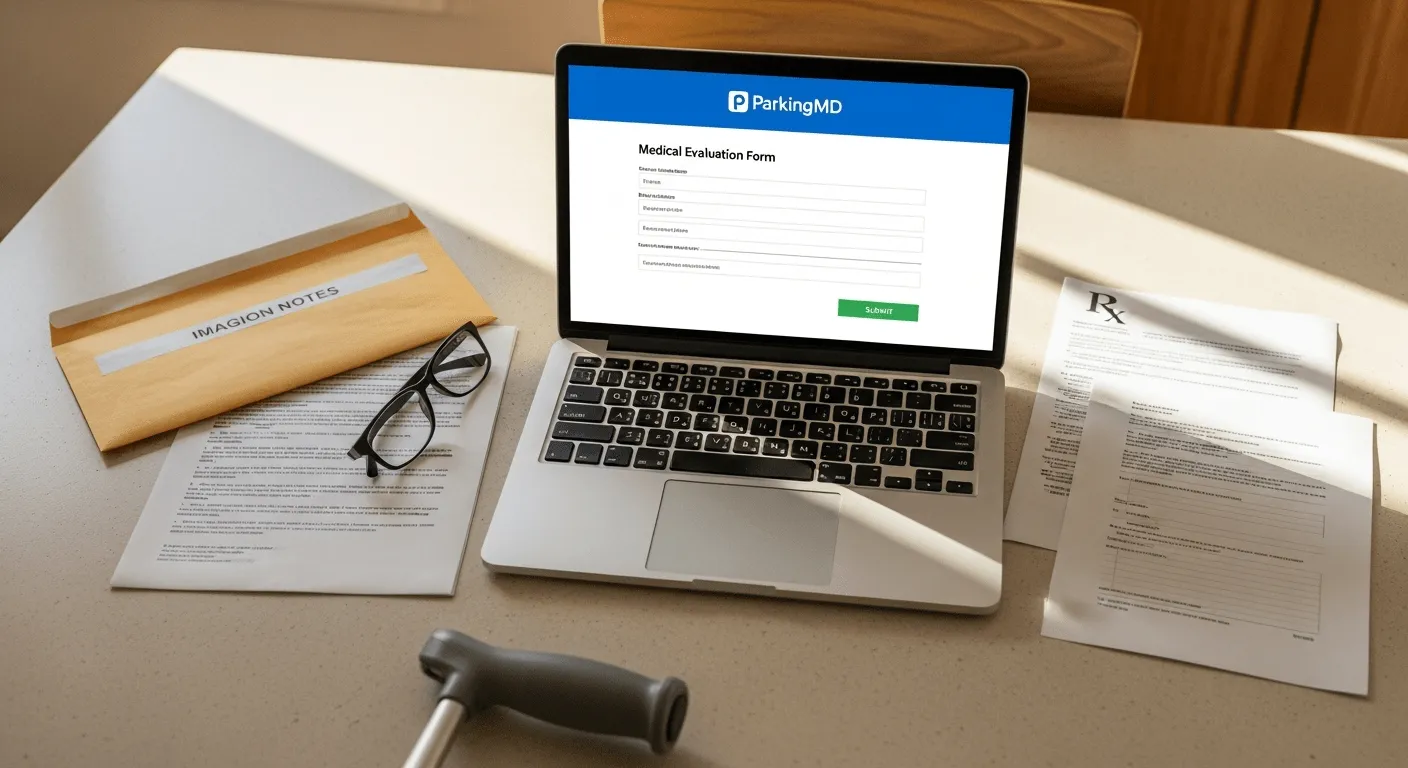
Yes, and this is one of the most consistent things patients describe about the evaluation. The physician reviews your submitted documentation before and during the evaluation, not after.
Tony Molina Jr’s experience confirms this directly:
“Uploaded documents regarding my condition and met with the Dr. He verified my condition was factual and I would be eligible for a placard.”
— Tony Molina Jr, Verified Trustpilot Review
“He verified my condition was factual” describes a physician making an independent clinical determination based on submitted documentation. That’s the standard ParkingMD’s evaluations are held to. The physician isn’t reading a summary of your records. They’re reviewing the actual documentation you uploaded and forming a clinical judgment from it.
Tony’s experience mirrors what other patients have described when they came in skeptical about whether a telehealth evaluation would be thorough enough. Several patients doubted the process would be legitimate until they went through it themselves, and the physician review was exactly what changed their minds.
”How does the actual interaction with the doctor work?”
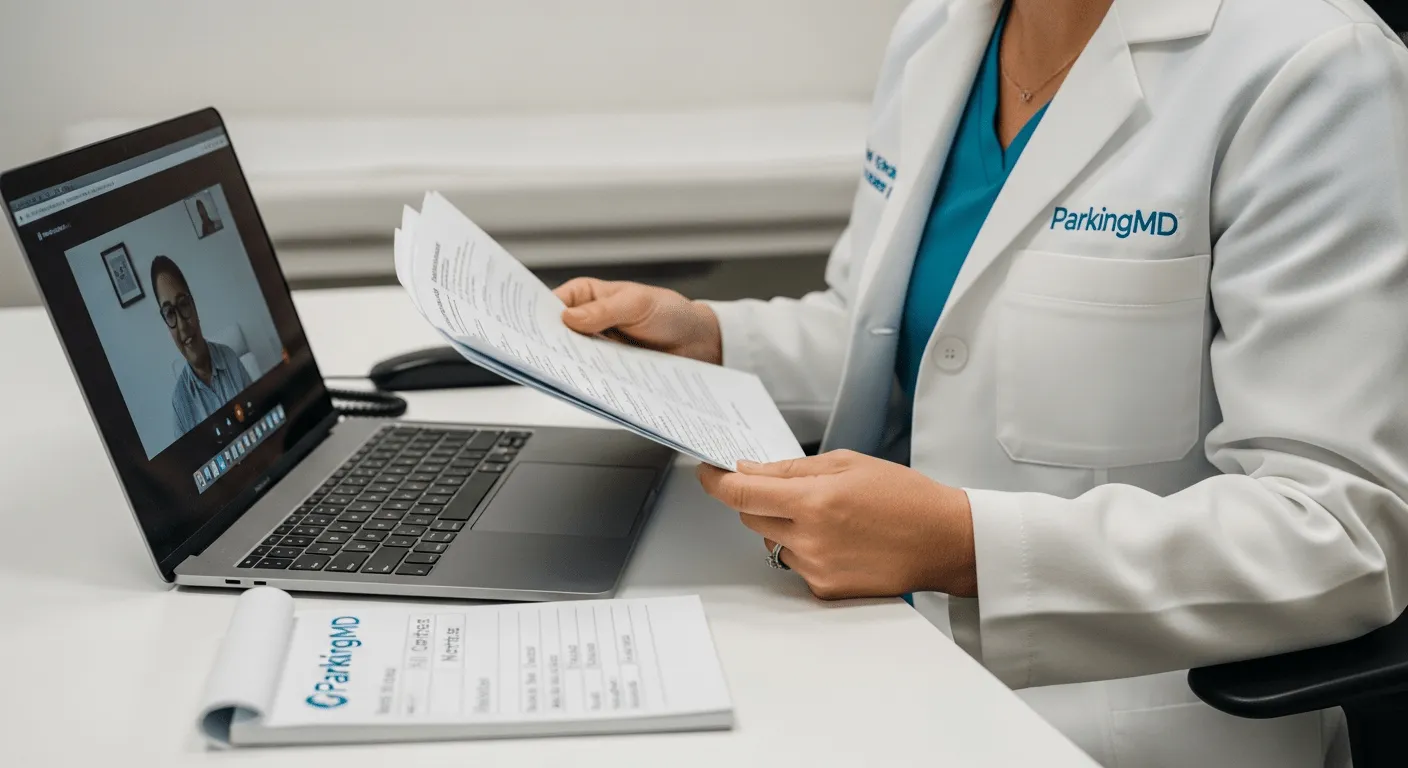
The evaluation is conducted via phone or video, depending on your preference and state requirements. For most patients, the interaction is straightforward. The physician has already reviewed your records before the call begins, which means the conversation focuses on your condition and any clarifying questions rather than starting from scratch.
Don Martin’s experience describes how smoothly it can go when records are in order:
“I followed the instructions and connected with the doctor very easily and uploaded my medical records and very shortly thereafter it was approved for my parking permit. This was so easy to follow the instructions and get my parking permit.”
— Don Martin, Verified Trustpilot Review
“Connected with the doctor very easily” reflects what most patients experience when their documentation is complete before the evaluation begins. The physician has context before the call starts. The interaction is efficient because the preparation work has already been done. Don’s timeline, from uploaded records to approved, moved quickly because nothing was missing when the evaluation began.
”How long does the evaluation actually take?”
This is one of the questions patients are most surprised by. The physician call itself is typically brief when records are well prepared, because the clinical review happens before the call, not during it.
Jason G. from Pennsylvania described his timeline specifically:
“The video call was less than 2 minutes, uploading my HH documents took longer.”
— Jason G., Verified Patient Review
Less than two minutes for the video call itself. The upload process took longer than the evaluation. That’s the correct order of effort. The work happens before the call, so the call itself can be focused and fast.
This doesn’t mean every evaluation is two minutes. Complex medical histories, multiple conditions, or documentation that requires follow-up questions will take longer. But for patients whose records are complete and clearly support their qualifying condition, the physician interaction is often shorter than they expected.
”What does the experience feel like compared to a regular doctor’s visit?”
Several patients describe the ParkingMD evaluation as feeling like a normal medical interaction, not an administrative transaction. That distinction matters for patients who are concerned the process will feel impersonal or superficial.
Locke from Oregon described it this way:
“Wonderful experience, it was easy to apply, it’s professional! Just like talking to your doctor.”
— Locke, Verified Patient Review
“Just like talking to your doctor” captures something important about how the evaluation is structured. The physician reviews your records, asks relevant questions, and makes a clinical determination. The interaction is professional and medically grounded. The only difference from an in-person visit is that it happens from your home, on your schedule, without a waiting room. The Americans with Disabilities Act National Network outlines the federal accessibility rights that disability parking permits are designed to support, including the medical certification requirement that makes the physician evaluation a legal necessity, not just a formality.
For patients whose primary care office was too backed up to prioritize a placard certification, Dr. Cooper’s experience is a useful comparison, his office was indifferent to the urgency, and ParkingMD wasn’t.
”What if I have questions during the evaluation?”
Questions during the evaluation are expected and welcome. The physician is there to review your case, and that includes answering questions you have about the process, your documentation, or what happens after the call ends.
Ernie Terlizzi’s experience reflects what that support looks like throughout the process:
“Professional and attentive — they will take time to answer questions and help walk you through the process. I would definitely recommend them.”
— Ernie Terlizzi, Verified Facebook Review
“Professional and attentive” describes a team that stays engaged from intake through approval, not just during the physician call.
What Happens After the Evaluation
Once the physician makes a clinical determination and your evaluation is approved, your signed state certification form is prepared and delivered to you. The form varies by state, with the REG 195 in California, the VTR-214 in Texas, and the HSMV 83039 in Florida among the most common. ParkingMD’s physicians complete the correct form for your state and deliver it ready for submission.
Most patients receive their signed form within 24 to 48 hours of approval. The final step is submitting the signed form to your state’s DMV, county tax assessor-collector, or authorized submission partner.
Your ParkingMD Medical Evaluation at a Glance
| Stage | What Happens | Typical Timeline |
|---|---|---|
| Intake form | Answer questions about your condition | Under 10 minutes |
| Record upload | Upload physician notes, imaging, specialist reports | Varies by preparation |
| Record review | ParkingMD team reviews documentation | Allow at least one night before scheduling |
| Physician evaluation | Licensed physician reviews records and conducts evaluation | Brief — depends on documentation completeness |
| Approval | Clinical determination made | Same session or follow-up if clarification needed |
| Signed form delivered | Completed state certification form sent to patient | Within 24 to 48 hours of approval |
| Submission | Patient submits signed form to state agency | One in-person trip or mail-in |
Ready to Start Your Disabled Parking Permit Evaluation?
Six patients described the same experience in different words: a real physician, a real review, a professional interaction that felt nothing like the impersonal process most people expect from a government form.
The evaluation happens from your home, on your schedule. Most patients receive their signed certification within 24 to 48 hours of approval.
Frequently Asked Questions
Is a ParkingMD evaluation accepted by my state's DMV?
Yes. ParkingMD's physicians are licensed in your state and complete the same state-required certification form as any in-person provider. The DMV does not distinguish between a form signed by a telehealth physician and one signed by an in-person doctor, provided the certifying physician holds an active license in your state.
Can I choose between a phone and video evaluation?
Yes. ParkingMD's evaluations are available via phone or video depending on your preference and state requirements. Either format produces the same clinical outcome, a licensed physician reviewing your records and making a determination.
How is my medical information protected during the evaluation?
ParkingMD's platform is fully HIPAA compliant. Your medical records and personal information are handled under the same privacy standards as any licensed healthcare provider.
What states does ParkingMD serve?
ParkingMD serves patients across all 50 states. The certifying physician holds an active license in your state, and the correct state-required certification form is completed as part of every evaluation. State-specific submission requirements are communicated to the patient before the signed form is delivered.
Can I use ParkingMD if I already have a placard that is expiring?
Yes. Renewal evaluations follow the same process as initial applications. A new physician certification on your state's required form is needed at renewal, and ParkingMD handles renewals the same way as first-time applications. Most states require a new certification each renewal cycle regardless of whether your condition has changed.

Meet the author
Alisha Shabbir
Hey, I'm Alisha and I help people understand disability parking laws and medical services. At ParkingMD, I write about state regulations, patient rights, and healthcare access to make confusing processes straightforward. I believe good information should be easy to find and understand. When I'm not researching state laws or writing guides, you'll find me reading and practicing mindfulness.
Get an Accessible Parking Permit Evaluation in Minutes.