Placard or Plate — Which One Actually Gets You Closer to the Door?
 by Nida Hammad
Last updated:


Choosing between a handicap parking placard and a disability license plate is often one of the first important decisions people make after finding out they qualify for accessible parking. Both options allow you to park in the same blue-striped accessible parking spaces, but they are used in different ways.
A placard can be moved from one vehicle to another, while a disability license plate stays attached to one specific car. Because of this, choosing the wrong option can create problems in daily life. For example, you may lose access to your parking benefit when riding in another person’s car, or you may end up paying extra renewal fees at the DMV.
This guide explains everything in simple terms so you can understand which option is best for you. You will learn what a handicap placard is, how a disability license plate works, who can qualify, how long each credential lasts, and what costs may be involved. The goal is to help you make the right decision based on your health needs, driving habits, and daily routine.
You will also learn how the application process works and what paperwork is usually required. In most states, a licensed doctor must confirm that you have a medical condition that limits your mobility or makes walking difficult. After your medical certification is completed, you can send your forms to the DMV to receive your parking credential.
The Americans with Disabilities Act requires accessible parking spaces across the United States, but each state manages its own parking placard and license plate program. This means the rules are not exactly the same everywhere. Some states charge small fees, while others offer placards for free. Renewal times, medical requirements, and application forms can also be different depending on where you live.
In this guide, we explain the most common rules that apply in many states and point out the areas where you should check your local DMV for exact details. By the end, you will clearly understand the difference between a handicap parking placard and a disability license plate, and you will know which choice fits your situation best.
What Is a Handicap Parking Placard?

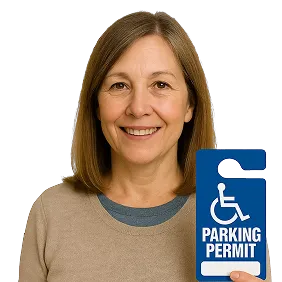
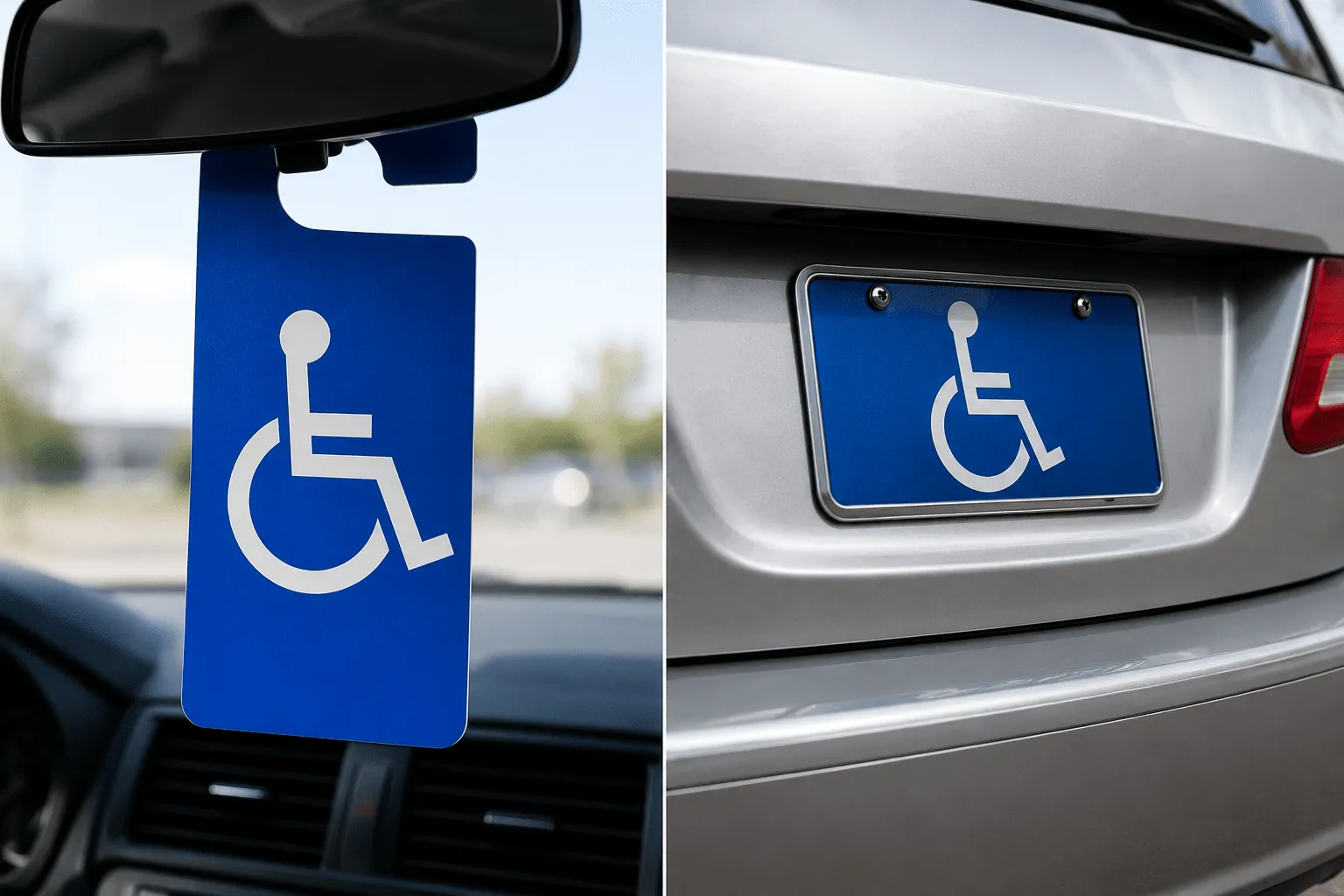
A handicap parking placard is a removable card that hangs from the rearview mirror when the car is parked. You can move the placard from one vehicle to another. It does not belong to the car. It belongs to the person with the disability.
Most states give two types of placards:
-
Blue placards are usually for permanent medical conditions.
-
Red placards are usually for temporary medical conditions and are often valid for up to six months.
Most placards include:
-
A unique ID number
-
An expiration date
-
In some states, a photo or signature
The placard should only hang from the mirror while the vehicle is parked. You must remove the placard before driving because it can block your view of the road. In some states, driving with the placard hanging from the mirror can lead to a traffic ticket.
The placard is issued in the name of the person with the disability, not in the name of the vehicle. This makes the placard very helpful for people who travel in different vehicles.
You can use your placard in Your own car, family member’s car, friend’s car, taxi or rideshare vehicle. You can use accessible parking spaces as long as the person with the disability is inside the vehicle.
What Is a Disability License Plate?

A disability license plate is a regular vehicle license plate that includes the International Symbol of Access, also known as the wheelchair symbol. This type of plate is issued for one specific vehicle, not for the person with the disability. The plate stays attached to the same car all the time and cannot be moved to another vehicle.
If you are driving the vehicle with the disability plate, you can park in accessible parking spaces. However, the plate only works for that one vehicle. If you travel in a different car, such as a friend’s car, a family member’s vehicle, or a rideshare, the disability plate on your own vehicle does not help you use accessible parking spaces. Because of this, some people choose to get both a disability license plate and a handicap parking placard.
Disability license plates are available in all 50 U.S. states. Many states also offer special types of disability plates, including veteran disability plates and specialty design plates. Some states even offer organization-themed plates that still include accessible parking privileges. Each type of plate may have different rules, fees, and eligibility requirements.
To receive a disability license plate, you usually need medical paperwork showing that you have a qualifying condition that affects your mobility or makes walking difficult. A licensed healthcare provider normally completes part of the application before it is sent to the DMV.
One major difference between a disability plate and a placard is the renewal process. Handicap placards often need to be renewed separately every few years. Disability license plates are usually renewed at the same time as your normal vehicle registration. This makes the process easier for many drivers because they do not need to complete a separate renewal for the disability status.
As long as your disability information remains approved with the DMV, your disability plate keeps its accessible parking privileges when you renew your registration. Many people like disability plates because they are always attached to the vehicle and do not need to be hung from the rearview mirror every time they park. However, people who travel in different vehicles may find a placard more useful because it can easily move from one car to another.
Side-by-side comparison of handicap parking placard vs. disability license plate
| Feature | Handicap Parking Placard | Disability License Plate |
|---|---|---|
| Tied to a person | Yes | No |
| Tied to a vehicle | No | Yes |
| Portable between vehicles | Yes | No |
| Temporary version available | Yes | No |
| Cost | Usually free | Standard plate fee applies |
| Renewal schedule | Every 2 to 4 years (varies by state) | Renewed with vehicle registration |
| Works in rideshares and other cars | Yes | No |
| Best suited for | Multiple-vehicle users, passengers, renters | Single-vehicle drivers with permanent disabilities |
Who Qualifies for Either Credential?
Each state manages its own disability parking program and sets its own eligibility rules for handicap parking placards and disability license plates. In most states, people may qualify if they have a medical condition that seriously limits their ability to walk or move safely.
Most states allow people to qualify if they have one or more of the following conditions:
-
They cannot walk 200 feet without needing to stop and rest.
-
They need help walking by using a cane, crutch, brace, wheelchair, prosthetic device, or another person.
-
They have a serious lung disease that makes breathing difficult.
-
They use portable oxygen.
-
They have a serious heart condition that limits physical activity.
-
They have severe arthritis or another condition that causes major difficulty while walking.
-
They have a neurological or orthopedic condition that affects movement.
-
In some states, people with legal blindness may also qualify.
The most important factor is whether the medical condition clearly limits the person’s ability to walk or move safely. To receive a placard or disability plate, the DMV usually requires proof from a licensed healthcare provider. A doctor or other approved medical professional must confirm that the person meets the state’s medical requirements.
Some qualifying conditions are temporary, while others are permanent. For example, a broken leg or a recent surgery may qualify someone for a temporary placard that lasts for a few months. Conditions such as multiple sclerosis, severe arthritis, or long-term mobility problems may qualify someone for a permanent placard or a disability license plate.
The type of parking credential you receive often depends on whether your condition is expected to improve over time. Temporary conditions usually receive temporary placards, while long-term or permanent conditions may qualify for permanent placards or disability plates.
Placard Types Explained: Permanent vs. Temporary
Understanding placard types helps you choose correctly from the start.
Permanent Placards
Permanent placards are given to people who have medical conditions that are expected to last for many years or for the rest of their lives. In most states, these placards are blue. They are commonly issued to people with serious mobility problems that make walking difficult on a daily basis.
Some conditions that may qualify for a permanent placard include:
-
Severe arthritis
-
Multiple sclerosis
-
Long-term heart or lung disease
-
Permanent mobility limitations
Most states require permanent placards to be renewed every two to four years. In some cases, you may need a doctor to complete a new medical form during renewal. Other states may allow a simpler renewal process if the condition is already listed as permanent with the DMV.
A permanent placard belongs to the person, not the vehicle. This means you can use it in different cars, including your own vehicle, a family member’s car, or a rideshare vehicle, as long as you are present.
Temporary Placards
Temporary placards are given to people who have short-term medical conditions that are expected to improve over time. These placards are usually red in most states. They are helpful for people recovering from injuries, surgery, or temporary mobility problems.
Common reasons for a temporary placard include:
-
A broken leg or foot
-
Recovery after surgery
-
A temporary injury that limits walking
Most temporary placards are valid for up to six months, although the exact time may be different depending on the state. Some states also limit the number of temporary placards a person can receive in a row.
If your condition lasts longer than expected, your doctor may complete paperwork for another temporary placard. If the condition becomes long-term, you may qualify for a permanent placard instead.
Both permanent and temporary placards provide the same accessible parking benefits while they are valid. The main difference is how long the condition is expected to last.
Benefits of a Handicap Parking Placard vs. a Plate
Both handicap parking placards and disability license plates give similar parking benefits. In most states, both allow people with disabilities to use accessible parking spaces marked with the wheelchair symbol. These spaces are usually closer to building entrances to make parking easier and safer.
According to the National Conference of State Legislatures, disability parking placards and license plates generally allow people with disabilities to use accessible parking spaces across all 50 states. In many states, these credentials may also provide additional benefits such as extra time at metered parking spaces or free metered parking in certain cities or areas. Valid disability parking credentials are also commonly recognized at federal buildings and national parks.
The main difference is how they are used. A handicap placard is more flexible because it can be moved from one vehicle to another. This is helpful for people who ride with family members, use rideshare services, or switch between different vehicles.
A disability license plate stays attached to one vehicle. This makes it simple and convenient because you do not need to remember to carry or hang a placard each time you park.
Many people prefer a placard if they travel in different vehicles. Others prefer a disability plate if they drive the same car every day. The best option depends on your daily routine and transportation needs.
Cost Comparison
Cost is an important factor for many people when choosing between a handicap parking placard and a disability license plate. The good news is that handicap parking placards are free in most states. Many people do not have to pay anything for the placard itself.
Some states may charge a small processing or administrative fee, but it is usually low. In many cases, the fee is less than $10.
Disability license plates are different because they are connected to vehicle registration. Most states charge the normal vehicle registration fee, and some may also charge an extra fee for the specialty disability plate.
Depending on the state, the extra cost may be:
-
No additional fee at all
-
A small extra fee
-
Around $20 or more in some states
For people who already own a vehicle and pay registration fees every year, getting a disability plate may not cost much extra. However, people who do not own a vehicle or who travel in different vehicles often find that a placard is the better financial choice.
A handicap placard can also be more useful because it can move from one vehicle to another. This gives more flexibility without extra registration costs.
How to Apply for a Handicap Parking Placard
Getting a handicap parking placard or disability license plate usually involves two main steps. First, a licensed healthcare provider must complete and sign your state’s medical certification form. Second, you must submit the completed form to your DMV or other state office that issues parking credentials.
For many people, the first step takes the most time. Scheduling a doctor’s appointment, traveling to the office, waiting for paperwork, and following up with the clinic can sometimes take several weeks. This process can be especially difficult for people who already have mobility problems or trouble traveling.
ParkingMD was created to make this process easier. The platform connects patients with licensed doctors through online telehealth appointments. If the doctor approves your request, ParkingMD sends your signed, DMV-ready medical certification within 24 to 48 hours. If you are not approved, you are not charged for the evaluation.
The second step is submitting your paperwork to the DMV. The exact process depends on the state where you live. Some states allow people to apply online or by mail, while others may require an in-person DMV visit.
ParkingMD also provides state-specific instructions to help you understand the next steps after receiving your medical certification. This makes the process easier and helps people avoid confusion when submitting their forms.
Ready to skip the waiting room? Start your evaluation with ParkingMD today and get your signed medical certification delivered in as little as 24 hours, all from home.
How to Apply for a Disability License Plate
The process for getting a disability license plate is similar to getting a handicap parking placard, but there is one important difference. A disability plate is connected to a vehicle, not to the person. Because of this, you must also provide information about your vehicle during the application process.
In many states, you may need:
-
Your vehicle title
-
Current vehicle registration
-
Proof of insurance
The first step is still getting medical certification from a licensed healthcare provider. The doctor must confirm that you have a qualifying medical condition using your state’s official DMV form.
Many people now use telehealth services to complete this step from home. ParkingMD connects patients with licensed doctors who complete certifications for both handicap placards and disability license plates.
The second step is completing your state’s disability plate application. In many states, this form is part of the normal vehicle registration paperwork. You usually select the disability plate option and attach your signed medical certification form.
The final step is submitting all of your documents to the DMV. Depending on the state, you may be able to:
-
Apply by mail
-
Visit the DMV in person
-
Complete part of the process online
Processing times are different in every state. Some people receive their disability plate within a few days, while others may wait several weeks.
It is also important to remember that disability plates are connected to the vehicle itself. If you sell your car, the disability plate may stay with the vehicle or may need to be returned to the DMV, depending on state rules.
The plate does not automatically move to your next vehicle. If you buy another car, you may need to complete a new application to receive a disability plate for the new vehicle.
Can You Have Both a Placard and a Plate?
Yes. Many people have both a handicap parking placard and a disability license plate at the same time. This is common for people who usually drive their own vehicle with a disability plate but sometimes travel in other vehicles.
A disability plate works only for one specific car. A placard, however, can be moved from one vehicle to another. Because of this, having both options can make daily travel much easier.
For example, a person may use their disability plate when:
-
Driving their own car every day
-
Going to work or school
-
Running daily errands
They may use a placard when:
-
Riding with family members or friends
-
Using medical transportation services
-
Traveling in a caregiver’s vehicle
-
Using rideshare or taxi services
Most states allow people to have a disability plate and one or more placards at the same time. However, the exact rules are different in each state. Some states allow only one or two placards, while others do not have a strict limit.
Having both credentials helps make sure you can use accessible parking spaces no matter which vehicle you are traveling in.
State-by-State Variations You Need to Know

Federal law under the Americans with Disabilities Act sets the basic rules for accessible parking in the United States. States are allowed to give people extra parking benefits, but they cannot provide less protection than the federal law requires.
Even though the main rules come from federal law, every state manages its own handicap parking program. Because of this, some rules are different depending on where you live.
According to the Centers for Disease Control and Prevention, more than 1 in 4 adults in the United States live with some type of disability, many of whom may benefit from accessible parking accommodations that support mobility and independence.
- Renewal Periods
The length of time a placard or disability plate stays valid is different in every state. Some states require renewal every two years, while others allow three, four, or even five years before renewal is needed.
For example:
-
California usually renews permanent placards every two years.
-
New York usually renews them every five years.
If you move to another state, your old placard or disability plate is usually accepted for a short time. However, you will normally need to apply for a new credential in your new state.
- Free Metered Parking Rules
Free metered parking rules are very different across the country. Some states allow all disability placard and plate holders to park at meters for free. Other states let cities and local governments make their own rules.
A few states no longer offer free metered parking at all. Because these rules vary so much, it is important to check your local DMV or city parking rules before parking at a meter without paying.
- Using Your Credential in Other States
Most states accept valid handicap placards and disability plates from other states. This means people can usually travel across the country and still use accessible parking spaces legally.
Many states also accept disability parking credentials from Canadian provinces. Some states may even recognize disability parking permits from other countries, but this is not guaranteed everywhere.
- Different Rules in Every State
According to the National Conference of State Legislatures, every state has its own:
-
Application forms
-
Renewal schedules
-
Parking enforcement rules
Because no two states have exactly the same rules, it is always important to read your state’s DMV instructions carefully before applying for a handicap placard or disability license plate.
Common Mistakes That Get Applications Rejected
DMV rejections happen more often than many people expect, but most of them can be avoided with careful attention to detail. According to medical experts who handle disability parking forms, most rejections happen because of simple mistakes in the application.
- Mismatched personal information
One of the most common reasons for rejection is incorrect or mismatched personal information. Your name, address, and ID number must be exactly the same on all documents, including your driver’s license or state ID. Even small differences, such as a missing middle initial or a slightly different spelling of your name, can cause the DMV to reject your application.
- Wrong credential type selected
Another common issue is choosing the wrong type of parking credential. If you apply for a permanent placard when your condition is temporary, or you apply for a temporary placard when your condition is long-term, your application may be rejected. This usually happens when the doctor’s notes do not match the type of credential you requested.
- Incomplete physician sections
The medical certification form must be fully completed by a licensed healthcare provider. If any required part is missing, the DMV will not accept it. Common problems include missing signatures, missing license numbers, or missing dates. Even one small missing detail can delay or stop your application.
Outdated forms
DMV forms are updated from time to time. If you use an old version of the form, your application may be rejected even if everything else is correct. It is always important to make sure you are using the most recent form from your state’s DMV.
Services like ParkingMD help reduce these errors because their physicians focus only on disability parking certifications. They know exactly how each state’s form should be filled out and carefully check everything before sending it. This helps lower the chance of rejection compared to regular clinics that do not handle these forms often.
What to Do If Your Application Is Denied
A denial is not the end of the process. Every state has an appeals system that lets you challenge the decision if your application is rejected.
If your application is denied, the first step is to carefully read the DMV denial notice. It usually explains the exact reason for the rejection, which helps you understand what went wrong.
If the problem is a simple form mistake, you may be able to fix it and submit the application again without starting completely over. This can include correcting missing information, fixing errors, or updating an outdated form.
If the denial is related to your medical condition, you may need to provide more medical documents. In this case, you can request a review and submit additional information from your doctor to support your case.
According to the ADA National Network, accessible parking is an important part of ensuring equal access for people with disabilities. If your application for a handicap parking placard or disability license plate is denied and you believe you qualify under your state’s rules, a disability rights organization or legal advocacy group may help you understand your appeal options and next steps.
If you believe you meet the federal requirements but were still denied, you may want to get help from a disability rights group or advisor. They can help you understand the rules and guide you through the appeal process.
How Long Does the Credential Last?
Permanent handicap placards and license plates stay valid until the renewal date set by your state. In most cases, the state will send you a reminder before they expire. When renewing a placard, you often need a new doctor’s certificate. However, some states may not require this if your condition is clearly permanent.
Temporary placards only last until the expiration date printed on them. If your condition is still the same after that date, you must get a new doctor’s certification before applying for a new temporary placard.
Disability license plates are usually renewed at the same time as your vehicle registration. In most states, the disability status continues automatically without needing a new medical form. Only a few states require you to update your medical information after some time.
It is important to remember your renewal date. If you use an accessible parking space with an expired placard or plate, you can get a ticket, even if you originally qualified for it.
Conclusion
Choosing between a handicap parking placard and a disability license plate depends on how you use parking and travel in daily life.
If you usually drive one car and rarely use other vehicles, a disability license plate may be more convenient because it stays on your car all the time. If you often ride with other people, use taxis or rideshare services, or travel in different cars, a placard is usually more helpful because you can take it with you. Some people even choose to have both, and many states allow this.
Both options have the same eligibility rules. The main differences are flexibility, cost, and renewal process. Placards are usually free, can be moved between vehicles, and may include temporary options for short-term conditions. License plates are fixed to one vehicle and are renewed along with your vehicle registration.
For most people, the most difficult part is not choosing between the two options. It is getting the doctor’s certification. Appointments, waiting times, and paperwork can make the process slow, especially for people with mobility challenges.
ParkingMD help make this process easier by connecting users with a licensed doctor online. The evaluation can be completed from home, and approved documents are usually provided within 24 to 48 hours. If a person is not approved, they are not charged.
Frequently Asked Questions
Can I use my handicap parking placard in any state?
Yes. All 50 U.S. states accept valid handicap parking placards from other states. As long as your placard is not expired and is used correctly, you can use it anywhere in the United States.
Can someone else use my placard to park without me?
No. The placard can only be used when the person whose name is on it is in the vehicle. It is illegal for someone else to use it without that person. This can lead to fines from about $250 to over $1,000, and the placard can be taken away permanently.
Do I need a new doctor's letter to renew my placard?
In most states, yes. A permanent placard usually needs a new doctor’s form when you renew it to confirm your condition still qualifies. Some states may skip this step if your condition is clearly permanent, but rules are different in each state, so check your local DMV.
What happens to my disability plate if I sell my car?
It depends on the state. In many states, you must return the disability plate to the DMV when you sell the car. The plate cannot be given to the new owner. In some cases, you may be able to move the plate to another car you own. Always check your state rules before selling a vehicle.
Can I get a temporary placard while waiting for a permanent one?
Usually, no. You will get only one type based on your doctor’s evaluation. If your condition is permanent, you get a permanent placard. If it is short-term, you get a temporary one.
Is a telehealth evaluation accepted for a handicap parking placard application?
Yes. A licensed doctor must complete your medical certification, but it does not matter if the visit is in person or online. The DMV only needs a signed form from a licensed physician.
How much does a handicap parking placard cost?
In most states, placards are free. Some states may charge a small fee. The doctor’s evaluation may cost extra depending on the service you use. Some services only charge if you are approved, so you do not pay if you do not qualify.

Meet the author
Nida Hammad
With over 5 years of experience in accessibility content, I create clear resources on handicap parking permits, state requirements, and applications.
Get an Accessible Parking Permit Evaluation in Minutes.