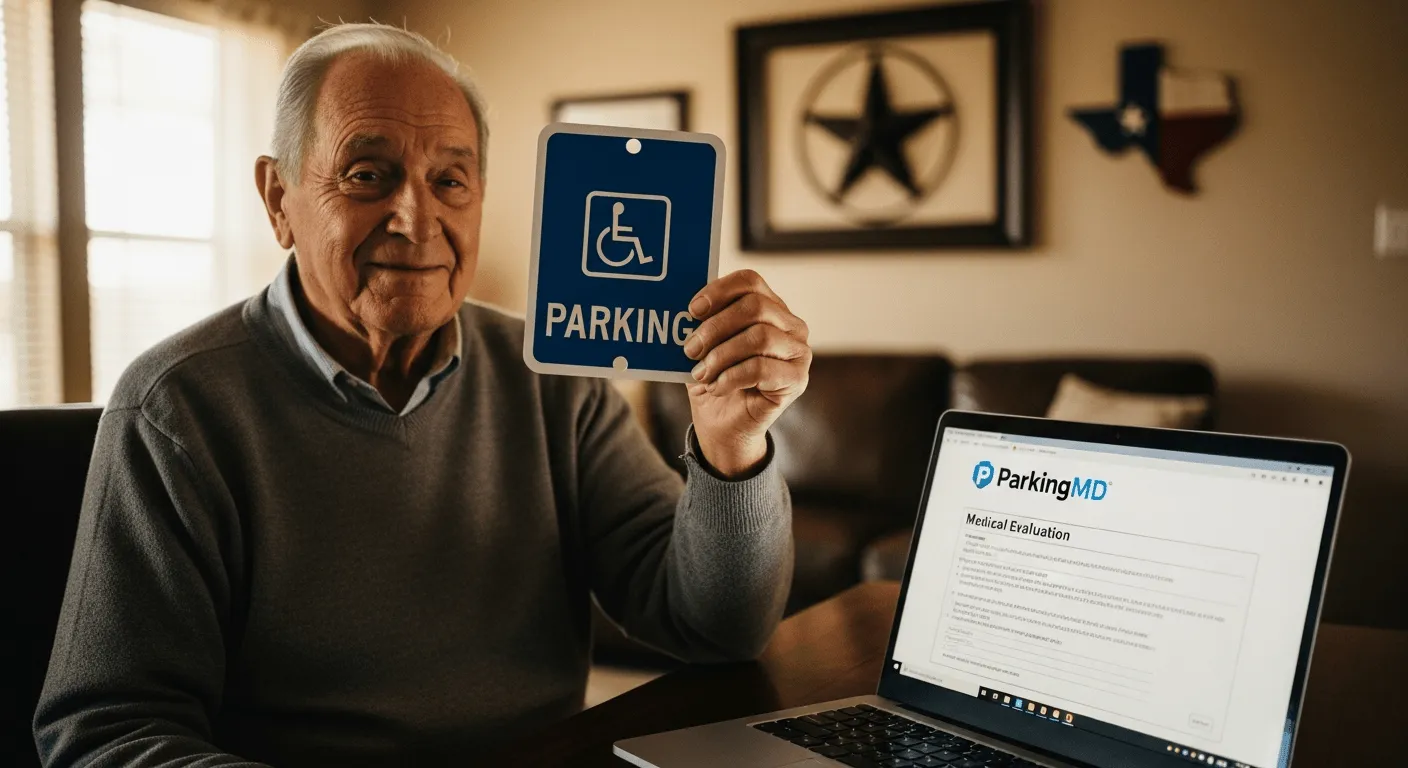
How Texas Patients Certified VTR-214 Online
 by Alisha Shabbir
Last updated:


Texas is home to nearly 1.5 million veterans and one of the largest concentrations of older adults managing chronic conditions that qualify for a disabled parking permit in the country. It also has one of the more specific placard processes. the VTR-214 is the only accepted certification form, it must be completed by a Texas-licensed provider, and applications go to the county tax assessor-collector office, not TxDMV directly. That last detail alone sends more Texas applicants to the wrong office than most people realize.
For patients who go through their primary care provider, the process moves at the pace of a non-urgent appointment, which in Texas can mean several weeks, especially in counties where the nearest provider is a long drive away. By the time the appointment happens, the form is completed, and the patient figures out where to submit, the process that should have taken days has stretched into weeks.
These six Texas patients found a faster, more direct path. Here’s what each of them experienced.
The Texas VTR-214: What Every Applicant Needs to Know
Texas’s official form for a Disabled Person Parking Placard or License Plate is the VTR-214. It has two sections: the applicant fills out their personal information, and a licensed Texas provider completes the medical certification, their license number, the qualifying diagnosis, and a description of how the condition limits the patient’s mobility.
One distinction that sets Texas apart from most states: the completed VTR-214 goes to your county tax assessor-collector office, not to Texas DMV. Texas has 254 counties, each with its own office handling placard applications. Patients who don’t know this often arrive at the wrong location and have to start the submission over. ParkingMD’s team advises on the correct submission route as part of every Texas evaluation, patients receive their signed VTR-214 knowing exactly where it needs to go.
One detail to confirm before you begin: the name on the VTR-214 must match your Texas driver’s license exactly, including middle initials. Confirming this before your intake starts avoids corrections after the form is already in hand.

How These Texas Patients Got Their Disabled Parking Permit Evaluation Done Right
1. Gray Politz — A Texas Veteran Who Couldn’t Wait Months for an Appointment
For veterans in Texas, the disabled parking permit process runs into a specific wall: VA scheduling. Non-urgent certifications like placard evaluations aren’t prioritized against clinical needs, and wait times at Texas VA facilities vary significantly by location. Gray Politz knew that going in.
“Easy process. As a vet it’s not always easy to get to your Dr or it takes months. This site u upload ur medical documents, get a call from a doc that reviews your diagnosis and your done. Then short trip to DMV.”
Gray’s process was straightforward: upload records, speak to a physician, receive the signed VTR-214. The VA documentation he already had was sufficient for the evaluation. He didn’t need a new appointment, a new referral, or a trip before the form was even started. For veterans managing service-connected conditions with records already in hand, that’s often the fastest path available. If you’ve been through a similar wait with your VA or primary care office, these patients ran into the same wall — and found the same solution.
2. Dan Kalili — Professional, Responsive, and Highly Recommended
Getting a disabled parking permit evaluation involves paperwork, a physician review, and a submission process that varies by county. For first-time applicants, having a team that responds quickly to questions isn’t a luxury, it’s the difference between a process that moves and one that stalls.
“They are very professional. The whole process was easy and they replied to my email quickly. I highly recommend them.”
— Dan Kalili, Verified Trustpilot Review
Dan’s review highlights something that shows up consistently across ParkingMD’s patient experience: communication. A primary care office operates on its own schedule, messages go to a front desk, calls get returned when there’s time. ParkingMD’s team is built around the evaluation process, which means questions about county submission, form requirements, and next steps get answered before they become delays.
3. Russ — Start to Finish, Sarah and the Team Made It Easy
When a patient names a specific staff member in their review, the interaction was personal enough to remember. For Russ, working with Sarah and the team made a process that could have been complicated feel genuinely uncomplicated from beginning to end.
“Working with Sarah and the team was easy and professional. Start to finish was so easy.”
— Russ, Verified Trustpilot Review
“Start to finish” covers more ground than it might seem. It means the intake was clear, the physician evaluation moved efficiently, the VTR-214 arrived correctly completed, and the submission step was handled without confusion. That arc, from first question to placard in hand, is what ParkingMD is built to support. Russ didn’t have to coordinate between multiple offices or figure out the county tax assessor routing on his own. The team carried that knowledge so he didn’t have to.
4. Todd — Transparent Pricing Before He Committed to Anything
One of the most common reasons patients hesitate before starting a disabled parking permit evaluation is not knowing what the process will actually cost. A primary care appointment comes with a co-pay, but it can also come with a return visit if the form needs to be corrected, transportation costs, and time off work, expenses that add up before the placard is even in hand.
“Very informative from the beginning and straight forward pricing! Ease of uploading information that was needed!”
— Todd, Verified Patient Review
Todd knew ParkingMD’s fee before he started. He knew what to upload and what the process would look like from intake to signed form. For a better understanding of the full disabled parking permit process and what it typically involves, the DMV Handicap Placard 101 guide breaks down each stage, and where the costs in the traditional route tend to accumulate. Todd’s experience didn’t include any of those hidden steps.
5. Douglas M. — Everything From the Comfort of His Couch
Douglas M.’s review is four words, but they carry real weight for any Texas patient who has considered what the traditional route actually requires: finding a provider with availability, scheduling an appointment, making the trip, waiting, and then figuring out the county submission process on the other side.
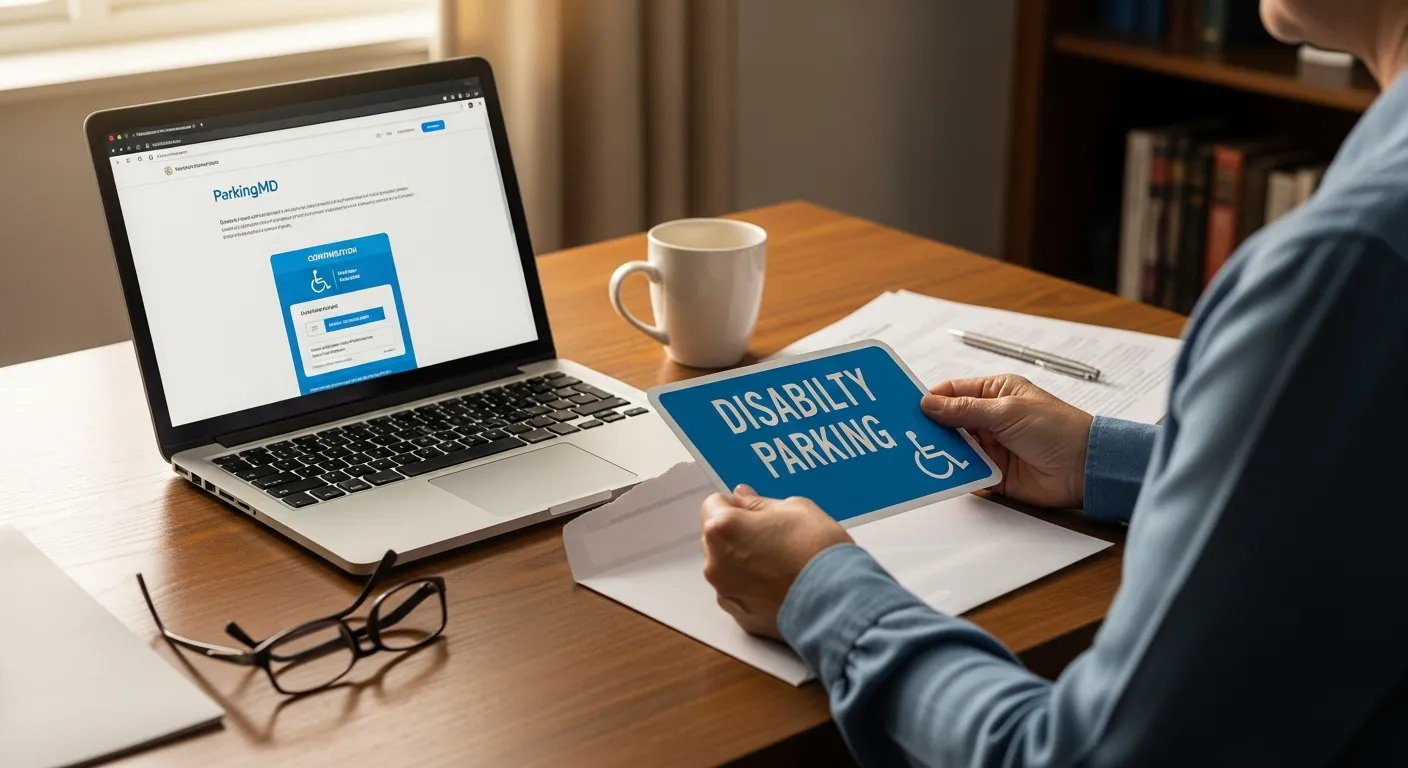
“You fill out all the information on the comfort of your couch.”
— Douglas M., Verified Patient Review
For patients managing mobility-limiting conditions, the exact conditions that qualify for a disabled parking permit, every unnecessary trip is a cost the system doesn’t account for. Douglas didn’t make any unnecessary trips. The intake, evaluation, and form delivery happened from home. The only trip he needed was to his county tax assessor-collector office to submit the completed VTR-214.
6. Darrell B. — Worth the Cost and Worth the Time
The question most patients ask before starting a disabled parking permit evaluation isn’t whether the process works — it’s whether it’s worth it compared to going through their own provider. Darrell B. answered that question directly.
“I would say it is well worth the cost and little time put into the process.”
— Darrell B., Verified Patient Review
“Little time” and “well worth the cost” together describe what happens when a process is designed to move efficiently. The VTR-214 evaluation, physician review, and signed form delivery are completed without the scheduling overhead, waiting room time, or correction cycle that comes with a provider who handles these forms occasionally. For a full picture of what disability parking covers and the benefits a permit provides, the complete guide to disability parking permits covers everything before you begin.
Texas Disabled Parking Permit: Key Details Before You Apply
Before you begin, here’s what Texas’s process looks like at a glance.
The VTR-214 is Texas’s required certification form.
The VTR-214 must be completed by a Texas-licensed provider with their license number, qualifying diagnosis, and a description of the patient’s mobility limitation. ParkingMD provides the VTR-214 as part of every Texas evaluation and delivers the completed form directly to the patient.
Applications go to the county tax assessor-collector.
This is the most commonly missed detail in the Texas process. Every VTR-214 is submitted to the county tax assessor-collector office, not to TxDMV directly. Texas has 254 counties, each with its own office. ParkingMD advises on the correct submission route for your county as part of the evaluation process.
The VTR-214 covers both placards and disabled person license plates.
If you’re applying for disabled person license plates in addition to or instead of a placard, the same VTR-214 form covers both. If you’re unsure which permit type is right for your situation, the red handicap parking permit guide explains the difference in plain terms.
Permanent placards are valid for 4 years.
Texas permanent placards expire after 4 years and require a new physician certification at renewal. Temporary placards are valid for up to 6 months.
Free metered parking applies statewide.
A valid Texas disabled parking permit provides complimentary parking at metered spaces across the state. Private lots and garages set their own policies independently.
| Texas Disabled Parking Permit Requirements | Details |
|---|---|
| Required certification form | VTR-214 |
| Application submission | County tax assessor-collector office |
| Permanent placard fee | No charge |
| Temporary placard fee | No charge |
| Permanent placard validity | 4 years |
| Temporary placard validity | Up to 6 months |
| Eligible certifying providers | MD, DO, PA, APRN, optometrist |
| Telehealth certification | Accepted |
| Metered parking | Complimentary, statewide |
| Plates vs. placard | Same VTR-214 form covers both |
How to Submit Your VTR-214 in Texas
-
At Your County Tax Assessor-Collector Office - Bring your completed, signed VTR-214 and a valid Texas driver’s license or state ID to your county tax assessor-collector office. The placard is issued at the counter or mailed to your address on file depending on the county.
-
By Mail - Most Texas counties accept mailed VTR-214 submissions. Check your county tax assessor-collector’s website for the mailing address and any specific requirements before sending. Keep a copy of the completed form for your records.
-
One Detail to Confirm Before You Submit - The name on the VTR-214 must match your Texas driver’s license exactly, including middle initials. Confirming this before your intake begins means the form arrives ready to submit without corrections.

Get Your Texas Disabled Parking Permit Evaluation Done Today
A veteran who couldn’t wait months for a VA appointment. A patient who handled everything from his couch. A first-time applicant who knew the cost and the process before he committed to a single step. Six Texas patients, six different starting points, all of them received a correctly completed VTR-214 without unnecessary delays, wrong offices, or return trips to a provider.
Texas telehealth evaluations are accepted statewide. Most patients receive their signed VTR-214 within one to five days.
Frequently Asked Questions
Can I get my Texas VTR-214 completed through online?
Yes. Texas accepts physician certifications from licensed Texas providers regardless of whether the evaluation was conducted in person or via telehealth. ParkingMD's physicians hold active Texas licenses and complete VTR-214 certifications regularly.
Why does my VTR-214 go to the county tax assessor-collector and not TxDMV?
Texas routes all disabled parking placard and plate applications through county tax assessor-collector offices rather than through TxDMV directly. Each of Texas's 254 counties has its own office handling applications. ParkingMD advises on the correct county office for your address as part of every Texas evaluation.
What conditions qualify for a disabled parking permit in Texas?
Qualifying conditions under Texas Transportation Code Section 681.001 include inability to walk 200 feet without stopping to rest, conditions requiring portable oxygen, Class III or IV cardiac disease, severe pulmonary disease, legal blindness, and other conditions that substantially impair mobility. Neurological, orthopedic, and arthritic conditions affecting walking ability may also qualify depending on their documented functional impact.
Can I apply for both a placard and disabled person license plates in Texas?
Yes. The VTR-214 covers both placard and disabled person plate applications. Indicate which permit type you're applying for in the applicant section. ParkingMD's physicians complete the provider section for whichever type you're requesting.
How long is a Texas disabled parking permit valid?
Permanent placards are valid for 4 years and require a new physician certification at renewal. Temporary placards are valid for up to 6 months. The county tax assessor-collector will process renewal applications the same way as initial applications — a new signed VTR-214 is required each time.

Meet the author
Alisha Shabbir
Hey, I'm Alisha and I help people understand disability parking laws and medical services. At ParkingMD, I write about state regulations, patient rights, and healthcare access to make confusing processes straightforward. I believe good information should be easy to find and understand. When I'm not researching state laws or writing guides, you'll find me reading and practicing mindfulness.
Get an Accessible Parking Permit Evaluation in Minutes.