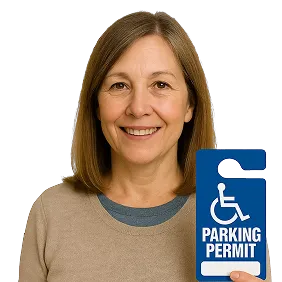

Stop Walking Through the Pain: How Arthritis Patients Get Closer Parking
 by Nida Hammad
Last updated:


Living with arthritis means navigating daily challenges that others might not see. Simple tasks like walking across a parking lot can become painful ordeals, turning routine errands into exhausting experiences. If arthritis affects your mobility, a handicap parking placard could provide the relief you need to maintain your independence and quality of life.
Many people with arthritis don’t realize they may qualify for handicap parking privileges. The good news is that various forms of arthritis can meet eligibility requirements, and the application process is more straightforward than you might think. This comprehensive guide will walk you through everything you need to know about obtaining handicap parking for arthritis.
Understanding Handicap Parking Placards for Arthritis
A handicap parking placard, also known as a disability parking permit, grants you access to designated accessible parking spaces. These prime spots are strategically located closer to building entrances and offer extra space for entering and exiting your vehicle safely. For someone dealing with arthritis-related mobility limitations, this accommodation can mean the difference between managing daily tasks independently or struggling with debilitating pain and fatigue.
The eligibility for a handicap placard isn’t based solely on having an arthritis diagnosis. Instead, it focuses on how your condition affects your ability to walk and move. According to medical experts at Hospital for Special Surgery, the key consideration is whether your arthritis significantly limits your mobility, not just the type of arthritis you have.
Ready to find out if you qualify? At ParkingMD, we simplify the process of obtaining your handicap parking permit. Our licensed healthcare providers can evaluate your condition and provide the medical certification you need, all through a convenient online consultation.
Types of Arthritis That Qualify for Handicap Parking
While having an arthritis diagnosis alone doesn’t automatically grant you a placard, many forms of arthritis commonly meet eligibility requirements when they substantially impact your ability to walk comfortably.
Rheumatoid Arthritis
Rheumatoid arthritis is an autoimmune disease that attacks the lining of your joints, causing painful inflammation, swelling, and potential joint damage. This condition typically affects the hands, wrists, knees, and feet, joints crucial for mobility and daily function.
When rheumatoid arthritis reaches moderate to severe stages, it can dramatically limit your walking ability. CreakyJoints reports that many people with rheumatoid arthritis qualify for handicap parking, particularly during flare-ups when joint pain and stiffness intensify. The unpredictable nature of RA means that some days you might walk relatively normally, while other days even short distances become nearly impossible.
Osteoarthritis
Osteoarthritis is the most prevalent form of arthritis, affecting millions of Americans. This degenerative joint disease occurs when the protective cartilage cushioning your joints gradually wears down over time. Weight-bearing joints like the hips, knees, spine, and ankles are most commonly affected.
Advanced osteoarthritis can cause bone-on-bone grinding, severe pain, and significant mobility restrictions. If your osteoarthritis makes walking across parking lots painful or requires you to use mobility aids like canes or walkers, you likely meet the criteria for a handicap placard.
Psoriatic Arthritis
Psoriatic arthritis develops in some people who have psoriasis, causing joint inflammation along with the characteristic skin condition. This type of arthritis can affect any joint in your body and often comes with severe fatigue that compounds physical limitations.
The combination of joint pain, swelling, and exhaustion can make even moderate walking distances challenging. When psoriatic arthritis limits your walking ability or causes significant discomfort during ambulation, it typically qualifies for handicap parking accommodations.
Ankylosing Spondylitis
Ankylosing spondylitis primarily targets the spine, causing inflammation that can eventually lead to vertebrae fusing together. This results in reduced flexibility, chronic back pain, and a hunched posture in advanced cases.
The spinal involvement in ankylosing spondylitis can make walking both difficult and painful, particularly over longer distances. Many individuals with this condition experience morning stiffness lasting several hours, making early errands especially challenging without close parking access.
Juvenile Arthritis
Children and young adults with juvenile arthritis face unique challenges. Despite their youth, they can experience severe joint pain and mobility limitations. Age doesn’t disqualify someone from needing handicap parking, the impact on mobility is what matters. Juvenile arthritis patients who meet the walking limitation criteria can and should apply for placards.
Severity Requirements and Eligibility Criteria

Having an arthritis diagnosis represents just the starting point. To qualify for handicap parking for arthritis, your condition must meet specific severity thresholds demonstrating substantial mobility impairment.
Medical Criteria for Qualification
Most states require that your arthritis causes at least one of the following limitations:
Limited Walking Distance: You cannot walk more than 200 feet without stopping to rest. This distance equals roughly two-thirds the length of a football field or the walk across a large parking lot. If arthritis pain, stiffness, or joint instability prevents you from completing this distance comfortably, you meet this criterion.
Mobility Aid Requirement: You need assistive devices such as a cane, walker, crutches, wheelchair, or leg braces to walk. If your arthritis has progressed to requiring these aids for safe ambulation, this generally satisfies eligibility requirements.
Cardiovascular or Respiratory Limitations: You have a lung disease or cardiovascular condition severely affected by walking. Some forms of inflammatory arthritis, particularly rheumatoid arthritis, can impact the heart and lungs, creating additional mobility challenges.
Severe Joint Instability: Your arthritis causes such significant joint instability that walking presents a real risk of falling or injury. This criterion particularly applies to advanced knee, hip, or ankle arthritis where joints may buckle or give out unexpectedly.
Bilateral Lower Extremity Impairment: Both legs are affected by arthritis to a degree that severely limits mobility.
Understanding Invisible Disabilities
One significant challenge arthritis patients face is that their condition often qualifies as an “invisible illness.” As discussed in the rheumatoid arthritis community, you might look perfectly healthy to others while experiencing debilitating pain and mobility limitations.
This invisibility sometimes leads to unwelcome comments or questioning looks when you use handicap parking. Remember that you don’t need to justify your placard to strangers. If you’ve been medically certified as needing handicap parking, you have every right to use those spaces regardless of how healthy you appear to others.
Temporary vs. Permanent Placards
Handicap placards come in two primary categories based on the expected duration of your mobility limitations.
Temporary Placards are issued for conditions expected to improve within six months. You might receive a temporary placard if you’ve recently undergone joint replacement surgery, are experiencing a severe arthritis flare-up, or are waiting for treatment interventions to take effect. These placards typically display an expiration date and can often be renewed if your condition hasn’t improved as anticipated.
Permanent Placards are designated for mobility limitations expected to last longer than six months or are considered permanent. Most people with chronic arthritis conditions like rheumatoid arthritis, advanced osteoarthritis, or ankylosing spondylitis receive permanent placards. While called “permanent,” these typically require renewal every two to five years depending on your state’s regulations.
The Application Process: Step-by-Step Guide for Handicap Parking for Arthritis

Obtaining a handicap parking placard for arthritis involves a straightforward process, though specific requirements vary by state. Here’s what you need to know.
Step One: Consult Your Healthcare Provider
Schedule an appointment with a qualified healthcare provider who treats your arthritis. This could be your primary care physician, rheumatologist, orthopedic surgeon, or another licensed medical professional. Not all healthcare providers can certify handicap placard applications, check your state’s requirements, but typically MDs, DOs, nurse practitioners, and physician assistants are authorized.
During your appointment, be honest and specific about your mobility limitations. Describe how far you can walk before experiencing significant pain, whether you use or need assistive devices, and how arthritis affects your daily activities. Don’t downplay your symptoms, this is the time to be accurate about your worst days, not your best ones.
Your healthcare provider will complete the medical certification portion of your application, verifying that you meet the eligibility criteria for a handicap placard.
Step Two: Complete the Application Form
Obtain your state’s handicap placard application form. You can typically download these from your state’s Department of Motor Vehicles (DMV) or motor vehicle division website, pick them up at DMV offices, or sometimes request them by mail.
Fill out the applicant portion of the form completely. You’ll need to provide personal information including your name, address, driver’s license number, and details about your disability. Some states charge a small processing fee, while others provide placards free of charge.
Step Three: Submit Your Application
Submit your completed and signed application to your state’s DMV or designated motor vehicle office. Submission methods vary by state:
-
In-person submission: Visit your local DMV office with your completed application
-
Mail submission: Send your application to the address specified on the form
-
Online submission: Some states now offer digital submission options
Processing times typically range from one to four weeks, depending on your state and submission method.
Step Four: Receive and Use Your Handicap Parking for Arthritis
Once approved, you’ll receive your handicap parking placard by mail. Temporary placards are usually red, while permanent placards are typically blue. Your placard will include an identification number and expiration date.
When parking, hang your placard from your rearview mirror so the identification number is visible from outside the vehicle. Remember to remove it before driving, as it can obstruct your vision. You can use your placard in any vehicle you’re traveling in, whether you’re driving or a passenger.
Application Tips for Success
Following these strategies can help ensure your handicap parking application gets approved quickly and without complications.
Be Thorough and Accurate
Complete every section of your application form. Incomplete applications get rejected or delayed, prolonging the time you’re without this crucial accommodation. Double-check that all information matches your official identification documents.
Document Your Condition
While not always required, bringing documentation of your arthritis diagnosis and treatment history to your medical appointment can be helpful. Medical records, imaging results showing joint damage, and medication lists demonstrate the legitimacy and severity of your condition.
Choose the Right Healthcare Provider
See a provider familiar with your arthritis and its impact on your life. If your primary care doctor doesn’t regularly treat your arthritis, consider asking your rheumatologist or orthopedic specialist to complete the certification. They’ll have detailed knowledge of your condition’s severity.
Be Honest About Your Limitations
Some people hesitate to “complain” about their symptoms or feel they should appear strong. When applying for a handicap placard, accuracy matters more than stoicism. Describe your mobility challenges honestly, focusing on your limitations on difficult days rather than your best days.
Understand Renewal Requirements
Mark your calendar with your placard’s expiration date. Most permanent placards require renewal every two to five years. Start the renewal process a few months before expiration to avoid any gap in your parking privileges.
Know Your Rights
Familiarize yourself with handicap parking laws in your state and any states you frequently visit. Understanding your rights helps you use handicap parking confidently and correctly.
Don’t let the application process overwhelm you. ParkingMD streamlines everything by connecting you with licensed medical professionals who understand arthritis and mobility limitations. Get your medical certification quickly through our online platform and move forward with your application right away.
Using Your Placard Responsibly
Once you receive your handicap placard, using it properly protects both your privileges and ensures accessibility for others who need it.
Display Your Placard Correctly
Always hang your placard from your rearview mirror with the identification number visible from outside your vehicle. Some states also issue license plates for permanent disabilities, these eliminate the need to hang a placard each time.
Only Use It When the Qualified Person Is Present
Handicap placards are issued to individuals, not vehicles. You can only use handicap parking when you, the person to whom the placard was issued, are actually using the vehicle. Allowing others to use your placard when you’re not present is illegal and can result in placard revocation and fines.
Respect Time Limits
Handicap parking spaces sometimes have time limits posted. While you’re exempt from paying parking meters in most jurisdictions, time limits still apply unless specifically stated otherwise.
Park Within the Lines
Use the access aisles appropriately. These striped areas next to handicap spaces aren’t extra parking spots—they provide crucial space for wheelchair users and those using walkers or other mobility aids to safely enter and exit vehicles.
Living Better with Handicap Parking Access
Securing handicap parking for arthritis isn’t about taking advantage of the system, it’s about accessing an accommodation that allows you to maintain your independence and quality of life. Closer parking means less pain, reduced fatigue, and greater ability to accomplish essential tasks like grocery shopping, attending medical appointments, and participating in social activities.
Don’t let pride or concern about others’ opinions prevent you from seeking an accommodation you legitimately need. Arthritis is a real, often debilitating condition that deserves recognition and reasonable accommodations. A handicap placard can significantly reduce the physical barriers arthritis places between you and living your life fully.
If you’re struggling with mobility due to arthritis, take the first step toward easier access today. The application process is simpler than you might think, and the benefits to your daily life can be substantial. You deserve to navigate the world with less pain and greater ease, a handicap parking placard can help make that possible.
Frequently Asked Questions
Can you get handicap parking for arthritis?
Yes, you can get handicap parking for arthritis, but the diagnosis alone isn't enough. Your arthritis must significantly limit your ability to walk to qualify for a handicap placard. Specifically, you need to meet one or more of these criteria: inability to walk more than 200 feet without resting, requiring mobility aids like a cane or walker, experiencing severe joint instability that poses fall risks, or having bilateral lower extremity impairment. If your arthritis causes these types of mobility limitations, you likely qualify for a handicap parking placard regardless of which type of arthritis you have.
Can I get a handicap placard for arthritis?
Yes, you can obtain a handicap placard for arthritis if your condition substantially impacts your mobility. The process involves getting medical certification from a qualified healthcare provider (such as your doctor or rheumatologist) who can verify that your arthritis limits your walking ability. Your provider will complete the medical portion of your state's handicap placard application, confirming you meet the eligibility criteria. Once certified, you'll submit the application to your state's DMV, and if approved, you'll receive either a temporary placard (valid up to 6 months) or a permanent placard depending on whether your mobility limitations are expected to improve or are long-term.
Does osteoarthritis qualify for handicap parking?
Yes, osteoarthritis can qualify for handicap parking when it significantly affects your ability to walk. Osteoarthritis is the most common form of arthritis and frequently impacts weight-bearing joints like the hips, knees, and spine. If your osteoarthritis has progressed to cause substantial pain, limited walking distance (less than 200 feet without rest), or requires you to use mobility aids such as a cane or walker, you meet the qualification criteria. Advanced osteoarthritis that has led to bone-on-bone contact or severe joint degeneration typically qualifies. The severity of your osteoarthritis and its impact on your daily mobility—not just having the diagnosis, determines your eligibility.
What makes you eligible for handicap parking?
Eligibility for handicap parking is based on specific mobility limitations rather than particular diagnoses. You qualify if you meet at least one of these criteria: you cannot walk more than 200 feet (roughly across a large parking lot) without stopping to rest; you require the use of mobility aids such as a cane, walker, wheelchair, crutches, or leg braces; you have a lung disease or cardiovascular condition that severely limits your walking ability; you experience severe joint instability that creates a risk of falling; or you have bilateral lower extremity impairment affecting both legs. For arthritis patients specifically, the key factor is whether your condition causes these functional limitations. A qualified healthcare provider must medically certify that you meet these criteria before you can receive a handicap placard.
Does gout qualify for handicap parking?
Yes, gout can qualify for handicap parking if it severely limits your mobility, though this typically applies during acute flare-ups or in cases of chronic tophaceous gout. Gout is a form of inflammatory arthritis that causes sudden, severe attacks of pain, swelling, and tenderness, most commonly in the big toe but potentially in any joint. During acute gout attacks, the pain can be so severe that walking even short distances becomes extremely difficult or impossible. If you experience frequent gout flares that significantly limit your walking ability, or if you have chronic gout with permanent joint damage affecting mobility, you may qualify for a handicap placard. Most people with gout would receive a temporary placard for use during active flare-ups, though those with chronic, severe gout causing ongoing mobility issues could qualify for a permanent placard.
Can I get a handicap placard for osteoarthritis?
Yes, you can absolutely get a handicap placard for osteoarthritis if it substantially limits your ability to walk. Osteoarthritis is one of the most common conditions that qualifies people for handicap parking placards. Since osteoarthritis typically affects weight-bearing joints, particularly the knees, hips, spine, and ankles, it often creates significant mobility challenges. If your osteoarthritis causes you to walk less than 200 feet comfortably, requires you to use assistive devices for safe walking, or creates severe pain that limits your ability to navigate parking lots, you meet the eligibility requirements. To obtain a placard, schedule an appointment with your doctor or rheumatologist to discuss your mobility limitations. They'll complete the medical certification portion of your state's handicap placard application. Whether you receive a temporary or permanent placard depends on whether your osteoarthritis is expected to improve (such as if you're awaiting joint replacement surgery) or represents a long-term condition.

Meet the author
Nida Hammad
With over 5 years of experience in accessibility content, I create clear resources on handicap parking permits, state requirements, and applications.
Get an Accessible Parking Permit Evaluation in Minutes.