![Handicap Placard in Maryland: Complete Guide [2026]](/_astro/t9b1cqsnhkeyjuhp8cnfr.CmyUYx2C_2gj1BS.webp)
Maryland Placard From Home: A Step-by-Step Guide to the MV-164A Process
 by Alisha Shabbir
Last updated:


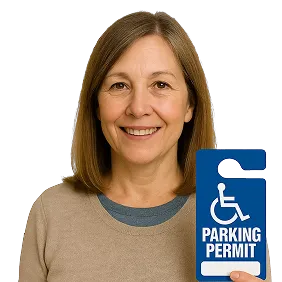
For Maryland residents with mobility challenges, a handicap placard in Maryland is a key to independence. It means grocery shopping without dreading the walk from the far end of the lot. It means attending doctor’s appointments without arriving exhausted before you even get through the door.
But the application process often feels more complicated than it needs to be. Between tracking down Form VR-210, getting your doctor to complete their section, and figuring out which MVA office handles what, many people put it off longer than they should. Some aren’t even sure if their condition qualifies.
Here’s the reality: if walking causes you pain, fatigue, or requires you to stop and rest, you likely meet Maryland’s eligibility criteria. Conditions like chronic back pain, arthritis, COPD, heart disease, and neuropathy all commonly qualify, even without a wheelchair or walker.
This guide covers the essential points Maryland residents need to know about disability parking permits: qualifying conditions, the application process, temporary vs. permanent placards, parking privileges, and how to get your medical certification without waiting weeks for a doctor’s appointment. If you’re comparing options, you can also compare Illinois online placard process
How to Get a Handicap Parking Permit in Maryland
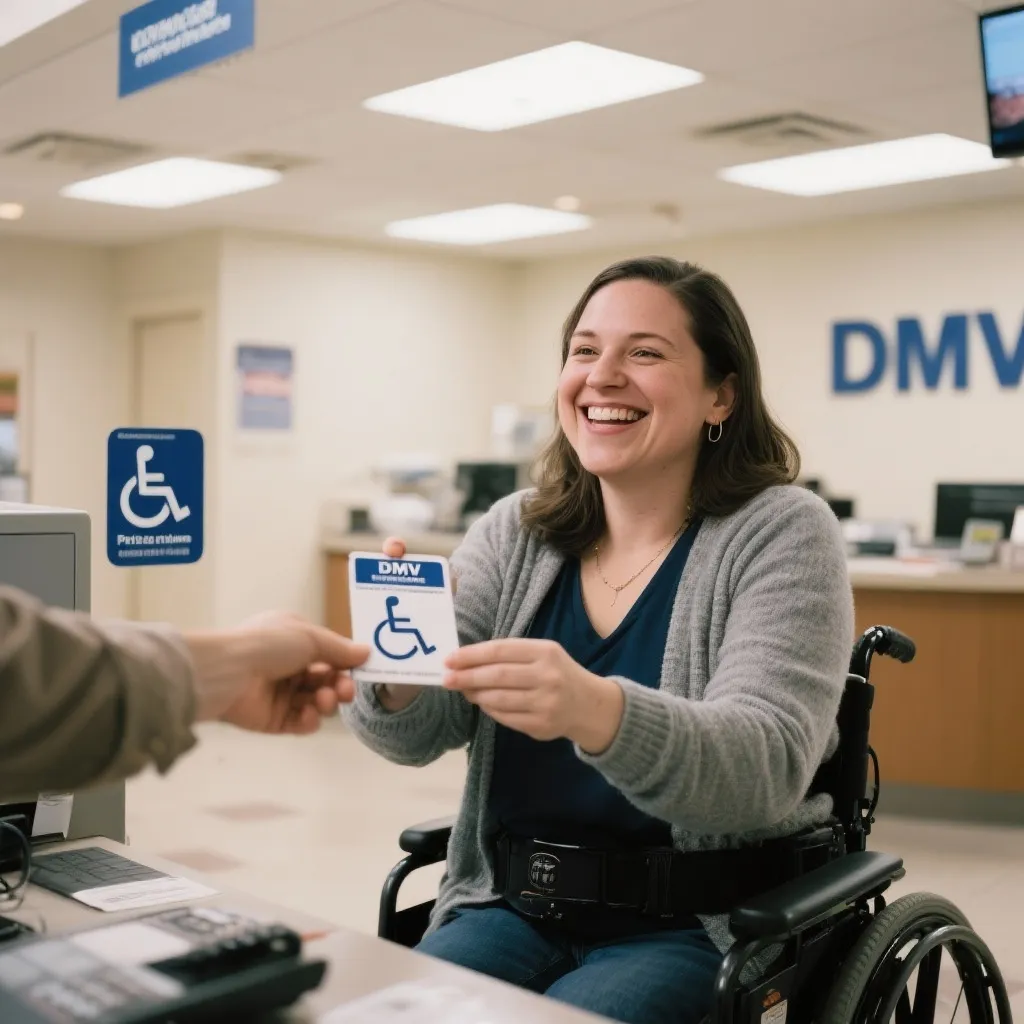
To get a handicap parking permit in Maryland, you need to complete Form VR-210, get medical certification from a licensed physician, and submit your application to the Maryland Motor Vehicle Administration (MVA). You can apply online, by mail, or in person at any full-service MVA office.
Skip the wait for a doctor’s appointment, Start your online handicap placard evaluation.
The process typically takes 1-2 weeks through traditional channels, though online physician evaluations can speed up the medical certification portion significantly.
Handicap Parking Placard Processes in Other States? Here is the Texas handicap placard process
Required Documents and Forms
Before you start, gather these items:
-
Form VR-210 (Application for Parking Placards/License Plates for Individuals with a Disability)
-
Medical certification from an authorized healthcare provider
-
Valid Maryland ID or proof of residency
-
Vehicle registration (only if applying for disability plates)
You can download the VR-210 form directly from the MVA website. The form has two parts: one section for you to complete and another section your physician must sign.
One thing that surprises many applicants: you don’t need a Maryland driver’s license. If you’re a passenger who needs accessible parking, you can still qualify. The permit belongs to you as a person, not to any specific vehicle.
Submission Options: Online, Mail, and In-Person
Maryland offers five ways to submit your application:
-
Online through the MVA Portal. Your physician completes their certification through the MVA’s online physician portal, then you finish your portion through myMVA services. This is the fastest option if your doctor participates.
-
Electronic Upload. Complete Form VR-210 with your doctor, scan it, and upload through myMVA online services.
-
Mail. Send your completed form to: MVA, Disability Unit, Room 202 6601 Ritchie Highway Glen Burnie, MD 21062
-
In Person. Visit any full-service MVA office. Locations in Glen Burnie, Rockville, Largo, Bel Air, and Waldorf all process disability parking applications. Note: the Oakland location cannot process these requests.
-
Physician Fax. Your doctor can fax the certified form directly to the MVA at (410) 787-7840.
| Method | Processing Time | Best For |
|---|---|---|
| Online Portal | 3-5 business days | Applicants with participating physicians |
| Electronic Upload | 5-7 business days | DIY applicants with scanner access |
| 10-14 business days | Those who prefer paper applications | |
| In Person | Same day (placard) | Urgent needs, immediate pickup |
| Physician Fax | 7-10 business days | When doctor handles submission |
How to Get Maryland Disability Parking Permit Online
You can’t get a Maryland disability parking permit unless you have a doctor’s certificate, which can be time consuming. Moreover, you need to verify that your specific provider is authorized by your state’s DMV before scheduling an appointment. An easier way is to get your health certification through ParkingMD, we have a team of licensed practitioners to help you with your disability permit in Maryland.
The process works in three steps:
Step 1: Book Your Evaluation Schedule an appointment online at a time that works for you.
Step 2: Meet with a Licensed Physician Connect through a secure video consultation. The physician reviews your medical history and assesses whether your condition qualifies under Maryland law.
Step 3: Get Your Approved Forms If you qualify, your completed, physician-signed VR-210 form arrives the same day—ready to submit to the MVA.

Who Qualifies for a Handicap Placard in Maryland
You qualify for a handicap placard in Maryland if you have a medical condition that significantly impairs your mobility. The Maryland MVA recognizes several qualifying conditions, and many common health issues meet the criteria.
Maryland’s qualifying conditions include:
-
Cannot walk 200 feet without stopping to rest due to a health condition
-
Cannot walk without assistance from another person or an assistive device (cane, crutches, walker, wheelchair, braces, or prosthetic device)
-
Requires portable oxygen
-
Lung disease with forced expiratory volume (FEV1) less than one liter, or arterial oxygen tension (pO2) less than 60 mm/hg on room air at rest
-
Cardiovascular disease classified as Class III or IV according to American Heart Association standards
-
Severe limitation in ability to walk due to arthritic, neurological, or orthopedic condition
-
Legal blindness
-
Loss of use or absence of a foot, leg, hand, or arm
-
Many conditions that aren’t immediately obvious, like fibromyalgia, chronic fatigue, or certain cardiac issues - fall under the medical conditions that qualify for a handicap placard.
The 200-Foot Rule Explained
This is Maryland’s most commonly used qualification. If you can’t walk 200 feet without needing to stop and rest because of a medical condition, you likely qualify. That’s roughly the length of two-thirds of a football field, or the distance across a typical grocery store parking lot.
Many conditions that aren’t obvious to others can affect your ability to walk that distance. Chronic back pain, severe arthritis, fibromyalgia, COPD, neuropathy, and heart conditions all commonly qualify. You don’t need to use a wheelchair or walker to be eligible.

Who Can Certify Your Condition
Maryland authorizes these healthcare providers to sign your VR-210:
-
Licensed Physician (MD or DO)
-
Licensed Nurse Practitioner
-
Physician Assistant
-
Licensed Chiropractor (for certain condition codes only)
-
Licensed Podiatrist (for certain condition codes only)
-
Licensed Optometrist (for visual impairments)
Temporary vs. Permanent Placards in Maryland
Maryland issues two types of disability parking placards: permanent (blue) and temporary (red). The application process is identical for both, the difference is what your physician indicates on Form VR-210.
| Feature | Permanent (Blue) | Temporary (Red) |
|---|---|---|
| Validity | 4 years | Up to 6 months |
| Renewable | Yes | Yes, if condition persists |
| Best For | Chronic/permanent conditions | Surgery recovery, temporary injuries, pregnancy complications |
Permanent placards make sense for ongoing conditions like arthritis, COPD, neuropathy, or any mobility impairment that isn’t expected to improve. Temporary placards work better for recovery situations where you’ll regain full mobility.
Parking Permit for Pregnancy and Surgery Recovery
Pregnancy itself doesn’t automatically qualify you for a handicap placard. However, pregnancy-related complications that affect your mobility do qualify. Conditions like severe pelvic pain, high-risk pregnancy requiring limited walking, pregnancy-related sciatica, or third-trimester mobility limitations combined with other conditions can all meet the criteria.
For surgery recovery, the key is timing. Many people wait until after their procedure to think about parking access, then find themselves stuck at home during the weeks it takes to get a placard. Getting your evaluation before your surgery date means accessible parking will be ready when you need it most.
If your temporary condition persists beyond six months, you can renew or convert to a permanent placard with updated medical certification.

Is Handicap Parking Free in Maryland?
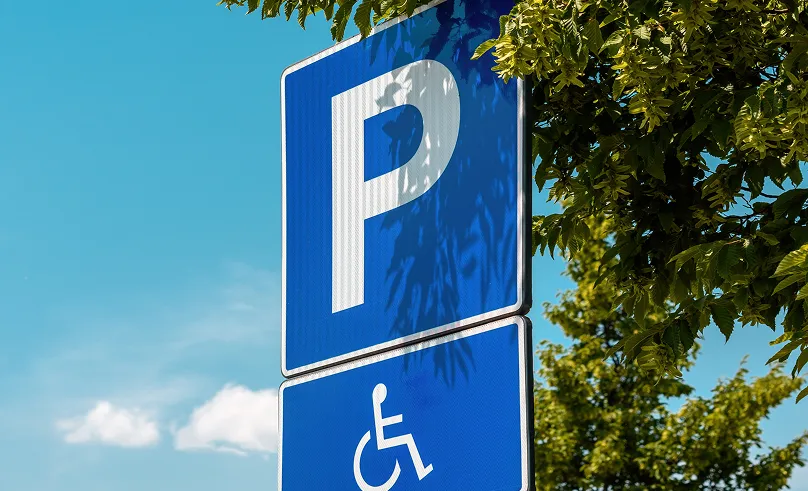
Yes, handicap parking at designated accessible spaces is free throughout Maryland. Placard holders are also exempt from paying parking meters that are not ADA-compliant, and you receive double the maximum meter time (up to 4 hours) at all meters.
These privileges apply across all 23 Maryland counties plus Baltimore City. Your placard provides consistent benefits whether you’re shopping, attending appointments, or visiting family anywhere in the state.
Do Disabled Drivers Pay for Parking Meters?
The meter rules can be confusing, so here’s the breakdown:
-
At non-ADA-compliant meters: You’re exempt from payment entirely. Most older meters fall into this category.
-
At ADA-compliant meters: You may need to pay, but you still get double the posted time limit (maxing out at 4 hours).
How do you know if a meter is ADA-compliant?
Under federal ADA accessibility standards, compliant meters must be at an accessible height with controls operable using one hand and without tight grasping. Most older meters don’t meet these requirements, which is why the exemption applies so broadly.
The rules apply consistently across Maryland, including downtown areas in Baltimore, Silver Spring, and Annapolis. Beach towns like Ocean City follow the same state regulations, though municipal beach lots and seasonal parking areas sometimes have their own permits or restrictions, always check local signage.
One important note: Washington D.C. has different rules than Maryland. If you’re crossing into the District, don’t assume your Maryland meter privileges apply. Always verify with posted signage.

Handicap Parking Rules in Maryland
Maryland has clear rules about how to use your disability placard legally. Following these rules protects you from fines and ensures the system works for everyone who needs it.
Display Requirements:
-
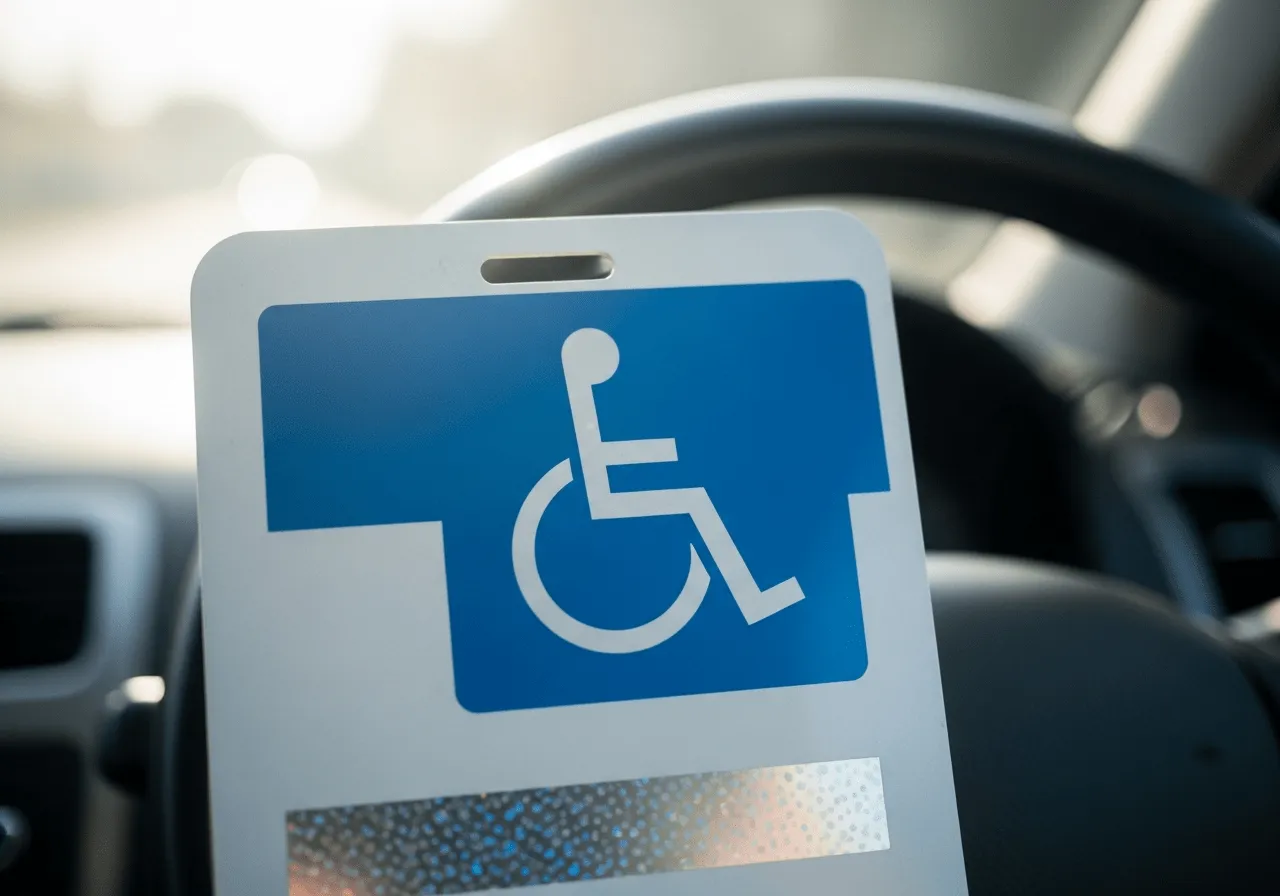
Hang your placard from the rearview mirror only when parked in an accessible space
-
Remove the placard while driving (it can obstruct your view)
-
Carry your disability certification card at all times when using the placard
Who Can Use the Placard:
-
The placard belongs to you as a person, not to any vehicle
-
You can use it in any car, whether you’re driving or riding as a passenger
-
The eligible individual (you) must be present whenever the placard is in use
-
Family members cannot use your placard when you’re not with them
That last point is important. Your spouse can’t borrow your placard to run errands, even if they’re picking something up for you. The placard only provides accessible parking when you’re actually in the vehicle.
Your Maryland placard is valid in all 50 states, though disability parking laws vary by state so always verify local rules when traveling.
Disabled Veteran Plates vs. Standard Placards
Disabled veteran (DV) plates provide the same accessible parking privileges as a standard disability placard in Maryland. If you have DV plates with the wheelchair symbol, you can park in any designated accessible parking space.
| Feature | DV Plates | Disability Placard |
|---|---|---|
| Attached to | Vehicle | Person |
| Transferable | No (stays with car) | Yes (use in any car) |
| Eligibility | 100% VA disability rating | Medical qualification |
| Visibility | Always visible | Must display when parked |
Many veterans with 100% VA disability ratings find it helpful to have both: DV plates on their primary vehicle and a placard for when they’re riding in someone else’s car.
Penalties for Placard Misuse
Misusing a disability placard in Maryland carries serious consequences:
-
Fine of up to $500 for illegal use
-
Placard revocation for repeated offenses
-
Potential criminal charges for fraud or using someone else’s placard
This includes parking in an accessible space without a valid placard, using a placard when the eligible individual isn’t present, or using an expired placard. Maryland law enforcement conducts compliance checks, particularly in high-traffic areas.
Renewing or Replacing a Maryland Disability Parking Permit
Keeping your placard current is your responsibility. The MVA sends renewal notices approximately 60 days before expiration, but don’t rely on that alone.
Renewal timelines:
-
Permanent (blue) placards: Every 4 years
-
Temporary (red) placards: Every 6 months (if condition continues)
-
Disability plates: Every 2 years
The renewal process mirrors the original application. You’ll need your physician to recertify your condition on a new Form VR-210, then submit through any of the same channels.
Lost or Stolen Placard Replacement: If your placard is lost, stolen, or damaged, request a replacement through the MVA. You may need to provide a police report if stolen. Replacement placards are free.
Address Changes: Moving within Maryland? Update your address with the MVA, but your placard remains valid. No need to reapply just because you’ve relocated.
Final Thoughts
Navigating Maryland’s disability parking system doesn’t have to be overwhelming. Once you understand the pieces, Form VR-210, medical certification, MVA submission, the process is straightforward.
If you’ve been putting off applying because you weren’t sure you’d qualify, the eligibility criteria are broader than most people realize. Chronic pain, arthritis, heart conditions, and difficulty walking distances all commonly meet the requirements. You don’t need a wheelchair or visible disability.
Most people don’t struggle with eligibility. They struggle with getting the medical certification. If your doctor charges too much, takes too long, or makes the process difficult, ParkingMD offers Maryland disability parking evaluations with licensed physicians who can complete your VR-210 the same day. Once you have your forms, submit to the MVA and your handicap placard will arrive within days.
Frequently Asked Questions
Is handicapped parking free in Maryland?
Yes. All designated accessible parking spaces are free throughout Maryland, including Baltimore, Montgomery County, Prince George's County, and all other jurisdictions. Placard holders also don't pay at non-ADA-compliant meters and receive double the time limit (up to 4 hours) at compliant meters. Beach towns like Ocean City follow the same rules, though some seasonal lots may have separate permits.
How long can a handicap person park in a handicap spot in Maryland?
There's no statewide time limit for designated accessible spaces in Maryland. You can park as long as the space is available, unless the specific lot posts its own restrictions. At metered spaces, placard holders receive double the posted time limit, up to a maximum of 4 hours. Private lots and garages may set their own rules, so always check signage.
Do handicap pay for parking in Bethesda, MD?
Bethesda follows Montgomery County and Maryland state rules. Placard holders are exempt from paying non-ADA-compliant meters and receive double time at ADA-compliant meters. Designated accessible spaces are free throughout the downtown area. Some private garages in Bethesda may have their own policies, so check posted signage before parking.
Can I have more than one placard in Maryland?
Maryland allows eligible individuals to hold up to two placards at once. This helps if you frequently travel in different vehicles or want a backup in case one is lost or damaged. Both placards are tied to you as a person. Remember: even with two placards, only one can be in use at any time since you must be present in the vehicle.
What happens if I'm caught using someone else's placard?
Using another person's disability placard is illegal in Maryland. Penalties include fines up to $500, immediate confiscation of the placard, and potential criminal charges for fraud. The original placard holder may also face consequences, including revocation of their permit. Law enforcement conducts random compliance checks in parking lots statewide.

Meet the author
Alisha Shabbir
Hey, I'm Alisha and I help people understand disability parking laws and medical services. At ParkingMD, I write about state regulations, patient rights, and healthcare access to make confusing processes straightforward. I believe good information should be easy to find and understand. When I'm not researching state laws or writing guides, you'll find me reading and practicing mindfulness.
Get an Accessible Parking Permit Evaluation in Minutes.