
Online Handicap Placard Scams: Red Flags and How to Stay Safe
 by Nida Hammad
Last updated:


If you’ve searched for help getting a disability parking placard online, you’ve probably noticed something unsettling. Some websites look polished and professional. Others feel off within seconds of loading. The confusion is understandable, because the process of getting a placard varies by state, and most people only go through it once every few years.
That gap in familiarity is exactly what scammers count on. People want a faster, simpler path than driving to a crowded DMV office, and telehealth evaluations are still new enough that many applicants aren’t sure what constitutes a legitimate one. Here’s the important part: not every online service is legitimate.
Only a state Department of Motor Vehicles (or equivalent agency) can actually issue a handicap placard. A legitimate telehealth provider’s role is limited to one thing: performing a medical evaluation and providing the certification required by your state. Anyone claiming to do more than that is a red flag worth taking seriously.
How Online Handicap Permit Scams Usually Work
Most scams targeting placard applicants follow a handful of predictable patterns. Understanding how they operate is the fastest way to avoid becoming a target and makes it easier to recognize a legitimate service when you find one.
Services That Skip the Required Medical Evaluation
Every state requires a licensed healthcare provider to certify that an applicant has a qualifying medical condition before a placard can be issued. Some fraudulent sites skip this step entirely. They collect a payment, maybe ask a few generic questions, and then claim they can produce a placard directly.
This is not how the system works anywhere in the United States. Only a licensed physician, physician assistant, nurse practitioner, or other authorized provider (depending on the state) can certify eligibility, and only the state DMV issues the actual placard. A service that skips medical review isn’t offering a shortcut. It’s operating outside the law, and any documents it produces won’t be valid at your local DMV.
Fake or Unofficial Handicap Placards
Some scam operations go a step further and sell physical placards or permits that were never issued by any government agency. These often show up as novelty items, counterfeit tags, or unofficial cards that mimic the look of a real placard.
Using one of these is a legal risk, not just a financial one. Displaying a fake placard can result in citations, fines, and in some states, misdemeanor charges. Because misuse penalties are increasing nationwide, and violations may result in fines over $1,000, license suspensions, and possible criminal charges, the potential cost of using a fake placard far outweighs whatever convenience it seemed to offer.
Advance Fee Fraud
This is one of the more common patterns. The applicant pays upfront, often through a nonrefundable processing fee, and then the company either disappears or stops responding. There’s no medical evaluation, no follow-up, and no placard. Contact information listed on the site often turns out to be fake or disconnected, and refund requests go nowhere.
If you’re ready to check whether a company has this history before paying anything, BBB Scam Tracker lets you search reported scams by business name, and BBB’s site also lets you research a business before you buy from it.
False Promises of Guaranteed Approval
No legitimate provider can promise approval before conducting a real medical evaluation. Eligibility depends on your specific medical condition matching your state’s criteria, which a provider can only assess after reviewing your history or speaking with you. Any site advertising 100% approval or guaranteed placard before you’ve even described your condition is making a claim that no licensed provider could honestly back up. This is one of the clearest markers of an online handicap permit scam.
Red Flags That Signal a Fake Online Handicap Placard Service

Once you know what to look for, spotting a fake online handicap placard operation becomes much easier. Here are the warning signs that should make you stop and dig deeper before entering payment information.
-
No real physicians listed: Legitimate telehealth companies name their providers, or at least describe how providers are selected and licensed. If a site never mentions a doctor, nurse practitioner, or physician assistant by name or credential, that’s a problem.
-
No provider profiles or medical credentials: You should be able to find licensing information, specialties, or at least a general description of provider qualifications. Its absence suggests there may be no licensed clinician involved at all.
-
Claims of instant placards: No online service can issue a placard instantly, because only the DMV does that, and DMV processing takes time even after certification is complete.
-
No actual evaluation: If the evaluation is just a checkbox form with no clinical questions and no provider review, it isn’t a real medical assessment.
-
No HIPAA compliance statement: Legitimate telehealth platforms are required to protect patient health information under HIPAA, and trustworthy providers say so clearly, usually with a dedicated privacy or compliance page.
-
No privacy policy: A missing or vague privacy policy means you have no idea how your personal and medical information will be stored, shared, or sold.
-
No business address: A company that won’t tell you where it operates from is a company that’s harder to hold accountable.
-
No customer service phone number: Email-only contact, or no contact method at all, makes it difficult to resolve problems if something goes wrong.
-
Guaranteed approval claims: As covered above, this promise cannot be made honestly before a real evaluation happens.
-
No state licensing information: Providers should be licensed in the state where you live, and a trustworthy company will be transparent about how it manages state-by-state licensing.
-
Payment by gift cards or wire transfer only: This is one of the single biggest red flags in any online scam, not just placard-related ones. Legitimate healthcare businesses accept standard payment methods like credit or debit cards. Gift card and wire transfer requests are a hallmark of advance fee fraud because these payments are nearly impossible to reverse.
-
Suspiciously low pricing: A price far below what licensed telehealth evaluations typically cost can indicate there’s no actual clinician involved, or that the “discount” is a hook to get your payment information.
Price is one of the most important factors people consider when choosing an online disability parking evaluation. While unusually low fees can be a red flag for a fraudulent service, higher prices do not automatically mean a provider is legitimate. Understanding the typical costs involved, including provider evaluation fees, state application fees, and how pricing varies by state, can help you identify realistic pricing and avoid scams that promise deals that seem too good to be true.
What a Legitimate Handicap Placard Service Looks Like
A trustworthy telehealth company operates within very specific boundaries, and understanding those boundaries helps you evaluate any service you’re considering.
A legitimate handicap placard service connects patients with licensed healthcare providers who are authorized to practice in the patient’s state. It performs an actual medical evaluation, whether through a detailed health questionnaire reviewed by a provider, a live video visit, or both, depending on state requirements. Based on that evaluation, the provider completes the state-required medical certification form.
Knowing what a legitimate service looks like is only part of the decision. Many applicants also want reassurance from people who have already completed the process successfully. Reading real patient experiences can provide additional confidence about what to expect, how the medical evaluation works, and whether the service delivers on its promises.
A legitimate provider will also follow HIPAA requirements for protecting patient data, identify its providers or describe how they’re licensed, and be upfront that it cannot guarantee approval, because eligibility is a medical determination, not a sales outcome.
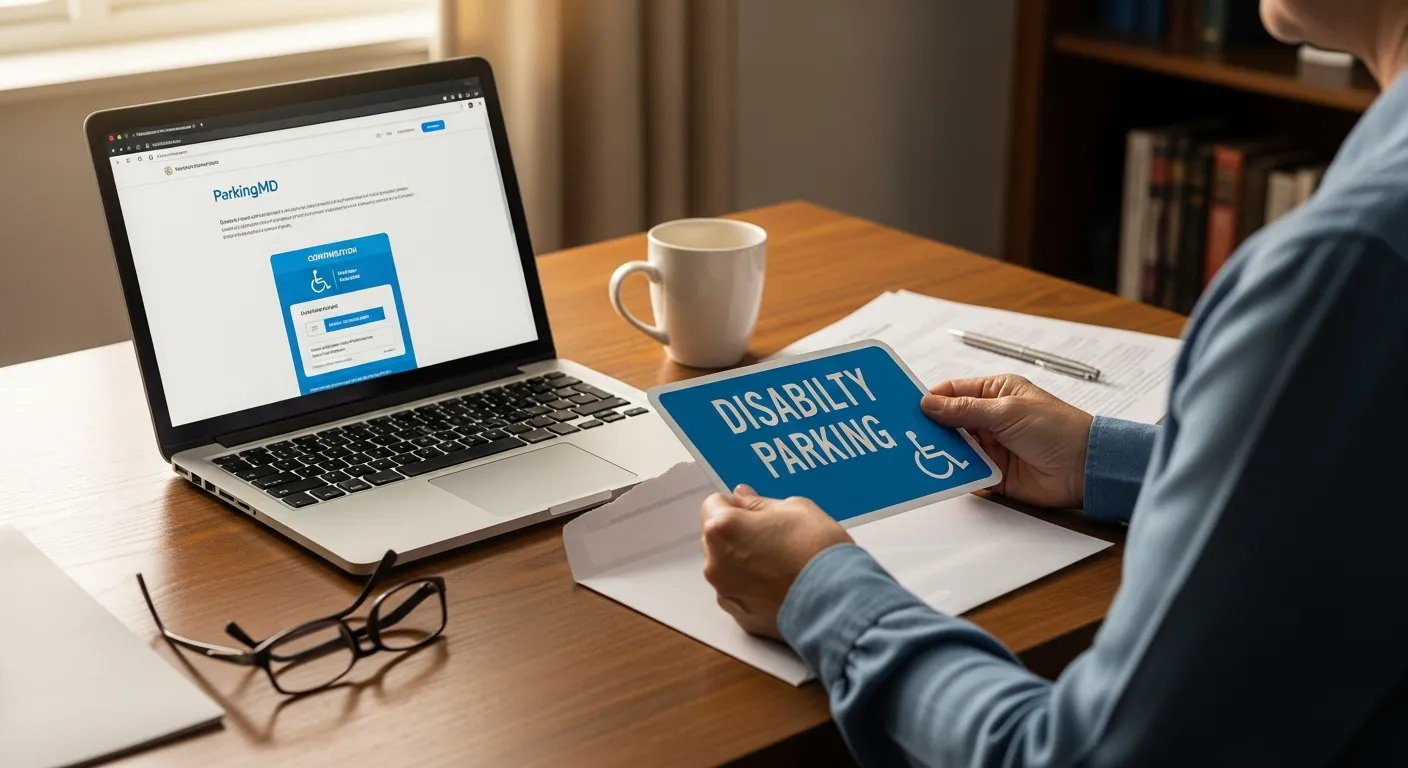
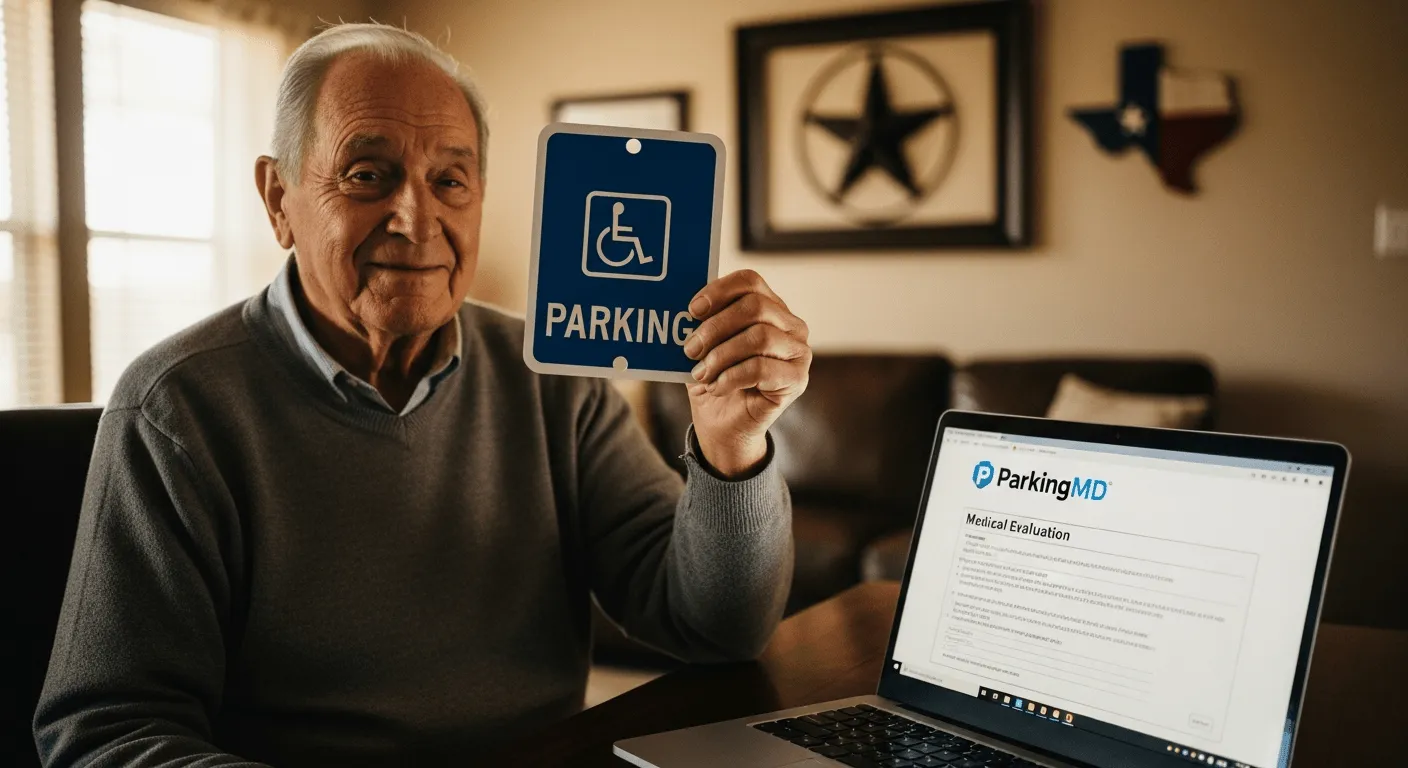
ParkingMD is one factual example of how this process works in practice. ParkingMD connects patients with licensed physicians across all 50 states, follows HIPAA requirements for handling patient information, and provides the state-required certification forms that applicants then submit to their DMV. It does not issue placards, because no telehealth company can. The state DMV remains the only authority authorized to issue an official disability parking placard.
How to Verify an Online Handicap Placard Service Before Paying

Before entering payment information, a few minutes of research can help protect both finances and medical data. Search the company name together with terms such as “reviews” or “complaints” and look for recurring patterns rather than isolated comments.
Repeated reports of no evaluation, no refunds, or unresponsive customer service are serious warning signs. The BBB Scam Tracker and the company’s BBB profile can also reveal complaint history and accreditation status. Provider credentials should be verified through DocInfo, the Federation of State Medical Boards’ free license lookup tool, to confirm that the physician is actively licensed and in good standing.
A legitimate service should also publish a clear HIPAA compliance statement, a detailed privacy policy, and a transparent explanation of which state-required forms it provides. A real phone number and business address should appear consistently across the website.
The state DMV remains the only authority authorized to issue an official disability parking placard. A legitimate online service can only facilitate the medical evaluation and provide the state-required certification when an applicant qualifies.
What To Do If You’ve Been Caught in an Online Handicap Permit Scam
If you believe you’ve been targeted, act quickly. Report the incident to the FTC’s fraud report portal, which shares reports with law enforcement partners investigating fraud. You can also file a complaint with your state attorney general’s consumer protection office.
If you paid using a credit card, contact your card issuer immediately to report the fraudulent or unauthorized transaction and request that the charge be disputed. Under the Fair Credit Billing Act, federal law sets out a dispute process to help you get billing mistakes fixed on credit cards, and you generally have 60 days from the date of the first statement showing the charge to file a dispute. Acting quickly gives you the best chance of recovering your money and preventing additional unauthorized charges from appearing on your account.
If you shared personal information, such as your driver’s license number, medical records, or insurance details, monitor your accounts closely for suspicious activity. Change passwords associated with any affected accounts if necessary, and keep copies of emails, payment receipts, advertisements, and other communications related to the transaction. These records can be valuable if your bank, credit card company, or law enforcement requests supporting documentation during an investigation.
Most importantly, never use a fake or unofficial handicap placard, even if you already paid for one. Displaying an invalid placard can result in fines, penalties, or legal consequences, regardless of whether you were misled by a fraudulent seller. Instead, work with a licensed healthcare provider, a reputable telehealth service authorized to perform disability evaluations, or your local DMV to complete the required medical assessment and obtain a legally issued handicap parking placard through the proper application process.
Frequently Asked Questions
Is getting a handicap placard online a scam?
Not inherently. Legitimate telehealth companies can legally connect you with a licensed provider for the required medical evaluation. The scam risk comes from specific companies that skip the evaluation, promise guaranteed approval, or never provide real certification.
Can you legally get a handicap placard online?
You can legally complete the medical evaluation and certification portion online through a licensed telehealth provider. The placard itself is still issued by your state DMV after you submit the completed certification.
How do I know if an online handicap permit evaluation is legitimate?
Look for named, licensed providers, a real HIPAA compliance statement, a clear privacy policy, standard payment methods, and no guarantees of approval before an evaluation takes place.
What is the biggest red flag of a fake online handicap placard service?
Guaranteed approval before any medical evaluation is one of the clearest signs, since no legitimate provider can promise an outcome that depends on your specific medical condition.
Can I get in trouble for using a fake handicap placard?
Yes. Displaying a placard that wasn't issued by your state DMV can result in fines, and depending on the state, additional penalties including license suspension.
What should I do if I already paid a scam website?
Dispute the charge with your credit card issuer, report the incident to the FTC at ReportFraud.ftc.gov, and file a complaint with your state attorney general's office.
Does a legitimate telehealth provider guarantee I'll get approved?
No. Legitimate providers evaluate your medical condition against your state's eligibility criteria, and approval depends on that evaluation, not on payment.

Meet the author
Nida Hammad
With over 5 years of experience in accessibility content, I create clear resources on handicap parking permits, state requirements, and applications.
Get an Accessible Parking Permit Evaluation in Minutes.