

Handicap Parking at Theme Parks: Avoid Parking Mistakes
 by Areeba Imran
Last updated:


Handicap parking theme park access can truly ruin your fun if you don’t know what you are doing. Most major parks offer accessible parking near entrances, but confusion about placards, out-of-state permits, and park-specific rules catches visitors off guard. You need to know what documentation works, how to find the right spaces, and what mistakes drain your energy before the fun starts.
This guide walks you through handicap parking theme park procedures from start to finish. You’ll learn how ADA parking works at major venues, whether to use a placard or plate, and how to plan your arrival for smooth access. We cover temporary permit eligibility for injury recovery, traveling with disability parking placard travel across state lines, and the five biggest mistakes that create parking headaches.
Five minutes of prep work prevents hours of frustration. You’ll discover how to verify your permit works out of state, what to do if accessible spots fill up, and when temporary permits make sense for short-term mobility issues. These strategies help you skip the confusion and start your day right.
Let’s break down everything you need to know about handicap parking theme park visits so you can focus on enjoying your time instead of solving parking problems.
How Does Handicap Parking at a Theme Park Work?
Handicap parking at theme parks follows federal ADA guidelines while adding venue-specific procedures. You’ll find designated spaces near entrances with proper signage and access routes. Each park may offer extra services beyond basic requirements.

Understanding these systems helps you plan your visit. Let’s break down what you need to know before you arrive.
ADA Parking Basics Every Visitor Should Know
According to the Americans with Disabilities Act, accessible parking spaces must meet specific standards. These include proper dimensions, clear signage with the International Symbol of Access, and direct routes to facility entrances.
Access aisles provide space for wheelchairs, walkers, and crutches. Never park in or block these striped areas. They’re not optional buffer zones.
Van-accessible spaces offer extra clearance for wheelchair lifts and ramps. Look for additional signage marking these spots. They feature wider access aisles than standard accessible spaces.
Space dimensions matter for safe vehicle access. Standard accessible spaces measure 8 feet wide with a 5-foot access aisle. Van spaces need an 8-foot access aisle.
ADA Requirements vs. Theme Park Parking Policies
Federal ADA guidance sets baseline requirements for all public facilities. The ADA National Network explains these include space dimensions, access aisle width, signage placement, and accessible routes to entrances.

Theme parks often go beyond these minimums. They may offer dedicated shuttle systems, priority drop-off zones, and specialized accessibility services. Some parks provide tram service directly from accessible parking areas.
Always check the specific park’s official accessibility information before visiting. Policies vary by venue for:
-
Parking arrival procedures and check-in processes
-
Shuttle or tram accessibility features
-
Drop-off zone locations and time limits
-
Accessible entrance routes and distances
Some parks require advance notification for certain services. Others offer same-day assistance at guest services. Call ahead to confirm current procedures and avoid surprises on arrival day.
Handicap Placard vs. Disability Plate: What Should You Bring?
Choosing between a placard and a plate affects your flexibility at theme parks. Both options grant access to accessible parking, but they work differently when you travel.
Using a Handicap Placard at a Theme Park
Placards offer the most flexibility for theme park visits. They transfer between vehicles, making them ideal for rental cars or rides with family members. You can move the placard from your personal vehicle to any car you use during your trip.
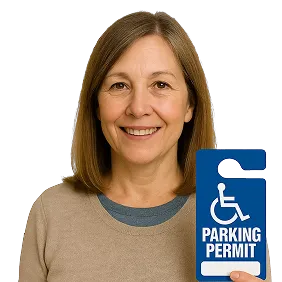
Display your placard by hanging it from the rearview mirror. The expiration date must face outward so parking attendants can verify it quickly. According to Disability Rights North Carolina, only the authorized permit holder may use the placard. Remove it while driving to avoid obstructing your view.
Services like Parking MD help you get placards quickly through online evaluations. This speeds up the process before your theme park trip.
Using a Disability License Plate
Disability plates stay permanently attached to one specific vehicle. They can’t transfer to rentals or other cars. This limits your options when traveling to theme parks in different states.
State rules govern both placard issuance and proper usage. Check your state’s specific requirements before traveling to avoid confusion at park entrances.
Accessible Parking Doesn’t Mean a Reserved Front-Row Space
A valid handicap permit grants access to designated accessible spaces. However, it doesn’t guarantee availability or reserve a specific front-row spot. These spaces operate on a first-come, first-served basis.

Accessible parking spaces may be occupied during peak times. Arriving early improves your chances of finding available spaces closest to entrances. Theme parks see heavy traffic on weekends and holidays, so plan accordingly.
The 5-Minute Parking Plan That Could Save Your Theme Park Day
Five minutes of research before you leave home can prevent hours of frustration at the park. Most theme park parking problems happen because visitors skip this simple prep step. You can avoid these issues with a quick planning session.
Check the Park Before You Leave Home
Start by visiting the park’s official website. Look for accessible parking locations, fees, and entrance points. According to Disney World accessibility services, guests should review parking maps and drop-off zones before arrival.
Check these details on the website:
-
Accessible parking lot locations and distances to entrances
-
Parking fees and payment methods accepted.
-
Tram and shuttle accessibility features
-
Wheelchair-accessible vehicle accommodations
-
Passenger loading and drop-off zone locations
Don’t assume the website covers everything. Call the park directly if information seems incomplete. Ask about oversized vehicle procedures if you drive a van or modified vehicle.
Plan for Peak Summer Crowds
Summer crowds fill accessible spaces fast. Arrive 60-90 minutes before the official opening during busy periods. This gives you the best chance at spots closest to entrances.
Research from Touring Plans shows accessible parking at Disney World fills quickly during peak season. Early arrival makes a huge difference in your park experience.
Have a backup plan ready. Know where alternative accessible lots are located. Identify drop-off zones if parking reaches capacity. This preparation saves stress when your first choice isn’t available.
Don’t Assume Every Theme Park or Summer Event Works the Same Way
Each venue maintains different accessible parking procedures. What works at Disney World differs completely from Universal Studios or Six Flags. Local fairs and concerts have their own unique systems.
Theme parks, water parks, festivals, and sporting events each handle accessible parking differently. Never assume identical policies across venues. Some parks offer free accessible parking while others charge standard rates.
Contact venues directly with specific questions. Ask about temporary disability parking permit eligibility if you’re traveling from out of state. Verify your placard works at the destination before you go.
Recovering From an Injury? Temporary Handicap Parking May Be an Option
Surgery recovery, leg injuries, and certain fractures can limit your mobility temporarily. These conditions may qualify you for a temporary disability parking permit. You don’t need a permanent condition to access handicap parking at theme parks.
Temporary permits help people who use crutches, walkers, or wheelchairs during recovery. If you can’t walk long distances right now, you might be eligible. Pregnancy complications that limit mobility also qualify in many states, though requirements vary by location.
Temporary Conditions Can Affect Mobility Too
Post-surgical recovery often requires parking accommodations. Hip replacements, knee surgeries, and foot procedures can make walking difficult for months. A broken leg or ankle might heal in six weeks, but you still need accessible parking during that time.
Your state determines what qualifies for temporary permits. California’s rules differ from Texas requirements. What works in one state may not apply in another. Check your specific state’s guidelines before assuming you qualify.
Don’t Wait Until Your Theme Park Trip to Find Out
Research temporary placard eligibility in your state before booking your theme park visit. Don’t wait until you arrive at the park to discover you need proper documentation. According to Florida disability parking permit regulations, a recent injury doesn’t automatically authorize accessible parking space usage.
Your doctor must certify that your condition substantially impairs your ability to walk. They’ll also document your expected recovery timeline. Most temporary permits stay valid for six months to one year, depending on state regulations and medical certification. States Condition requirements for medical documentation vary significantly across jurisdictions.
Start the application process at least three weeks before your trip. Processing times vary by state, and you need that permit in hand before you travel.
Traveling to an Out-of-State Theme Park With a Handicap Placard
Your handicap placard works at theme parks across the country. All 50 states honor valid permits from other states through reciprocity agreements.


That said, display rules vary by location. Some states require front windshield visibility. Others accept dashboard placement. Research your destination’s requirements before you go. For a deeper look, see state reciprocity agreements.
Check the Rules Before Crossing State Lines
Display requirements aren’t the only difference. Time limits, meter exemptions, and local restrictions change by state.
Theme parks may have their own parking policies, too. Private property rules can override state laws. Check the park’s accessibility page before your visit. You can explore this further in disability parking for travelers.
Keep your permit ID card with you. Parking enforcement may ask to verify authenticity. This proves you’re the authorized user.
Using Your Placard in a Rental or Someone Else’s Vehicle
Your placard travels with you, not your car. You can display it in any vehicle when you’re present as a driver or passenger.
Rental cars work the same way. Hang your placard when you arrive. Remove it when you leave the vehicle.
Never lend your placard to others. This constitutes illegal misuse. Fines apply even across state lines.
5 Handicap Parking Mistakes to Avoid at Theme Parks
Handicap parking theme park visits should be stress-free. However, simple mistakes can turn your day into a frustrating experience. These errors are easy to prevent with proper planning.
Let’s look at the most common problems people face. You can avoid each one with a few minutes of preparation at home.
1. Forgetting Your Placard
Leaving your placard at home means you can’t legally use accessible parking spaces. Double-check before you leave. Your medical condition alone doesn’t grant parking privileges without the proper documentation displayed.
Keep your placard in your car at all times. Store it in the glove compartment when not hanging from the mirror. This simple habit prevents last-minute panic at the park entrance.
2. Assuming Your Medical Condition Alone Is Enough
Having a qualifying medical condition doesn’t authorize accessible parking without state-issued documentation. You must display a valid placard or license plate to use designated spaces. Park security can’t verify your condition without proper credentials.
Understanding the Blue vs Red Handicap Placard system helps you get the right permit for your needs. Both colors provide identical parking privileges at theme parks nationwide.
3. Using Someone Else’s Placard Improperly
Borrowing a family member’s or friend’s placard when they’re not present is illegal. This misuse results in fines up to $500 in most states. The permit holder must be in the vehicle to use accessible spaces.
4. Parking in the Access Aisle
Access aisles are striped areas next to accessible spaces. They give people using mobility devices room to enter and exit vehicles. Never park in these areas, even briefly.
Blocking access aisles prevents legitimate permit holders from safely accessing their vehicles. Your car may be towed immediately. These zones exist for a reason.
5. Waiting Until You Arrive to Check the Park’s Accessibility Rules
Researching park-specific accessibility policies at home takes 5 minutes. Solving problems in a crowded parking lot takes much longer. You’ll face unnecessary stress when you’re already tired and ready to enjoy your day.
Most theme parks post detailed accessibility information online. Check their website before departure. Some parks require advance registration for accessible parking during peak seasons.
Conclusion
Handicap parking theme park access doesn’t have to be complicated. You now know how ADA parking works at major venues. You understand the difference between placards and plates. You’ve learned which mistakes to avoid and how to plan ahead.
Your permit works across state lines at any theme park. Temporary disability parking permit eligibility can help during recovery periods. Five minutes of research before you leave prevents hours of frustration at the gate.
Check your permit expiration date before your next trip. Review your destination park’s accessible parking rules online. Verify whether your state requires both front and rear display. These simple steps make the arrival smooth and stress-free.
If mobility challenges are limiting your park visits, find out if you qualify for a permit. Parking MD connects you with licensed physicians who can evaluate your eligibility in 24 to 48 hours. Start your day at the attractions, not struggling across a massive parking lot.
Don’t Let Parking Suck The Fun Out of Vacation. Check Your Eligibility With Parking MD!
Frequently Asked Questions
What documentation do I need to park in handicap spaces at theme parks?
You need a valid handicap placard or disability license plate that meets ADA standards. Your permit must display the International Symbol of Access and remain current. Out-of-state permits work at theme parks across the country under federal ADA guidelines. Temporary permits also qualify if they're still valid during your visit. Always bring your permit and be ready to display it properly when you arrive at the parking area.
How do handicap parking spaces at theme parks differ from regular accessible parking?
Theme parks follow federal ADA requirements but often add extra services. Standard accessible spaces measure 8 feet wide with a 5-foot access aisle. Van-accessible spots feature an 8-foot access aisle for wheelchair lifts. Parks may offer dedicated shuttle systems, priority drop-off zones, and tram service from accessible parking areas. Some venues require advance notification for certain services, while others provide same-day assistance at guest services.
Should I use a handicap placard or disability plate when visiting theme parks?
Placards offer more flexibility for theme park visits because they transfer between vehicles. This makes them ideal for rental cars or rides with family members. Disability plates stay with one vehicle, which limits your options when traveling. If you're flying to a theme park and renting a car, a placard lets you use accessible parking immediately. Both options grant the same parking access under ADA guidelines.
Can I use my out-of-state handicap permit at theme parks?
Yes, out-of-state handicap permits work at theme parks nationwide under federal ADA guidelines. All states recognize valid disability placards and plates from other states. You don't need special permission or additional documentation. Just display your current permit as you would at home. This applies whether you're driving your own vehicle or using a rental car with your placard.
What are the access aisle rules in theme park handicap parking?
Access aisles are striped areas next to handicap spaces that provide room for wheelchairs, walkers, and crutches. Never park in or block these zones. They're required by ADA standards, not optional buffer space. Standard accessible spaces have a 5-foot access aisle, while van-accessible spots feature an 8-foot aisle. These dimensions allow safe entry and exit from vehicles with mobility equipment.
Do theme parks offer services beyond basic ADA parking requirements?
Most major theme parks go beyond federal minimums. They may provide dedicated shuttle systems from accessible parking areas, priority drop-off zones with extended time limits, and specialized accessibility services. Some parks offer tram service directly from handicap parking to entrances. Policies vary by venue, so check the specific park's official accessibility information before your visit. Some parks require advance notification for certain services.
What should I do if all handicap parking spaces are full at a theme park?
Contact the park's guest services immediately for alternative accessible parking options. Most parks maintain overflow accessible areas or can direct you to nearby accessible spots. Some parks offer valet parking assistance or temporary parking solutions for visitors with mobility needs. Never park in a non-accessible space, even if accessible spots are full. Parks are required to have contingency plans for high-traffic days.
Are temporary handicap permits accepted at theme parks?
Yes, temporary handicap permits issued for short-term mobility issues are accepted at theme parks as long as they're still valid. These permits work the same way as permanent ones for parking purposes. Make sure your temporary permit displays the International Symbol of Access and hasn't expired. If your recovery period extends beyond your permit's end date, contact your healthcare provider for renewal before your park visit.
Can I get a temporary handicap permit for a theme park visit if I'm recovering from surgery?
You may qualify for a temporary handicap permit if you're recovering from surgery or have a short-term mobility limitation. Eligibility varies by state, but most require a healthcare provider's certification that your condition limits mobility for a specific timeframe. Contact your state's DMV or licensing agency to apply. Processing times vary, so apply well in advance of your theme park trip. Some states offer expedited temporary permits for documented medical situations.

Meet the author
Areeba Imran
I am a healthcare professional and seasoned medical writer with 13+ years of experience across health, wellness, and clinical content. My work focuses on delivering trustworthy, evidence-based information that empowers readers to make informed decisions. With a keen interest in innovation and evolving areas of patient care, I bring a modern perspective to today's healthcare setup.
Get an Accessible Parking Permit Evaluation in Minutes.


![Handicap Placard in Maryland: Complete Guide [2026]](/_astro/t9b1cqsnhkeyjuhp8cnfr.CmyUYx2C_2gj1BS.webp)
