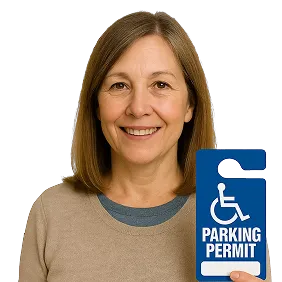

Red Handicap Placard: Who Qualifies & How to Apply
 by Areeba Imran
Last updated:


A red handicap placard lets you park in handicap spaces while you recover. It’s temporary—usually good for 6 months to 1 year. You get it after surgery, injury, or a short-term health issue. Over 70 million Americans have disabilities. Many need parking help while they heal.
Red placards look like blue ones. But they work differently. Red is for short-term needs. Blue is for permanent disabilities. Most people mix them up. This confusion delays applications and can lead to misuse. You might wonder who qualifies, how long it lasts, or what the rules are.
This guide answers all your questions. You’ll learn what a red placard is. You’ll find out who qualifies. You’ll see how to apply. You’ll understand how it differs from permanent permits. By the end, you’ll know how to get parking help during recovery.
What Is a Red Handicap Placard?
A red handicap placard is a temporary parking permit. Your state’s DMV issues it. It helps people with short-term mobility problems. You might need one after surgery, injury, or pregnancy issues.

Red placards give you the same parking rights as blue ones. You can park in handicap spaces. You skip parking meter fees in most places. Many areas give you extra time limits too.
The permit goes with you, not your car. You can use it in any vehicle when you’re there. This works if you’re driving or riding as a passenger. The main difference from permanent permits is how long they last.
What Is a Red Handicap Placard? Overview
Red placards work for conditions that should get better in 6 to 12 months. Your state’s DMV gives these temporary permits to people healing from medical events. Parking MD can connect you with doctors who check your eligibility online.
The California DMV says red placards work in all handicap spaces across the country. Your placard shows the expiration date on the front. You hang it from your rearview mirror.
Red placards help many people. Someone healing from knee surgery might need one for three months. Someone with pregnancy issues could use it for six months. The permit lets you focus on healing instead of searching for accessible parking.
Red and blue placards have big differences. Red permits have set expiration dates based on your healing timeline. Blue permits are permanent and need different medical proof. But both give you the same parking rights.
How long your red placard lasts depends on your state and health condition. Most states give them for 6 months at first. Some ex
Some states use different color systems beyond red and blue. Green placards mark veterans with disabilities in some areas. Purple placards mark transportation vehicles in some states.
you need medical proof from a doctor. Your doctor must show that your mobility problem affects your ability to walk safely. Your condition should be temporary but serious enough to need parking help.
Red placard rules are the same in all states. You must be there when using the space. You can’t give it to friends or family. Misuse can result in fines up to $500 in many states.
Many types of people qualify for temporary placards. People healing from joint surgery often qualify. People with severe sprains or broken bones need them during healing. Pregnancy issues that limit walking also qualify.
Who Qualifies for a Red Handicap Placard?
You qualify for a red placard if you have a temporary health condition. Your condition must affect how you move for a set time. Most states say your problem must last 6 months to 1 year.
Medical Conditions That May Qualify
Several temporary health conditions qualify you for a red placard. Healing from surgery often limits how far you can walk safely. Injuries from accidents or falls can restrict your movement.
Pregnancy issues may reduce your mobility during certain months. Temporary breathing problems from infections can qualify. The Massachusetts Registry of Motor Vehicles says conditions must greatly affect your ability to walk or require mobility aids.
Your doctor must verify your condition. They’ll write down when you should recover. This helps determine if you need a temporary or permanent permit.
Temporary Functional Limitations That May Qualify
Functional limitations focus on what you can’t do physically. You qualify if you can’t walk 200 feet without resting. That’s about two-thirds of a football field.
You also qualify if you need mobility aids. These include wheelchairs, walkers, or crutches for daily movement. Learning the differences between red and blue placards helps you apply for the right one.
Your doctor fills out a state application form. They give medical proof of your functional limitation. The paperwork must include your expected recovery date. This date determines when your red placard expires.
How to Get a Red Handicap Placard
Getting a red placard takes three main steps. You need medical proof, a completed state form, and proper submission. Most states process applications in 2-4 weeks.
Medical Certification Requirements
First, schedule an appointment with your doctor. They’ll check your mobility limitations. They’ll complete the medical section. Your doctor must verify your condition and explain why you need temporary parking help.
Online services like Parking MD connect you with doctors for fast approval. This works well if you can’t visit an office easily. The doctor reviews your medical history and current condition.
Your doctor needs to write down specific details. They must note your health conditions and expected recovery time. Most temporary placard approvals require an estimated healing time.
Applying Through Your State DMV
Next, download your state’s application form from the DMV website. Fill in all sections with correct personal information. You’ll need your driver’s license number and current address.
The Michigan Secretary of State says you must submit both the medical proof and completed application together. Missing paperwork causes delays.
Check your state’s rules before submitting. Some states take online applications. Others need mail or in-person submission. Fees range from free to $15 depending on your state.
Getting Evaluated Online (where permitted)
Many states now allow video doctor visits for placard applications. This saves time and travel. You can complete the medical approval from home.
Online services usually give approval in 24-48 hours. The doctor reviews your medical records and does a video check. They then complete the state form.
After you get your medical approval, submit it with your application to the DMV. Online submissions usually process 1-2 weeks faster than mail. Some states give temporary permits for immediate use while processing your permanent placard.
Need a temporary handicap placard? See If You Qualify!
How Long Does a Red Handicap Placard Last?
Most red placards expire in 6 months to 1 year. The time depends on your state’s rules and your health condition. Your doctor decides the first timeframe based on when you should recover.

Typical Expiration Periods
Your placard shows the expiration date on the front. Watch this date so you don’t lose parking access. The Illinois disability parking program says temporary placards can last up to 6 months.
Some states allow longer first periods. Texas gives temporary permits for up to 1 year. California usually gives 6-month periods. Florida offers temporary permits from 3 to 12 months based on medical proof.
Renewal Requirements
Renewal needs new medical proof if your disability continues past the first timeframe. Your doctor must verify you still need parking help. Start the renewal process 60 days before expiration. This keeps your coverage going during ongoing recovery.
You’ll submit a new application with updated medical paperwork. Most states charge the same fee as the first application. Some states limit how many times you can renew a temporary permit before switching to permanent status.
When You’ll Need a New Medical Certification
If your condition doesn’t improve after maximum renewals, states require switching to a permanent blue permit. This stops misuse of temporary permits for long-term conditions. Your doctor will help you decide if you need permanent status.
Check your state’s renewal limits. Some states allow only two temporary renewals. Others allow renewals as long as your doctor approves. Switching to permanent status requires different paperwork and evaluation.
Red vs. Blue Handicap Placards: What’s the Difference?
Red and blue placards serve different purposes based on how long you need help. Red placards are temporary for conditions that should improve. Blue placards are permanent for long-term disabilities. Both colors give you the same parking rights.
Temporary vs. Permanent Placards
Red placard holders get the same access as permanent permit users. You can park in handicap spaces. You skip meter fees in most areas. You enjoy extra time limits. The only difference is how long your permit lasts.
Red permits have expiration dates and need renewal with new medical proof. Blue permits last 2-5 years. Red placards process faster with less paperwork than permanent permits.
For example, someone healing from knee surgery might get a red placard for six months. Someone with permanent mobility issues from multiple sclerosis would get a blue placard.
Colors May Vary by State
Some states use different color systems beyond red and blue. Green placards mark veterans with disabilities in some areas. Purple placards mark transportation vehicles in some states.
These color differences don’t affect your parking rights when you travel. All valid handicap permits work across state lines. The International Symbol of Access marks accessible parking spaces nationwide.
Check your state’s DMV website to see which colors they use. Most states use red for temporary and blue for permanent. But knowing the alternatives helps you recognize valid permits from other states.
Disclaimer: This article provides general information about red handicap placards. Laws and regulations vary by state. For accurate information about your specific state’s requirements, visit your state’s official DMV website or contact your local motor vehicle department. Always consult with a licensed healthcare provider about your eligibility for a disability parking permit.
Conclusion
Red handicap placards give you temporary parking access during recovery. These permits work like permanent blue placards but expire in 6 months to 1 year. You qualify if surgery, injury, or a short-term condition limits your mobility.
The application process needs medical proof and DMV paperwork. Your doctor must document your health condition and expected recovery time. Most states issue temporary disability parking permits in 2-4 weeks after approval.
Watch your expiration date carefully. Start renewal 60 days early if your condition continues. Display your red handicap placard correctly and follow your state’s parking rules.
Parking MD connects you with doctors for fast online approvals. Skip the office visit and get your medical approval in 24-48 hours. Start your application today and get the parking help you need during recovery.
to improve within 6 to 12 months. State DMVs issue these temporary disability parking permits to people recovering from medical events. Parking MD can connect you with licensed physicians who evaluate your eligibility online.
According to the California DMV disability parking guidelines, red placards provide access to all designated handicap spaces nationwide. The permit includes your expiration date printed clearly on the front. You must display it hanging from your rearview mirror.
These permits serve people in various situations. Someone recovering from knee surgery might need one for three months. A person with pregnancy complications could use it for six months. The permit ensures you can focus on healing instead of struggling to find accessible parking.
Key Considerations
Red vs blue handicap placard differences matter when applying. Red permits have specific expiration dates tied to your recovery timeline. Blue permits are permanent and require different medical documentation. The parking privileges remain identical between both types.
How long does red handicap placard last depends on your state and medical condition. Most states issue them for 6 months initially. Some extend up to 12 months for longer recoveries. Your doctor determines the appropriate duration based on your expected healing time.
Temporary handicap permit eligibility requires medical certification from a licensed healthcare provider. They must verify your mobility limitation affects your ability to walk safely. The condition should be temporary but significant enough to need parking accommodation.
Red handicap placard rules are consistent across states. The permit holder must be present when using designated spaces. You can’t lend it to friends or family members. Misuse can result in fines up to $500 in many states.
Who qualifies for temporary handicap placard includes people with various conditions. Post-surgical patients recovering from joint replacements often qualify. People with severe sprains or fractures need them during healing. Pregnancy complications that limit walking also meet eligibility requirements.
Who Qualifies for a Red Handicap Placard?
Red handicap placard eligibility depends on temporary medical conditions and functional limitations. Your condition must affect your mobility for a specific period. Most states require that your impairment lasts between 6 months and 1 year.
Medical Conditions That May Qualify
Several temporary medical conditions qualify you for a red handicap placard. Post-surgical recovery often limits your ability to walk safely. Injury rehabilitation from accidents or falls can restrict your movement.
Pregnancy complications may reduce your mobility during certain trimesters. Temporary breathing difficulties from infections or acute conditions can qualify. According to the Massachusetts Registry of Motor Vehicles, conditions must substantially impair your ability to walk or require assistive devices.
Your healthcare provider must certify your condition. They’ll document the expected recovery timeline. This helps determine if you need a temporary or permanent permit.
Temporary Functional Limitations That May Qualify
Functional limitations focus on what you can’t do physically. You qualify if you can’t walk 200 feet without stopping to rest. This distance equals about two-thirds of a football field.
You also qualify if you need mobility devices. These include wheelchairs, walkers, or crutches for daily movement. Understanding the Red vs Blue Placard differences helps you apply for the right permit type.
Your doctor must complete a state application form. They’ll provide medical certification of your functional limitation. The documentation must include your expected recovery date. This timeline determines your red placard’s expiration date.
How to Get a Red Handicap Placard
Getting a red handicap placard requires three main steps. You need medical certification, a completed state form, and proper submission. Most states process applications within 2-4 weeks.
Medical Certification Requirements
First, schedule an appointment with your healthcare provider. They’ll assess your mobility limitations and complete the medical certification section. Your doctor must verify your condition and explain why you need temporary parking accommodation.
Online evaluation services like Parking MD connect you with licensed physicians for fast certification where state law permits. This option works well if you can’t easily visit a doctor’s office. The physician will review your medical history and current condition.
Your healthcare provider needs to document specific details. They must note your Qualifying Conditions and expected recovery timeline. Most temporary disability parking permit certifications require an estimated duration of impairment.
Applying Through Your State DMV
Next, download your state’s application form from the official DMV website. Complete all sections with accurate personal information. You’ll need your driver’s license number and current address.
According to the Michigan Secretary of State, applicants must submit both the medical certification and completed application together. Missing documents cause processing delays.
Check your state’s specific requirements before submitting. Some states accept online applications while others require mail or in-person submission. Fees vary by state, ranging from free to $15.
Getting Evaluated Online (where permitted)
Many states now allow telehealth evaluations for red placard applications. This option saves time and reduces the burden of traveling to appointments. You can complete the entire medical certification from home.
Online services typically provide certification within 24-48 hours. The licensed physician reviews your medical records and conducts a virtual assessment. They then complete the required state certification form.
After receiving your medical certification, submit it with your application to the DMV. Online submissions typically process 1-2 weeks faster than mail applications. Some states provide temporary permits for immediate use while processing your permanent red placard.
How Long Does a Red Handicap Placard Last?
Most red handicap placards expire within 6 months to 1 year. The exact duration depends on your state’s regulations and your medical condition. Your doctor determines the initial timeframe based on your expected recovery period.
Typical Expiration Periods
The expiration date is printed clearly on your red placard. You must monitor this date to avoid gaps in parking access. According to the Illinois disability parking program FAQ, temporary placards can be issued for up to 6 months at a time.
Some states allow longer initial periods. Texas issues temporary permits for up to 1 year. California typically grants 6-month periods. Florida offers temporary permits ranging from 3 to 12 months based on medical certification.
Renewal Requirements
Renewal requires new medical certification if your disability persists beyond the original timeframe. Your doctor must verify that you still need parking accommodation. Start the renewal process 60 days before expiration to maintain continuous coverage during ongoing recovery.
You’ll need to submit a new application with updated medical documentation. Most states charge the same fee as the initial application. Some states limit how many times you can renew a temporary permit before using placard in other state or transitioning to permanent status.
When You’ll Need a New Medical Certification
If your condition hasn’t improved after maximum renewal periods, states require transitioning to a permanent blue permit. This prevents misuse of temporary permits for long-term conditions. Your doctor will help determine if you need permanent status instead.
Check your state’s specific rules about renewal limits. Some states allow only two temporary renewals. Others permit renewals as long as your doctor certifies ongoing need. The transition to permanent status requires different documentation and evaluation criteria.
Red vs. Blue Handicap Placards: What’s the Difference?
Red and blue handicap placards serve different purposes based on your disability duration. Red placards are temporary permits for conditions expected to improve. Blue placards are permanent for long-term disabilities. Both colors provide identical parking privileges.
Temporary vs. Permanent Placards
Red handicap placard holders get the same access as permanent permit users. You can park in designated spaces, skip meter fees in most areas, and enjoy extended time limits. The only difference is how long your permit lasts.
Red permits have expiration dates and require renewal with new medical certification. Blue permits typically last 2-5 years. The application process is faster for red placards with less extensive documentation requirements than permanent permits.
For example, someone recovering from knee surgery might receive a red placard valid for six months. Someone with permanent mobility limitations from multiple sclerosis would receive a blue placard.
Colors May Vary by State
According to disabled parking permits nationwide overview, some states use different color systems beyond red and blue. Green placards designate veterans with disabilities in certain jurisdictions. Purple placards mark transportation vehicles in some states.
These color variations don’t affect your parking rights when traveling. All valid handicap permits work across state lines. The International Symbol of Access remains the standard marker for accessible parking spaces nationwide.
Check your state’s DMV website to confirm which colors they issue. Most states follow the red-for-temporary and blue-for-permanent system. However, knowing the alternatives helps you recognize valid permits from other states.
Conclusion
Red handicap placards give you temporary parking access during recovery. These permits work just like permanent blue placards but expire within 6 months to 1 year. You qualify if surgery, injury, or a short-term condition limits your mobility.
The application process requires medical certification and DMV paperwork. Your doctor must document your qualifying condition and expected recovery timeline. Most states issue temporary disability parking permits within 2-4 weeks after approval.
Track your expiration date carefully. Start renewal 60 days early if your condition persists. Display your red handicap placard correctly and follow state-specific parking rules.
Parking MD connects you with licensed physicians for fast online evaluations. Skip the office visit and get your medical certification within 24-48 hours. Start your application today and access the parking relief you need during recovery.
Ready to apply for a temporary handicap placard? Get Started Today with Parking MD!
Frequently Asked Questions
What is a red handicap placard and how does it differ from a blue one?
A red handicap placard is a temporary disability parking permit issued by state DMVs for short-term mobility impairments. Red permits have specific expiration dates tied to your recovery timeline, while blue permits are permanent and require different medical documentation. Both types provide identical parking privileges in designated handicap spaces. The red placard works for conditions expected to improve within 6 to 12 months, such as recovery from surgery or injury. You can use it in any car when you're present, whether driving or riding as a passenger.
Who qualifies for a temporary handicap placard?
Temporary handicap permit eligibility requires medical certification from a licensed healthcare provider who verifies your mobility limitation affects your ability to walk safely. The condition should be temporary but significant enough to need parking accommodation. Post-surgical patients recovering from joint replacements often qualify. People with severe pregnancy complications can use it for six months. Someone recovering from knee surgery might need one for three months. Your doctor determines if your short-term medical condition warrants temporary parking access during your recovery period.
How long does a red handicap placard last?
Most states issue red handicap placards for 6 months initially. Some extend up to 12 months for longer recoveries. Your doctor determines the appropriate duration based on your expected healing time. The permit includes your expiration date printed clearly on the front. Red placards are designed for conditions expected to improve within 6 to 12 months. The specific timeline depends on your state and medical condition. Your healthcare provider evaluates how long you'll need parking accommodation during your recovery.
Can I use my red handicap parking placard in any vehicle?
Yes, the permit moves with you, not your vehicle. You can use it in any car when you're present. This works whether you're driving or riding as a passenger. The permit holder must be present when using designated spaces. You can't lend it to friends or family members. Misuse can result in fines up to $500 in many states. The red placard provides access to all designated handicap spaces nationwide, so you can use it across state lines during your recovery period.
What parking privileges does a red handicap placard provide?
Red placards give you the same parking privileges as permanent blue permits. You can park in designated handicap spaces. Most locations also exempt you from parking meter fees. Many areas offer extended time limits too. According to California DMV disability parking guidelines, red placards provide access to all designated handicap spaces nationwide. You must display it hanging from your rearview mirror. The parking privileges remain identical between red and blue permit types, with the only difference being the duration of validity.
How do I apply for a red handicap placard?
State DMVs issue temporary disability parking permits to people recovering from medical events. You need medical certification from a licensed healthcare provider who evaluates your eligibility. Parking MD can connect you with licensed physicians who evaluate your eligibility online. Your doctor must verify your mobility limitation affects your ability to walk safely. The condition should be temporary but significant enough to need parking accommodation. Your healthcare provider determines the appropriate duration based on your expected healing time, typically between 6 to 12 months.

Meet the author
Areeba Imran
I am a healthcare professional and seasoned medical writer with 13+ years of experience across health, wellness, and clinical content. My work focuses on delivering trustworthy, evidence-based information that empowers readers to make informed decisions. With a keen interest in innovation and evolving areas of patient care, I bring a modern perspective to today's healthcare setup.
Get an Accessible Parking Permit Evaluation in Minutes.