
Can You Use Your Handicap Placard in Another State?
 by Sahar Mustafa
Last updated:


Planning a road trip or visiting family in another state? If you rely on an out of state handicap placard, you need to know whether it works when you cross state lines. Your disability parking permit works in all 50 states. All 50 states honor valid placards from other states. They do this through handicap placard reciprocity agreements.
That said, confusion around proper display rules, parking privileges, and time limits can make travel stressful. Some states charge meter fees while others don’t. Extended stays might require a local permit. And if you get ticketed, you need to know how to handle it.
This guide covers everything you need for traveling with a handicap placard across state lines. You’ll learn which parking perks work across state lines. You’ll find out what papers to bring with you. You’ll know when you need a local permit. You’ll see how to fix parking tickets. We’ll also walk you through a pre-trip checklist so you can travel with confidence.
Let’s start with how out of state handicap placard recognition works and what it means for your next trip.
Interstate Reciprocity: How Out of State Handicap Placards Work Across State Lines
Your out of state handicap placard works in all 50 states. This nationwide recognition makes travel easier for people with mobility challenges. You don’t need to apply for a new permit when you cross state lines.

Federal Law and State Recognition
The Americans with Disabilities Act makes all states honor disability parking permits from other states. Nationwide reciprocity standards set a federal rule for handicap parking. This rule gives you the same access in all states. Your California permit works in Texas. Your Florida permit works in New York.
States must recognize both temporary and permanent placards. The color doesn’t matter for interstate use. Red temporary permits receive the same recognition as blue permanent ones.
What Makes a Placard Valid Nationwide
Your placard must display specific features to qualify for interstate recognition:
-
International Symbol of Access clearly visible
-
Current expiration date printed on the placard
-
State of issue clearly marked
-
Unique permit number for verification
The vehicle registration state doesn’t affect your placard’s validity. You can use a Texas-issued placard while driving a car registered in Arizona. The permit follows the person, not the vehicle.
Check your out of state handicap placard expiration date before traveling. An expired placard loses its interstate recognition immediately. Most states won’t honor permits past their expiration date, even by one day.
Exceptions and Special Cases
Some locations operate under different rules. U.S. territories like Puerto Rico and Guam may have separate parking regulations. Tribal lands can set their own parking policies independent of state laws.
Private property owners maintain the right to enforce additional restrictions. Shopping centers and hospitals might limit parking duration even with a valid placard. Understanding state placard laws helps you know what to expect when traveling. Always check posted signs for property-specific rules.
Military bases require additional identification beyond your placard. You’ll need proper base access credentials to use handicap spaces on federal installations.
State-by-State Rules for an Out of State Handicap Placard
Understanding handicap placard reciprocity helps you travel with confidence. Most states honor out of state disability permits. However, specific rules vary by location.
The good news is that federal law requires states to recognize valid disability placards from other states. This means your permit works nationwide. That said, some states add extra requirements for extended stays.
States with Full Reciprocity
Most states accept out of state handicap placards without restrictions. You can park in designated spaces just like local residents. Your permit grants the same access rights across state lines.
These states offer complete reciprocity:
-
California accepts all valid out of state permits
-
Texas honors disability placards from every state
-
New York recognizes permits nationwide
-
Illinois provides full access to visitors
-
Michigan accepts all state-issued placards
Your out of state handicap placard remains valid for its entire duration. You don’t need extra forms for short visits. Simply display it properly when parking.
States with Special Conditions
Some states require extra steps for long-term visitors. Florida, Arizona, and Texas have specific rules for snowbirds. These states see many seasonal residents each year.
According to Florida’s visitor permit policies, out of state permits work for visits under six months. After that, you must apply for a Florida permit. Arizona follows similar guidelines for extended stays.
Texas allows out of state permits but requires in-state registration after 90 days. This applies if you establish residency. Temporary visitors face no restrictions.
Documentation Requirements by Region
Keep your permit ID card with you at all times. Some states require proof of disability during enforcement checks. Your original permit documentation serves this purpose.
Western states typically accept permits without extra paperwork. Southern states may ask for additional verification during extended stays. Northeastern states follow federal guidelines closely.
Understanding state-by-state placard rules and application processes helps you prepare for travel. Each state maintains its own DMV requirements. Check local regulations before long trips.
Proper Display and Usage When Traveling
When you travel with your out of state handicap placard, display it right. Proper use stops tickets and gets you parking access. Most states honor valid disability permits from other states. They do this through handicap placard reciprocity agreements. However, display rules vary by location.
How to Display Your Placard Correctly
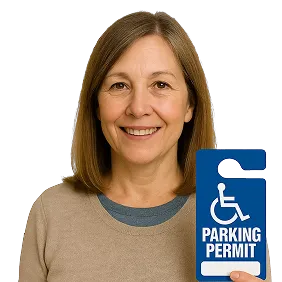
Hang your placard from the rearview mirror with the permit number and expiration date facing outward. This allows parking enforcement officers to verify your permit quickly from outside the vehicle. The International Symbol of Access should be clearly visible.
Remove the placard while driving. Many states give citations for blocked windshields. This happens when placards hang while you drive. Store it in your glove compartment or center console when the car is in motion.
Keep your permit ID card with you at all times. Some states require you to present this card along with your driver’s license when using disability parking spaces. The card proves you’re the authorized permit holder.
Common Mistakes That Lead to Tickets
Using an expired placard is the most frequent violation. Check your expiration date before each trip. Parking enforcement officers scan dates first when checking permits.
Leaving the placard displayed while driving results in obstruction violations in most jurisdictions. This mistake costs drivers $100-$250 in fines depending on local laws.
Parking without the permit holder present violates interstate handicap parking rules everywhere. Your friend or family member cannot use your placard when you’re not in the vehicle, even if they’re running a quick errand for you.
State-Specific Display Requirements
According to the California DMV placard regulations, out of state permits must be displayed exactly as in-state permits with full visibility of all information. Some states ask for extra papers for rental cars. You need them when you travel with a disability permit.
Some places require you to register your out of state permit. You must do this with local authorities. This rule applies for stays over 30 days. Contact the DMV in your destination state before extended visits to verify requirements.
If your placard design differs from local placards, parking enforcement may inspect it more closely. Keep your permit ID card accessible to prove authenticity. Most officers recognize standard placard formats from all 50 states.
Parking Privileges and Restrictions in Different States
Using an out of state handicap placard across different states can be confusing. Each state sets its own rules for meter fees, time limits, and private property access. Understanding these variations helps you avoid fines and park legally wherever you travel.
Meter Exemptions Across State Lines
Most states honor out of state handicap placards for meter parking exemptions. California, New York, and Texas allow free meter parking with valid disability permits from any state. However, some cities still charge fees regardless of your placard.
For instance, Chicago requires payment at certain meters even with a valid permit. Portland enforces similar restrictions in downtown zones. Always check local parking signs for specific meter rules when you arrive.
Some municipalities post clear signage about meter exemptions. Others require you to check city websites before parking. When in doubt, pay the meter to avoid tickets.
Time Limit Variations
Time limit exemptions vary widely by municipality. One city might waive all time restrictions for handicap placard holders. The next town over might enforce strict limits even with a valid permit.
Many states allow extended parking in time-restricted zones. But local ordinances can override state rules. For example, a two-hour zone might become four hours with a placard in one city but remain unchanged in another.
Understanding ADA parking requirements and local regulations helps you know what to expect. Check with local parking authorities when planning extended stays in unfamiliar areas.
Private Property Rules
Private parking lots don’t always honor out of state disability parking permits. Shopping malls, hospitals, and office buildings set their own policies. Some accept all state-issued placards while others restrict access to local permits only.
Hospital parking often creates confusion for visitors. Many medical facilities honor all valid disability permits for patient parking. But visitor lots might have different rules or require advance registration.
Special event parking adds another layer of complexity. Concerts, festivals, and sporting events may suspend normal handicap parking privileges. Temporary restriction zones can pop up without warning during major events. Call the venue before you go. Ask if your placard works there. Ask what accessible parking spots they have.
Extended Stays: When You Need a Local Permit
Planning an extended stay in another state? You might need more than your out of state handicap placard. Most states require you to get a local permit after 30 to 90 days of residency.
Temporary Residency Thresholds
States define temporary residency differently. Florida and Arizona set the threshold at 90 days for snowbirds. California requires a local permit after 30 days of continuous residence. Texas allows 90 days before you must switch.
These rules protect local residents while accommodating visitors. You can use your home state permit during short trips. Extended stays trigger local permit requirements.
How to Obtain a Temporary Visitor Permit
Getting a temporary visitor permit varies by state. Most require proof of your existing permit and medical documentation. Some states accept out of state doctor certifications. Others require evaluation by a local physician.
The application process mirrors standard permit applications. You’ll need to complete state forms and pay applicable fees. Processing takes 2 to 4 weeks in most states.
Cost comparison shows visitor permits range from free to $15. This beats maintaining multiple permits or risking fines. Many snowbird spots make the permit process fast for seasonal guests.
Maintaining Multiple State Permits
You can hold valid permits from multiple states simultaneously. This helps people who split time between locations. Both permits must remain current and properly displayed.
Documentation requirements include proof of residency in each state. You’ll need separate medical certifications for each application. Some states accept copies of existing certifications. Others require new evaluations.
Keep both permits accessible when traveling. Display the permit for the state where you’re currently parking. Store the other permit safely in your vehicle. Know how temporary placards work in different states. This keeps you safe when you travel far.
Handling Parking Enforcement Issues While Traveling
Using an out of state handicap placard can sometimes lead to parking tickets. Officers may not recognize permits from other states. You might also park in spots with unclear signage or local restrictions.

Common reasons for citations include expired permits, improper display, or parking in restricted zones. Some cities enforce time limits even with valid permits. Private property owners may have different rules than public spaces.
What to Do If You Receive a Ticket
Don’t panic if you get a parking citation while traveling. Take photos of your displayed permit immediately. Document the parking space, signage, and surrounding area with your phone.
Write down the exact time, location, and circumstances. Note any confusing signage or unclear markings. This evidence helps when you contest the ticket later.
Contact the issuing authority within 24 hours. Many cities have dedicated disability parking enforcement offices. Ask about their appeal process and required documentation.
Proving Your Permit’s Validity
Always carry your permit ID card when traveling with your placard. This card shows your permit number, expiration date, and issuing state. Officers can verify its authenticity through this documentation.
Keep a copy of your medical certification in your vehicle. Some states require proof that your permit is current and legitimate. Having these documents ready speeds up any verification process.
According to Curb Free with Cory Lee, avoiding parking tickets while traveling requires understanding local enforcement practices. Different cities interpret handicap placard reciprocity rules differently.
Contesting Out of State Violations
You can appeal most parking citations even if you don’t live in that state. Start by reviewing the ticket for appeal instructions and deadlines. Most jurisdictions give you 15-30 days to respond.
Submit your appeal in writing with supporting evidence. Include photos of your displayed permit, the parking space, and any confusing signage. Attach copies of your permit ID card and medical certification.
Many cities now accept online appeals through their parking enforcement websites. This saves you from mailing documents or making phone calls. Follow up if you don’t receive a response within the stated timeframe.
You can ask for a hearing if your appeal gets denied. Some violations warrant legal assistance, especially if fines exceed $200. An attorney familiar with disability parking laws can help navigate complex cases.
Special Considerations for Different Permit Types
Understanding how different permit types work across state lines helps you avoid parking issues when traveling. Each permit format has unique recognition challenges that affect your parking rights.
Temporary Placards Across State Lines
Temporary permits receive the same recognition as permanent ones in most states. However, some jurisdictions require additional verification for short-term placards.
States may ask for proof of medical certification when you use a temporary out of state handicap placard. This happens more often with permits nearing expiration dates. Keep your permit ID card with you to show officials if questioned.
-
Temporary permits from other states are valid for up to 90 days in most jurisdictions
-
Some cities require registration of temporary visitor permits after 30 days
-
Border states often have reciprocal agreements for temporary placard recognition
Check local DMV websites before extended stays. Rules for using disability permit in another state vary by municipality.
License Plates Versus Hanging Placards
License plates create more recognition challenges than hanging placards when you travel. Parking enforcement officers may not recognize out of state disability plate designs.
The differences between placards versus plates become clear when crossing state lines. Plates stay with one vehicle while placards transfer between cars.
-
Hanging placards display the International Symbol of Access clearly
-
License plates require officers to check state-specific designs
-
Some automated parking systems don’t recognize out of state disability plates
Carry a hanging placard as backup when driving with disability plates across state lines. This prevents confusion and potential parking citations.
Veteran and Military Disability Permits
Veterans with service-connected disabilities often receive special parking privileges. These permits may include unique identifiers that vary by state.
Military disability plates and placards follow interstate handicap parking rules like civilian permits. However, some states offer additional benefits for veterans.
-
VA medical facilities honor all state-issued veteran disability permits
-
Some states waive fees for veteran disability parking credentials
-
Military bases accept civilian disability permits from all states
Veterans should check if their home state offers enhanced parking privileges. These benefits often extend to federal properties nationwide.
Planning Your Trip: Checklist for Traveling with a Handicap Placard
Traveling with a handicap placard requires advance preparation to avoid parking issues. You need proper documentation and state-specific knowledge before you leave home.
Pre-Trip Documentation Preparation
Pack your permit ID card along with your placard. Keep a copy of your medical certification in your vehicle. These documents prove your permit is valid if questioned.
Store your placard in a protective sleeve to prevent sun damage. Bring a backup photo of your permit on your phone. This helps if your placard gets lost during your trip.
State-Specific Research
Research parking rules in your destination state before you travel. According to the New York DMV, out of state handicap placard holders must follow specific local restrictions and time limits. Some states require additional permits for extended stays.
Download parking apps like Spot Hero or Park Mobile to locate accessible spaces. These tools show real-time availability and help you plan stops. Check if your destination offers meter exemptions for out of state permits.
Emergency Contacts and Resources
Save DMV phone numbers for states you’ll visit in your contacts. This helps if you need to verify parking rules or report issues. Keep your home state DMV number handy too.
Create a backup plan for parking access if problems arise. Identify accessible parking garages near your hotel or destinations. Know where to find temporary permits if your placard is lost or stolen while traveling.
Conclusion
Your out of state handicap placard gives you parking access nationwide. Federal reciprocity laws protect your rights across all 50 states. You can park in designated accessible spaces wherever you travel.
Each state sets its own rules for meter exemptions and time limits. Some states require visitor permits for extended stays. Others restrict certain parking privileges to residents only. Understanding these differences helps you avoid tickets and complications.
Check your placard’s expiration date before you leave home. Keep your permit ID card with you at all times. Display your placard correctly on your rearview mirror. Research local regulations if you plan to stay more than 30 days.
Contact the destination state’s DMV well before extended visits. Ask about temporary visitor disability permit requirements. Make copies of your documentation for backup. These simple steps protect your parking access during travel.
Need help getting your disability parking permit? ParkingMD connects you with licensed physicians online. Get approved in 24 to 48 hours through a secure, HIPAA-compliant process. Start your evaluation today and travel with confidence.
Frequently Asked Questions
Does my out of state handicap placard work in all 50 states?
Yes, your out of state handicap placard works in all 50 states. The Americans with Disabilities Act requires every state to honor valid disability parking permits from other states through nationwide reciprocity agreements. You don't need to apply for a new permit when you cross state lines. Both temporary and permanent placards receive recognition. Your California permit works in Texas, and your Florida permit works in New York. The color doesn't matter for interstate use.
What features must my placard have to be valid nationwide?
Your placard needs four specific features for interstate recognition. First, it must display the International Symbol of Access clearly. Second, it needs a current expiration date printed on the placard. Third, the state of issue must be clearly marked. Fourth, it requires a unique permit number for verification. An expired placard loses its interstate recognition immediately. Most states won't honor permits past their expiration date, even by one day. Check your expiration before traveling.
Can I use my out of state handicap placard if my car is registered in a different state?
Yes, you can use your out of state handicap placard regardless of where your vehicle is registered. The vehicle registration state doesn't affect your placard's validity. You can use a Texas-issued placard while driving a car registered in Arizona. The permit follows the person, not the vehicle. This flexibility makes it easier for people with mobility challenges to travel across state lines without worrying about matching registration and permit states.
Are there any locations where my out of state handicap placard might not work?
Some locations operate under different rules than standard state reciprocity. U.S. territories like Puerto Rico and Guam may have separate parking regulations. Tribal lands can set their own parking policies independent of state laws. Military bases require additional identification beyond your placard. You'll need proper base access credentials to use handicap spaces on federal installations. Private property owners also maintain the right to enforce additional restrictions, like limiting parking duration even with a valid placard.
Do private businesses have to honor my out of state handicap placard?
Private property owners must honor your valid out of state handicap placard, but they can enforce additional restrictions. Shopping centers and hospitals might limit parking duration even with a valid placard. Always check posted signs for property-specific rules. While federal law requires recognition of your permit, private businesses can set time limits or other conditions. These restrictions apply equally to both in-state and out-of-state placards. The key is that they can't deny access entirely.
What should I check on my placard before traveling to another state?
Check your expiration date before traveling to another state. An expired placard loses its interstate recognition immediately. Most states won't honor permits past their expiration date, even by one day. Also verify that your placard displays the International Symbol of Access clearly and shows your state of issue. Make sure the unique permit number is visible. These features help law enforcement verify your placard's validity. Carry any supporting documentation that came with your permit for additional verification if needed.
Do I need to register my out of state handicap placard when visiting another state?
Most travelers do not need to register their out of state handicap placard for short visits. However, some states may require additional registration or a local permit if you stay for an extended period. Check the DMV requirements in your destination state before long-term travel.
Can I use an out of state handicap placard in a rental car?
Yes. Your out of state handicap placard belongs to you, not your vehicle. You can use it in a rental car or another vehicle as long as you are traveling in the vehicle and display the placard correctly while parked.
What should I do if I lose my handicap placard while traveling?
Contact the agency that issued your placard as soon as possible to report it lost or stolen and ask about the replacement process. If needed, check with the DMV in the state you're visiting to learn about temporary parking accommodations while you wait for a replacement.

Meet the author
Sahar Mustafa
Hi, I'm Sahar. I write for ParkingMD about disability parking permits, qualifying conditions, state forms, and online medical evaluations. I know the process can feel confusing because the medical certification is only one part of what many states require. That is why I pay attention to the practical details people usually get stuck on. I want readers to finish an article knowing what to do next.
Get an Accessible Parking Permit Evaluation in Minutes.