
MS Patients: You Shouldn't Have to Walk Twice as Far
 by Nida Hammad
Last updated:


Living with Multiple Sclerosis (MS) brings a unique set of daily challenges, and mobility is one of the most significant. For many people managing MS, a Multiple Sclerosis (MS) Placard, also known as a disability parking placard or handicap placard, can be a vital tool that preserves energy, reduces pain, and maintains independence. Whether your symptoms are visible or invisible to others, having access to designated accessible parking spaces can make a meaningful difference in your quality of life. This guide walks you through everything you need to know about obtaining and using a disability parking placard when living with MS.
Understanding Multiple Sclerosis and Mobility Challenges
Multiple Sclerosis is a chronic, often disabling disease of the central nervous system. It disrupts the flow of information between the brain and body, and among the body’s systems. The condition affects each person differently. Some individuals experience mild symptoms that come and go, while others face progressive and permanent disability over time.
Common symptoms of MS that can affect mobility include fatigue, muscle weakness, difficulty walking, balance problems, coordination issues, spasticity, and heat sensitivity. Fatigue alone, described by many as an overwhelming exhaustion that is not relieved by rest, is one of the most debilitating and commonly reported symptoms in MS. Walking even short distances can become a significant physical effort on difficult days.
Heat sensitivity, also known as Uhthoff’s phenomenon, is another factor that complicates mobility. When a person with MS is exposed to heat, whether from weather, physical exertion, or a hot environment, their symptoms can temporarily worsen. This means that a short walk across a large parking lot in summer heat can be enough to trigger a relapse-like episode, reduce vision, or cause extreme fatigue.
All of these factors explain why accessible parking is not just a convenience for people with MS. It is often a medical necessity that allows them to participate in everyday activities that others take for granted.
What Is a Multiple Sclerosis (MS) Placard?

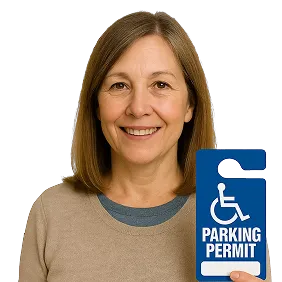
A Multiple Sclerosis (MS) Placard is a disability parking permit issued to individuals whose medical condition significantly limits their ability to walk. These permits allow the holder to park in designated accessible parking spaces closer to building entrances, reducing the distance they must travel on foot.
Disability parking placards come in two main forms: temporary and permanent. A temporary placard is typically issued for a specific period and is appropriate for people whose MS-related mobility limitations are expected to improve. A permanent placard is issued for conditions that are long-term or progressive, which applies to many people living with MS, especially those with secondary progressive or primary progressive MS.
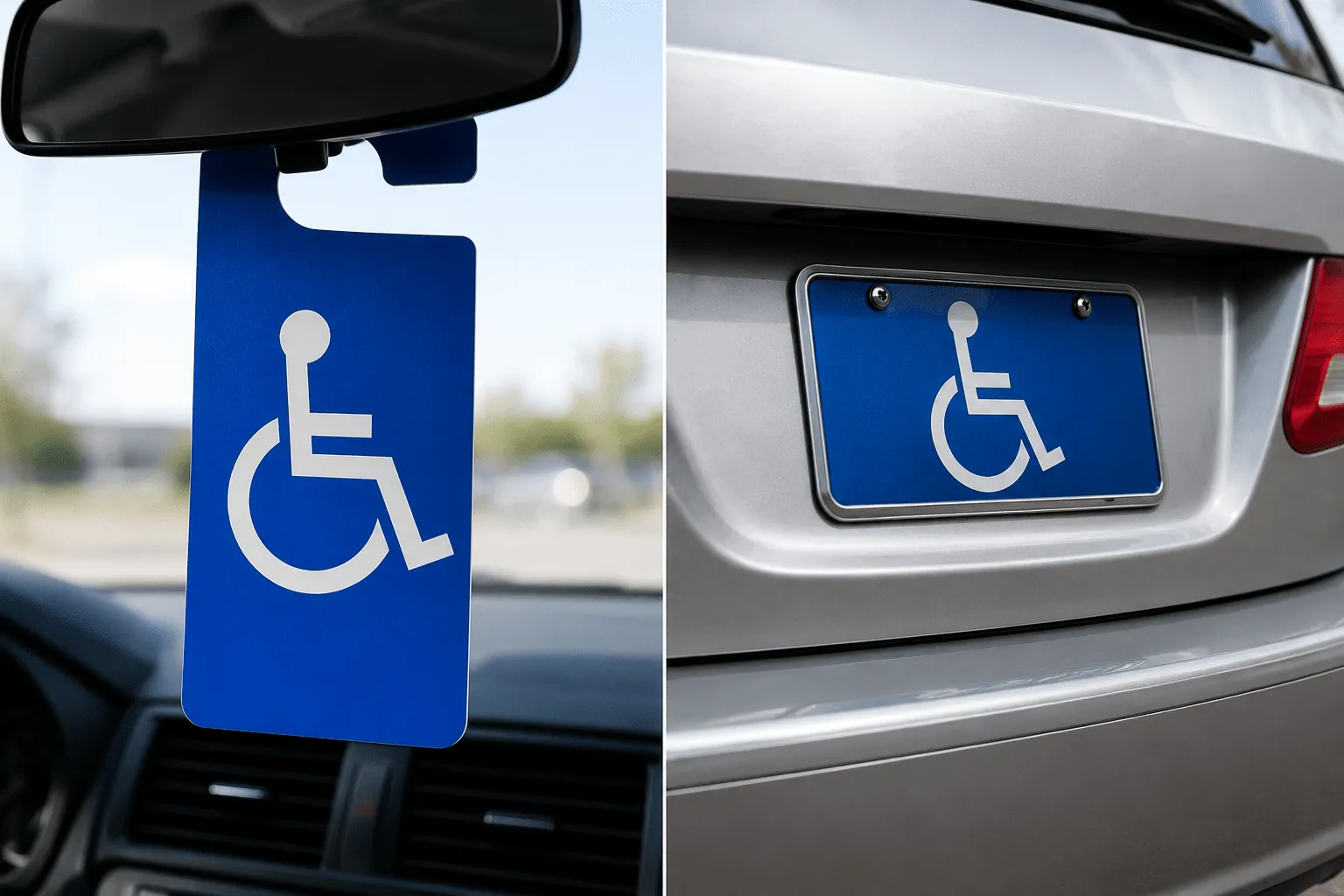
In addition to placards, some individuals may also qualify for a disability license plate, which serves a similar function but is attached directly to the vehicle. The placard, however, has the advantage of being portable and usable in any vehicle the permit holder travels in.
It is worth noting that MS can be an episodic condition. Some people with relapsing-remitting MS may have periods of relative wellness followed by relapses. Placard eligibility is generally based on your functional limitations during your worst periods, not only on your best days. This distinction matters because the need for accessible parking is real, even if it is not constant.
Does Multiple Sclerosis Qualify for a Disability Parking Placard?
The short answer is yes. Multiple Sclerosis is recognized as a qualifying condition for disability parking permits. According to a research, people with MS can qualify for a disabled parking placard if the disease affects their ability to walk without significant assistance or difficulty.
The qualifying criteria generally consider whether the applicant:
-
Cannot walk 200 feet without stopping to rest
-
Cannot walk without the use of an assistive device such as a cane, crutch, brace, prosthetic device, or wheelchair
-
Is severely limited in their ability to walk due to an arthritic, neurological, or orthopedic condition
-
Has a condition that limits or impairs their ability to walk
MS fits squarely within these categories because of its neurological nature and its wide-ranging effects on mobility, balance, and endurance. The fact that MS symptoms fluctuate does not disqualify a person from receiving a placard. On the contrary, the unpredictable nature of the disease makes access to closer parking even more important.
Ready to Get Your Disability Parking Placard?
If you or a loved one is living with MS and struggling with parking access, ParkingMD can help. ParkingMD connects patients with licensed medical providers who can evaluate your condition and complete the necessary certification for a disability parking permit. The process is fast, convenient, and done entirely online. Visit ParkingMD today to get started and take the first step toward easier, safer mobility.
How to Apply for a Multiple Sclerosis (MS) Placard

The process of applying for a disability parking placard varies by location, but the core steps remain largely consistent. Understanding the process in advance can help you avoid delays and ensure your application is complete and properly supported.
Step 1: Get a Medical Evaluation
The first and most critical step is obtaining certification from a licensed medical professional. A doctor, physician assistant, nurse practitioner, or other authorized healthcare provider must confirm that you have a qualifying condition and that it significantly impairs your ability to walk. For MS patients, this typically involves your neurologist or primary care physician documenting your diagnosis and the mobility-related functional limitations caused by your disease.
Your healthcare provider will need to complete a form, sometimes called a Physician’s Statement or Certification of Disability, which accompanies your placard application. Be honest and specific with your provider about the full range of your symptoms, including fatigue, heat sensitivity, and bad days, as these all factor into the assessment of your disability.
Step 2: Complete the Application Form
You will need to obtain the appropriate application form from your local motor vehicle authority. Many states now allow this form to be downloaded online. The form typically requires your personal information, vehicle information, and the completed medical certification from your provider.
Application requirements and renewal timelines differ by jurisdiction. To find the rules that apply to you, you can refer to the state-by-state disability parking permit laws and online application process guide available through ParkingMD, which provides detailed, current information organized by location.
Step 3: Submit Your Application
Once your form is complete and your medical certification is attached, you submit the application to the appropriate government office. Depending on where you live, this may be a Department of Motor Vehicles, a licensing agency, or a transportation authority. Processing times vary, but many jurisdictions can issue placards within a few weeks of receiving a complete application.
Step 4: Receive and Display Your Placard
Once issued, your placard must be displayed according to local regulations, which typically require hanging it from the rearview mirror when parked in an accessible space. The placard should not obstruct your view while driving and should be removed when the vehicle is in motion in some jurisdictions. Misuse of a disability parking placard, such as lending it to someone who does not have a disability, is illegal and can result in fines.
Navigating the Invisible Disability Challenge
One of the most difficult aspects of living with MS and using a disability parking placard is facing social judgment. Many people with MS do not use wheelchairs or other visible aids. On good days, they may appear perfectly healthy to observers. This can lead to confrontations in parking lots and public spaces.
As discussed in a report by MS Views and News, many MS patients have reported being challenged, questioned, or even harassed for using accessible parking spaces. Strangers sometimes assume that a person who walks without difficulty does not need a placard, not understanding that MS can be deeply disabling even when it is not outwardly visible.
Another perspective from Multiple Sclerosis News Today illustrates real experiences faced by MS patients who use placards, including incidents where individuals were confronted at locations like major retail stores. These encounters can be emotionally exhausting and demoralizing, adding stress to what is already a difficult daily experience.
If you are living with MS and use a disability parking placard, know that you are fully entitled to do so. Your placard was issued because a medical professional certified that your condition creates qualifying limitations. You are not obligated to justify or explain your disability to anyone in a parking lot. Some MS patients find it helpful to carry documentation of their diagnosis for peace of mind, but this is a personal choice, not a legal requirement.
Disability Discrimination and Your Rights
People with MS are protected under disability discrimination laws in most countries. In the United States, the Americans with Disabilities Act (ADA) provides broad protections that cover people with MS, even when their disability is not visible. According to a research, people with MS have rights related to employment, public accommodations, transportation, and more.
With respect to parking, this means that accessible parking spaces are legally protected spaces. Parking in an accessible space without a valid permit is a violation that carries fines in virtually every jurisdiction. On the other side of that protection is the right of legitimate permit holders to use those spaces without harassment or interference.
If you are denied access to a disability parking space you are entitled to use, or if you face discrimination related to your disability, you may have legal recourse. It is worth being familiar with the basic protections available to you, and organizations like the National Multiple Sclerosis Society can provide guidance and resources for people facing discrimination.
Temporary vs. Permanent MS Placard: Which Do You Need?
Deciding between a temporary and permanent placard depends on the nature of your MS and the expected duration of your mobility limitations. For people with relapsing-remitting MS who are currently in a relapse or recovering from one, a temporary placard may be the appropriate choice. It covers the period of limitation without committing to a long-term classification.
For those with secondary progressive MS or primary progressive MS, a permanent placard is often more appropriate. The progressive nature of these forms of the disease means that mobility challenges are unlikely to fully resolve and may worsen over time.
Even if you currently have a temporary placard, your healthcare provider can certify you for a permanent one if your condition changes. Likewise, if your MS goes into remission and your mobility improves significantly, you are not required to use a placard you no longer need. These are personal medical decisions best made in consultation with your neurologist or care team.
For a detailed walkthrough of the application process in a specific region, you can consult the complete guide to getting a handicap placard available at ParkingMD, which outlines exactly what documentation is needed and how to navigate each step.
Let ParkingMD Help You Get Your Placard
Navigating the disability parking placard process while managing MS symptoms can feel overwhelming. ParkingMD simplifies everything by allowing you to connect with a licensed medical provider online, get your certification completed, and submit your application with confidence. No long waits, no complicated paperwork, no unnecessary stress. Start your application with ParkingMD now and get the parking access you deserve.
Tips for Using Your MS Placard Effectively
Once you have your placard, there are a few practical tips that can help you use it effectively and protect your rights.
-
Always display your placard correctly according to local regulations. This typically means hanging it from the rearview mirror only when the vehicle is parked in an accessible space.
-
Keep track of your placard’s expiration date and begin the renewal process early. Temporary placards often expire within a few months, while permanent ones may require renewal every few years depending on your jurisdiction.
-
Do not allow others to use your placard when you are not present. This is illegal and puts your permit at risk of being revoked.
-
If someone approaches you and questions your use of an accessible space, you are not required to engage. You may simply state that you have a valid permit and continue on your way.
-
If your MS symptoms worsen and you transition to a different type of placard or plate, update your credentials with your motor vehicle authority promptly.
The Emotional Impact of Accessible Parking for MS Patients
The ability to park close to a destination may seem like a small thing to those who do not live with a chronic illness. For people with MS, it can mean the difference between being able to attend a work meeting, a family event, or a medical appointment and having to miss it entirely due to physical exhaustion.
MS fatigue is unique. It is not like ordinary tiredness after a long day. It can strike suddenly, it can be profound, and it can be completely unrelated to how much physical activity a person has performed. Using accessible parking reduces the total energy expenditure required for any given trip, which means that more energy is conserved for the activities that matter most.
Many MS patients describe feeling more confident and less anxious about going out when they know that accessible parking will be available. The placard, in this sense, is not just a logistical tool. It is a psychological support that reinforces the ability to remain active and engaged in life despite the limitations imposed by the disease.
Advocacy for accessible parking rights also matters. When MS patients speak out about their experiences, whether with confrontations in parking lots or with bureaucratic barriers to obtaining permits, it raises public awareness and drives systemic improvements. Your voice matters, and your need for accessible parking is legitimate.
Conclusion
Multiple Sclerosis is a complex, often unpredictable condition that can profoundly affect a person’s mobility, energy, and ability to participate in daily life. A Multiple Sclerosis (MS) Placard is one of the most practical tools available to people living with this disease, offering access to closer parking spaces that reduce physical exertion, preserve energy, and support independence.
Getting a placard involves a medical evaluation, an application process, and some patience, but the benefits are well worth the effort. If you have MS and your condition limits your ability to walk comfortably or safely, you likely qualify for a disability parking permit, and you deserve to have it.
ParkingMD is here to help make that process easier. With online access to licensed providers who can complete your medical certification, and a streamlined application process, ParkingMD removes many of the barriers that can make getting a placard feel difficult. Visit ParkingMD to learn more and begin your application today.
Frequently Asked Questions
1. Can I get a disability parking placard if my MS symptoms are mild or not always visible?
Yes. Eligibility for a disability parking placard is based on how your condition functionally limits your ability to walk, not on whether your disability is visually apparent. If MS causes you to struggle with walking, experience severe fatigue, or face heat-triggered symptom worsening that makes long walks dangerous, you may qualify even if you appear healthy on many days.
2. Do I need a specific MS diagnosis type to qualify for a placard?
No. Eligibility is generally based on functional limitations, not on the specific type of MS you have. Whether you have relapsing-remitting, secondary progressive, or primary progressive MS, what matters most is the extent to which your condition impairs your ability to walk safely and comfortably.
3. How long does a disability parking placard last if I have MS?
The duration depends on the type of placard issued. Temporary placards usually last a few months, while permanent placards typically must be renewed every one to four years depending on the issuing authority. Your healthcare provider can certify you for a permanent placard if your MS is considered a long-term or progressive condition.
4. Can someone question or challenge my right to use an accessible parking space?
While individuals may question your use of a placard, you are not legally required to explain or justify your disability. Your placard was issued by a medical professional and a government authority. If confrontations occur and become threatening or abusive, you may report the situation to local authorities or property management. Your right to use the space is protected.
5. What if my MS goes into remission? Do I have to stop using my placard?
If your mobility significantly improves during remission and you no longer meet the qualifying criteria, it is appropriate to stop using your placard. However, if your limitations persist even in partial remission, or if you continue to experience episodic difficulty walking, your placard may still be valid and appropriate. Consult your healthcare provider for guidance based on your specific situation.
6. Can ParkingMD help me get a placard for MS?
Yes. ParkingMD connects individuals with licensed medical providers who can evaluate your MS-related functional limitations and complete the required medical certification for your disability parking placard application. The process is designed to be convenient, accessible, and handled entirely online, making it easier for people with MS to get the permits they need without added physical strain.

Meet the author
Nida Hammad
With over 5 years of experience in accessibility content, I create clear resources on handicap parking permits, state requirements, and applications.
Get an Accessible Parking Permit Evaluation in Minutes.